

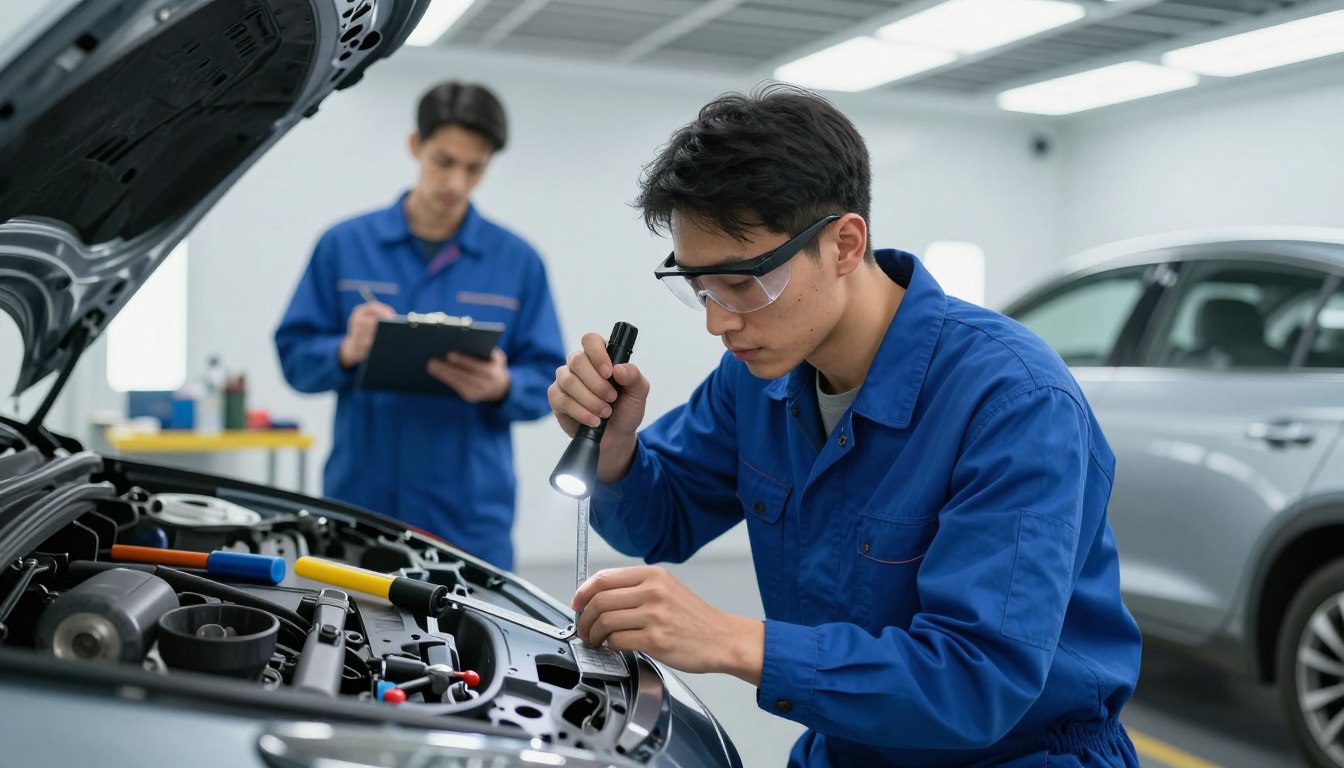
Are you sure your car is safe to drive after repairs? Many people think their car is back to normal after repairs. But, hidden risks can stay hidden under new paint or body parts.
A collision repair inspection is a key safety step. It checks if every part works right, just like the maker designed. Without this check, your car might not be safe.
Getting a safety inspection gives you peace of mind. You shouldn’t risk your family’s safety after an accident. For top-notch repairs, choose Miracle Body and Paint Collision Center.
Key Takeaways
- Most drivers incorrectly assume their vehicle is perfect immediately after shop work.
- Hidden structural damage often remains undetected without a secondary review.
- Professional checks verify that all safety systems function according to factory standards.
- A detailed assessment protects your passengers and ensures long-term road reliability.
- Miracle Body and Paint Collision Center offers the expertise needed to restore your vehicle safely.
The Evolving Complexity of Modern Vehicle Architecture
The world of car repair has changed a lot because of new car technology. Today’s cars are like mobile computers, not just simple machines. So, a detailed collision repair inspection is now more important than ever to keep your car safe on the road.
Advanced Driver Assistance Systems and Sensor Calibration
Modern cars have many safety features like lane-keep assist and blind-spot monitoring. These systems use cameras, radar, and ultrasonic sensors to work right. Even a small crash can mess up these parts.
If these systems aren’t fixed after a crash, they might not work when you need them. A pro repair quality check must check all sensors to make sure they talk to the car’s computer. Skipping this could be very dangerous.
The Shift Toward Lightweight Materials and Structural Integrity
Car makers use strong steel, aluminum, and carbon fiber to save fuel and improve safety. These materials need special welding and bonding to stay strong. Old repair ways can weaken the whole car frame.
Fixing a car with these materials is a careful science. A good repair quality check makes sure the shop uses the right methods for your car. Keeping you safe means fixing your car to its original standards after a crash.
Understanding the Risks of Improper Collision Repairs
Many drivers think a shiny car means it’s safe. But, not all damage is visible. A safety inspection is key to knowing your car is really safe.
Compromised Crumple Zones and Energy Absorption
Modern cars have special crumple zones. They’re designed to absorb shock in a crash. If these areas aren’t fixed right, they might not work as they should.
This could mean bad news for your safety. A collision repair inspection checks if repairs are done right. It’s not just about how the car looks.
Electrical System Vulnerabilities After Impact
Today’s cars have lots of sensors and computers. A small crash can mess with these systems. If they’re not fixed right, your car might not be safe.
Fixing these systems is as important as fixing the metal. A qualified technician must check and fix each part. This keeps your car running smoothly and safely.
The Critical Role of a Professional Collision Repair Inspection
A repair quality check is your last defense against unsafe cars. You might think your car is safe after repairs, but a pro inspection proves it. It checks your car thoroughly to find any repair mistakes.
Identifying Hidden Damage Beyond Surface Aesthetics
Many drivers only look at the car’s outside. But true safety is inside. A safety inspection checks the car’s structure, not just the paint. This ensures your car is safe in future crashes.
Technicians use special tools to find hidden problems. They check for bad welds, loose parts, and damaged crumple zones. Finding these issues early stops long-term problems and keeps your car running right.
Verifying Manufacturer Repair Procedures and Standards
Every car maker has specific repair rules. A safety inspection makes sure repairs follow these rules. This is key for your car’s safety systems and airbags to work right.
The table below shows the big difference between a quick look and a detailed check:
| Inspection Feature | Visual Assessment | Professional Audit |
|---|---|---|
| Structural Integrity | Surface level only | Detailed frame analysis |
| Sensor Calibration | Not checked | Computerized verification |
| OEM Compliance | Often ignored | Strict adherence verified |
| Hidden Faults | Frequently missed | Comprehensive detection |
In the end, a thorough repair quality check means your car is safe. Don’t accept anything less than a full check of your car. Your safety is at stake.
Why Visual Assessments Are No Longer Sufficient
Cars are now like rolling computers, not just metal boxes. A shiny paint job and straight body panels look good but don’t mean the car is safe. A detailed collision repair inspection checks more than just looks to make sure everything works right.
The Limitations of Human Observation in Modern Diagnostics
Our eyes are great for finding dents or scratches. But they can’t find digital problems. Today’s cars have many sensors, cameras, and modules that control everything. If these are off, the car might look fine but could be critical safety risks.
Just looking at a car is not enough. You need a detailed safety inspection to check the car’s hidden electronic parts. Without special tools, even skilled mechanics might miss important problems.
Utilizing Computerized Scanning Tools for Hidden Faults
Now, mechanics use computer tools to talk to your car’s computer. These tools check the car’s systems deeply to find hidden problems. This is key to making sure all safety features work right.
Using digital tools in repairs means shops can check if all parts work together. This tech makes sure your car’s advanced safety systems work when you need them. Here’s why digital checks are better than just looking.
| Inspection Feature | Visual Assessment | Computerized Scanning |
|---|---|---|
| Sensor Calibration | Not Possible | Precise Verification |
| Hidden Fault Codes | Cannot Detect | Full System Report |
| Electronic Integrity | Limited to Wiring | Complete Circuit Test |
| Safety Compliance | Subjective | Data-Driven Accuracy |
The Impact of Poor Repairs on Vehicle Resale Value
A bad repair can make your car less valuable when you want to trade it in. The repair history of your car is key when selling or trading. A collision repair inspection helps keep your car’s value and safety high.

Documenting Repairs for Future Ownership Transparency
Keeping detailed records of repairs is important for your peace of mind. These records show that your car was fixed right. They help build trust with future buyers.
Bad repairs can cause problems if your car has a loan or lease. Lenders and leasing companies have strict standards. Keeping records proves the work was done right, protecting your finances.
Avoiding Diminished Value Through Quality Assurance
Never skip a repair quality check to avoid extra costs. If problems show up later, you might have to pay for them again. Quality assurance helps avoid a big drop in value.
Choosing quality repairs keeps your car safe and valuable. Professional checks today save you from future surprises. A well-maintained car is easier to sell or trade later.
Navigating Insurance Claims and Repair Quality
Your insurance provider is key in the repair process. But, their goals might not match your safety needs. You want your car fixed fully, but adjusters might try to lower the claim amount. This can lead to repairs that aren’t safe for your car.
Ensuring Your Insurer Covers Necessary Safety Protocols
You should fight for repairs that follow the car maker’s rules. Insurers might choose the cheapest option, but you can demand the best. A collision repair inspection proves your car was fixed right.
Ask your repair shop for proof of their work. If an insurer won’t pay for important repairs, show them the evidence. Being open is your strongest ally when dealing with adjusters who might not know the latest car needs.
The Conflict Between Cost-Cutting and Safety Standards
The insurance world wants cheap repairs, but cars today need more. Insurers might use cheaper parts to save money. But these parts might not be safe for your car.
A detailed safety inspection is your defense against these shortcuts. It checks if all parts are installed right and work as they should. This keeps your car safe for a long time. Here’s a table showing the main differences in what each side focuses on.
| Priority Area | Insurance Company Focus | Vehicle Owner Focus |
|---|---|---|
| Repair Costs | Minimize total payout | Ensure long-term safety |
| Parts Selection | Aftermarket/Used parts | OEM certified components |
| Repair Speed | Quick turnaround time | Quality and precision |
| Safety Validation | Basic visual check | Comprehensive diagnostic audit |
Common Failures Found During Post-Repair Audits
A post-repair audit often finds critical mistakes that can harm your vehicle’s safety. Even if a car looks fine, a detailed repair quality check can find hidden dangers. These problems often come from rushing the work or ignoring strict manufacturer rules.
Doing a full safety inspection is key to making sure your car is safe. Without this check, you might drive a car that doesn’t work right in an emergency.
Incomplete Welding and Structural Fastening Issues
Welds and fasteners are vital for a car’s strength. If a tech doesn’t weld right or misses needed fasteners, the car’s frame might not work right in a crash. Weakened joints can cause big problems if you’re in another accident.
Many shops forget the importance of using the right bonding agents with welds. Without these, the car’s frame gets weaker. Always check that the repair shop followed the exact OEM structural repair procedures to keep the car safe.
Misaligned Sensors and Camera Calibration Errors
Today’s cars use many sensors for safety features. A small mistake in the bumper or windshield can mess up these features. A pro repair quality check must check that all sensors and cameras are set up right.
If your car’s safety features aren’t set up right, they might not work. This can make the car act strangely on the road. A careful safety inspection makes sure all systems talk to each other correctly, keeping everyone safe.
| Failure Category | Potential Risk | Audit Focus |
|---|---|---|
| Structural Welding | Reduced crash protection | Weld penetration depth |
| Sensor Alignment | ADAS system failure | Digital calibration data |
| Fastener Integrity | Component detachment | Torque specifications |
The Legal and Liability Implications of Unsafe Repairs
Unsafe repairs can put your vehicle and your safety at risk. If a repair is done wrong, you might face big problems if you get into an accident later. Getting a collision repair inspection helps make sure your car is safe and meets legal standards.
Protecting Yourself in Future Liability Disputes
If you’re in another accident, the quality of your previous repairs will be checked. If repairs were bad, you could be blamed for some of the damage. A safety inspection gives you proof that you checked your car’s condition.
This proof helps protect you in court. It shows you did your best to make sure your car was fixed right. Without it, proving the repair shop was at fault can be hard.
The Responsibility of Repair Facilities to Adhere to OEM Guidelines
Repair shops must follow Original Equipment Manufacturer (OEM) rules. These rules are not just suggestions; they’re critical safety requirements. If a shop doesn’t follow them to save money, they’re putting you at risk.
A detailed collision repair inspection checks if the shop followed these rules. If they didn’t, you have a good case against them. Always choose a shop that does a thorough safety inspection to keep you safe and avoid legal trouble.
How Technology Has Changed the Collision Repair Landscape
The digital revolution has changed collision repair a lot. Modern cars are now complex systems with sensors and processors. This makes a detailed collision repair inspection very important to keep your car safe.
The Integration of Telematics and Vehicle Health Monitoring
Today, repair shops use advanced telematics to check your car. These systems give real-time data on your car’s condition after a crash. This helps technicians make sure everything works right.
This data-driven approach lets shops do a deep repair quality check. It checks more than what we can see. This is key for keeping modern cars safe.
Why Software Updates Are Part of the Repair Process
Software is now a big part of fixing cars. When a car gets damaged, its computer might need updates. Without these, safety features can fail.
Technicians must update your car’s software as much as they fix the body. Updating your car’s computer systems is essential. It makes sure your car is as safe as it was new.
The Importance of Certified Technicians and Equipment
Modern cars need precise repairs, and only certified pros can do it right. When your car gets damaged, the repair quality affects your safety inspection scores. A top-notch facility with advanced tech ensures all issues are fixed before you hit the road again.
Training Requirements for Modern Collision Repair
Today’s cars are like high-tech computers, needing skilled technicians. Shops must train their staff in manufacturer-specific training to handle different car brands. This knowledge is key for a detailed collision repair inspection that meets factory standards.
Without this training, a tech might miss important safety steps. Continuous learning keeps mechanics up-to-date with new repair methods. Always check if the shop has the latest certifications from car makers.
The Necessity of Specialized Tools for Specific Vehicle Makes
General tools can’t fix today’s cars. Cars with strong steel and aluminum need special welding tools to keep their safety features. Also, advanced scanners are needed to find hidden problems in electronic systems.
Using the right tools ensures sensors and cameras work perfectly. This attention to detail is what makes a collision repair inspection professional. Here’s a comparison of standard and certified repair shops.
| Feature | Standard Repair Shop | Certified Repair Center |
|---|---|---|
| Technician Training | General automotive knowledge | OEM-specific certification |
| Diagnostic Tools | Basic OBD-II scanners | Advanced factory-level software |
| Repair Standards | Cost-focused methods | Safety-first protocols |
| Calibration | Often outsourced | In-house precision calibration |
Ensuring Passenger Safety Through Rigorous Quality Checks
A thorough post-repair evaluation is your last defense. You want to be sure your vehicle is safe for you and your passengers. A detailed collision repair inspection checks if your car looks good and works well.
The Link Between Structural Integrity and Airbag Deployment
Modern cars use sensors for airbag deployment. If the car’s frame is off, sensors might not work right. Precision is vital because small changes in metal can affect crash outcomes.
A safety inspection makes sure sensors are set right. Without this, airbags might not work when needed. You should know your car’s systems are in sync for safety.
Protecting Occupants During Secondary Collisions
Crashes can have more than one impact. If a car’s structure is weak, it might not handle a second crash. Reinforcing the cabin’s strength is key to keep passengers safe.
Checks confirm welds and fasteners meet standards. A strict collision repair inspection ensures your car can absorb crash energy. This dedication to quality keeps your family safe on the road.
The Psychological Peace of Mind of a Verified Repair
A verified repair process turns accident stress into security. Knowing your vehicle has been thoroughly checked, you lose fear of hidden problems. True confidence on the road comes from knowing experts have checked every system.
Reducing Anxiety After Returning to the Road
Getting back behind the wheel after a crash can be scary. You might wonder if your car feels the same or if there’s hidden damage. A detailed repair quality check helps you feel secure, knowing pros have checked everything.
This method helps you focus on driving. You won’t worry about strange noises or steering issues. You can trust your car is safe, which is key for your mental well-being.
Building Trust Between Vehicle Owners and Repair Centers
Trust is key in your relationship with your service provider. Detailed work documentation builds a partnership. Always know what to check before driving your car after repairs to feel informed.
A professional collision repair inspection builds trust. It shows the shop cares more about your safety than quick fixes. A thorough repair quality check means more than just getting your car back. It means your family is safe.
| Feature | Unverified Repair | Verified Repair |
|---|---|---|
| Driver Confidence | Low/Anxious | High/Secure |
| Safety Documentation | None Provided | Detailed Reports |
| Long-term Reliability | Uncertain | Validated |
| Communication | Minimal | Transparent |
Industry Trends in Post-Repair Quality Assurance
More car owners are now using independent experts to check their vehicle repairs. With today’s advanced car tech, just trusting the repair shop isn’t enough. A professional collision repair inspection offers the needed check to make sure your car is safe to drive.
The Rise of Third-Party Inspection Services
There’s a big increase in third-party services for independent checks. These services make sure repairs follow the car maker’s rules. By getting an outside expert, you can feel sure that your car’s structure and electronics are okay.
Finding the right service needs some research. Look for companies with the latest tools and certified techs. A detailed safety inspection can find problems that might cause more damage later.
Standardizing Safety Protocols Across the Collision Industry
The industry is moving towards one set of safety standards for repairs. Groups are working to set common rules for all shops to follow. This aims to make sure repairs are consistent and safe for everyone.
Having these standards means that important parts like ADAS and welds are fixed the same way everywhere. Knowing about these standards helps you ask for better collision repair inspection for your car.
The table below shows how old ways of checking repairs differ from new, standardized methods.
| Feature | Traditional Assessment | Modern Quality Assurance |
|---|---|---|
| Primary Focus | Surface Aesthetics | Structural & Electronic Integrity |
| Diagnostic Tools | Visual Observation | Computerized Scanning & Calibration |
| Verification | Shop Self-Certification | Third-Party Independent Audit |
| Safety Goal | Cosmetic Restoration | Full OEM Compliance |
Choosing a thorough safety inspection is key to protecting your car and family. Keeping up with these trends helps you make informed choices during the repair process.
Selecting the Right Collision Center for Your Needs
Choosing the right collision center is key to your car’s safety. It’s not just about fixing looks; it’s about making sure your car is safe to drive. A good repair quality check ensures every part works right.
Questions to Ask Before Committing to a Repair Shop
Talk to the shop manager before they start work. Ask if they use the right OEM repair methods. Also, find out if they do a full safety inspection after fixing your car.
Ask about the parts they use. Genuine OEM parts are better for keeping your car safe. Also, ask for a detailed repair plan so you know what’s being fixed.
Evaluating Shop Certifications and Customer Testimonials
Look for shops with I-CAR Gold Class or specific manufacturer certifications. These show the technicians are well-trained. It means they know the latest car tech.
Customer reviews can tell you a lot. Look for feedback on clear communication and the final delivery. Here’s a table to help you compare shops:
| Feature | High-Quality Shop | Standard Shop |
|---|---|---|
| Safety Inspection | Mandatory post-repair | Visual check only |
| Technician Training | Certified (I-CAR/OEM) | General experience |
| Repair Quality Check | Detailed digital report | Verbal confirmation |
The best shop puts your safety first. By picking a place that values precision and accountability, your car stays safe for you and your family.
Conclusion
Your car is a complex machine that needs careful attention to stay safe. A detailed collision repair inspection is key to spotting hidden problems. It gives you peace of mind, knowing your car is up to safety standards.
Every driver should get a thorough repair quality check before hitting the road again. This step finds issues that the naked eye can’t see. A pro safety check makes sure your car’s airbags, sensors, and structure work right.
Miracle Body and Paint Collision Center is here to help your car get back to top shape. Our team knows all about modern car engineering. We use the latest tools to make sure repairs are done right.
Visit us at one of our San Antonio locations for your next service. Our techs are all about precision and keeping you safe. Contact Miracle Body and Paint Collision Center today for your check-up and drive with confidence.

