


Road incidents are a sad fact for businesses that use transportation. You can’t always stop a crash, but you can control how you react. A slow response can cause downtime and high costs, hurting your profits.
Having a clear plan is key to protecting your drivers and vehicles. Focus on being efficient to keep your business running smoothly, even when things go wrong. Speed is essential in handling crash aftermath to keep your business moving.
Getting professional help is a big plus in recovering from a crash. Whether you need fleet vehicle accident repair or commercial vehicle repair, having a reliable partner is important. Miracle Body and Paint Collision Center has the skills to get your vehicles back on the road safely. Contact us today to see how we can help speed up your recovery.
Key Takeaways
- Proactive planning minimizes operational downtime after road incidents.
- Quick responses help control rising costs and insurance claims.
- Driver safety remains the top priority during the recovery phase.
- Professional partnerships ensure high-quality restoration of your assets.
- Miracle Body and Paint Collision Center offers expert support for your business needs.
The Economic Impact of Fleet Downtime
When a vehicle is out of commission after an accident, your business loses more than just a vehicle. Every moment a truck or van is not working, your efficiency drops. It’s key to have good fleet maintenance, but accidents can happen even with the best plans.
Understanding the Cost of Idle Assets
An idle asset costs your company money without doing any work. While it’s in the repair shop, you keep paying for insurance and registration. Every day it’s not working, it’s like losing money without any benefit.
There’s also the cost of renting other vehicles or hiring delivery services. These extra costs can hurt your profits. Good commercial vehicle repair helps get your vehicles back on the road fast.
How Delays Affect Your Bottom Line
Delays in repairs can cause big problems in your business. Drivers get confused, and your dispatch team has trouble planning routes. This can lead to missed deadlines and unhappy customers who might leave.
Also, dealing with insurance claims and finding parts can be slow. A smooth fleet maintenance process helps avoid these delays. This way, you keep your costs down and your business running smoothly.
The table below shows how different factors add up to the cost of an accident:
| Cost Category | Impact Level | Financial Consequence |
|---|---|---|
| Lost Revenue | High | Direct reduction in daily income |
| Rental Fees | Medium | Increased operational overhead |
| Administrative Time | Medium | Higher labor costs for coordination |
| Insurance Premiums | Low | Long-term increase in policy rates |
The main goal of any commercial vehicle repair plan is to get your business back to normal. By tackling these financial issues early, you keep your business strong against unexpected road challenges.
Prioritizing Fleet Vehicle Accident Repair
When a commercial vehicle is out of commission, time is of the essence. A fast response plan is key. It helps keep evidence safe, speeds up communication, and reduces financial and legal risks. Quick action protects your business and keeps your operations running smoothly.
Why Commercial Vehicles Require Expedited Service
Commercial vehicles are more than just assets; they drive your revenue. An idle truck or van means lost delivery windows, penalties, and the chance of losing customers. It’s not just about the repair costs.
By focusing on fleet vehicle accident repair quickly, you keep your business reliable. Fast service helps you get back to full capacity before small issues become big financial problems. In the transportation world, every minute counts, and delays hurt your bottom line.
The Difference Between Consumer and Fleet Repair Timelines
Personal vehicle repairs often focus on looks and convenience. But fleet vehicle accident repair is all about getting the vehicle back on the road fast and safely. While personal repairs can take weeks, fleet repairs need to be quick and efficient.
The table below shows the main differences between consumer and fleet repair expectations:
| Feature | Consumer Repair | Fleet Repair |
|---|---|---|
| Primary Goal | Aesthetic Restoration | Operational Readiness |
| Timeline | Flexible/Standard | Strict/Expedited |
| Communication | Occasional Updates | Real-Time Status |
Knowing these differences helps you work better with repair shops. It ensures your vehicles get the urgent attention they need. Matching your needs with a professional shop cuts downtime and boosts fleet efficiency.
Streamlining the Initial Damage Assessment Process
When a collision happens, time is of the essence. Every hour your vehicle is out of commission means lost money and missed deadlines. By improving the first steps after an accident, you can get back on the road faster.
Digital Estimating Tools for Faster Approvals
Modern fleet maintenance has changed how we document damage. Drivers can now report accidents right away using mobile apps and telematics boxes. These tools gather important data like location, speed, and impact severity, helping adjusters quickly process claims.
By sending high-resolution photos to a central portal, you give repair shops all they need before the vehicle arrives. This digital process is key for top-notch commercial vehicle repair. It cuts down on the delays caused by back-and-forth communication.
Identifying Hidden Damage Early
Finding hidden damage is a big challenge after a collision. Proactive assessment helps avoid these surprises. Advanced diagnostic software during the first check can spot issues like structural problems or sensor damage.
Spotting these problems early means you can order parts right away, avoiding extra downtime. By integrating these fleet maintenance steps, your commercial vehicle repair stays on track. A detailed initial scan saves your business time and money.
The Role of Advanced Diagnostic Technology in Collision Centers
Precision is key in fleet vehicle accident repair today. Modern collision centers use advanced diagnostic tools. They make sure every vehicle is fixed to its original factory standards.
These high-tech tools help find hidden structural issues. This technological advantage boosts the safety and reliability of your commercial vehicles after a crash.
Computerized Frame Alignment Systems
Heavy impacts can warp a vehicle’s chassis, affecting its safety. Computerized frame alignment systems measure the frame against exact manufacturer data.
These systems use lasers to spot even tiny frame shifts. By fixing these issues, shops ensure your fleet vehicle accident repair meets top safety standards for heavy-duty use.
Electronic Scanning for Sensor Calibration
Modern commercial vehicles have complex ADAS systems. These systems use cameras and radar. A small crash can mess up these parts, causing safety risks.
Electronic scanning tools are vital for fixing these sensors. Proper calibration is a critical step in fleet vehicle accident repair. It keeps safety features like automatic braking working right.
Sourcing OEM and Aftermarket Parts for Rapid Turnaround
When your fleet is down, getting parts fast is key. Quick access to the right parts is vital for commercial vehicle repair. Without a smooth supply chain, even skilled techs face delays.
Managing Supply Chain Challenges
Today’s logistics can be tough, causing repair delays. Global shortages and shipping issues often block part availability. Proactive inventory management helps you stay ahead of these market changes.
Leading repair centers have strong ties with many suppliers. This way, they can quickly find the parts you need, even when the market is tight. This approach keeps your vehicles on the road, not in the shop.
Balancing Cost and Availability
Deciding between OEM and aftermarket parts is tricky. OEM parts are sure to fit right, but aftermarket can be cheaper and faster for non-essential repairs. You need to think about how urgent the repair is and what your fleet needs long-term.
| Part Type | Availability | Cost Efficiency | Best Use Case |
|---|---|---|---|
| OEM Parts | Moderate | Higher | Safety-critical systems |
| Aftermarket | High | Lower | Cosmetic or non-structural |
| Refurbished | Variable | Excellent | Budget-conscious repairs |
Your aim is to keep downtime low and safety high. A smart approach to commercial vehicle repair means not sacrificing quality for speed. Strategic sourcing is key to a successful and profitable fleet.
Managing Insurance Claims for Commercial Fleets
Handling insurance claims well is key to keeping your fleet running smoothly. If a vehicle in your fleet gets into an accident, dealing with the claims can be tough. By working closely with insurers, you save money and keep your business running.
Working Directly with Fleet Insurance Providers
Talking directly to your insurance company is vital for quick service. Working with a company like Fleet Response can make things easier. They help manage all the paperwork and talk to the insurer for you.
Reducing Administrative Bottlenecks
Long delays in getting vehicles fixed often come from too much paperwork. By using digital tools for claims, you can speed things up. This lets your team focus on what they do best, not on paperwork.
| Feature | Manual Claims Process | Automated Claims Management |
|---|---|---|
| Documentation Speed | Slow and prone to errors | Instant and accurate |
| Insurer Coordination | Fragmented communication | Centralized and transparent |
| Impact on Fleet Maintenance | High risk of delays | Optimized for quick return |
Structural Repair Techniques for Heavy-Duty Vehicles
When a commercial truck gets into a collision, the frame usually takes the hit. It’s key to keep your vehicles safe and sound. Without the right fix, your trucks might not drive right, which can be dangerous and wear out tires fast.
Frame Straightening for Commercial Trucks
Fixing heavy-duty trucks needs special tools and skills. Techs use computerized measuring systems to find even the smallest frame issues. This is how they make sure the truck is fixed right, back to its original state.
After finding the damage, techs use hydraulic tools to fix the frame. This makes sure the truck drives well and can carry heavy loads safely. Fixing the frame right now stops bigger problems later on.
Welding Standards for Fleet Safety
Welding is a big part of fixing trucks, and it has to be done right to keep drivers safe. Techs follow strict rules to make sure the welds are strong. Weak welds can cause big problems, like the truck breaking down under heavy loads.
Following safety rules and the maker’s guidelines is very important. It makes sure your trucks can handle tough roads. Here’s a table that shows the main differences between fixing trucks right and not quite right.
| Repair Focus | Technique Used | Safety Priority |
|---|---|---|
| Frame Alignment | Hydraulic Pulling | High (Structural) |
| Metal Joining | Certified Welding | High (Integrity) |
| Cosmetic Finish | Surface Prep | Medium (Aesthetic) |
| Sensor Calibration | Digital Scanning | High (Operational) |
Precision Color Matching and Paint Application
A professional paint finish is more than looks; it’s key to your fleet’s identity. When your vehicles hit the road, they act as mobile billboards for your business. High-quality refinishing in your fleet maintenance program makes sure every vehicle looks professional.
Maintaining Brand Consistency Across Your Fleet
Consistency is key for a strong corporate image. When a vehicle is repaired, the new paint must match the original perfectly. Modern collision centers use computerized spectrophotometers to get the exact paint formula.
This tech removes guesswork, ensuring every repair follows strict brand guidelines. This keeps your fleet looking uniform. It’s a vital part of fleet maintenance that keeps your vehicles looking new.
Using High-Efficiency Paint Booths
The paint environment greatly affects the final look. High-efficiency paint booths offer a clean, controlled space. They use optimized airflow and temperature control for even, quick paint curing.
These booths speed up drying and curing times. This means your vehicles can get back on the road faster. Here’s a comparison of modern, high-efficiency systems versus traditional ones.
| Feature | Traditional Booth | High-Efficiency Booth |
|---|---|---|
| Curing Time | Slow/Variable | Fast/Consistent |
| Finish Quality | Moderate | Superior/Factory-Grade |
| Fleet Maintenance Impact | Increased Downtime | Minimized Downtime |
| Energy Usage | High | Optimized/Low |
Quality Control Protocols for Fleet Safety
Reliable commercial vehicle repair relies on strict quality control. Trucks must work as well as before the accident. A detailed verification process makes sure nothing is missed during repairs.
Multi-Point Inspection Checklists
A thorough multi-point inspection is your last defense against mechanical failure. Technicians check every system, from the frame to electronic safety sensors. Consistency is key for managing a large fleet, avoiding costly downtime.
Standardized checklists ensure all technicians follow the same steps. This ensures critical parts like brakes and lights work right. It means your commercial vehicle repair meets top standards.
Ensuring Compliance with DOT Regulations
Safety is a must, not just a good idea. Following Department of Transportation (DOT) rules is a must to avoid fines and legal trouble. Your repair partner must document every step for your records.
Good documentation shows your vehicles meet safety standards after repairs. This protects your business and keeps drivers safe. Here’s what you need to focus on to stay compliant during repairs.
| Inspection Category | Safety Priority | Compliance Goal |
|---|---|---|
| Structural Integrity | High | DOT Frame Standards |
| Braking Systems | Critical | Federal Performance Specs |
| Lighting & Signals | Medium | Visibility Requirements |
| Sensor Calibration | High | ADAS Operational Safety |
The Importance of Specialized Training for Technicians
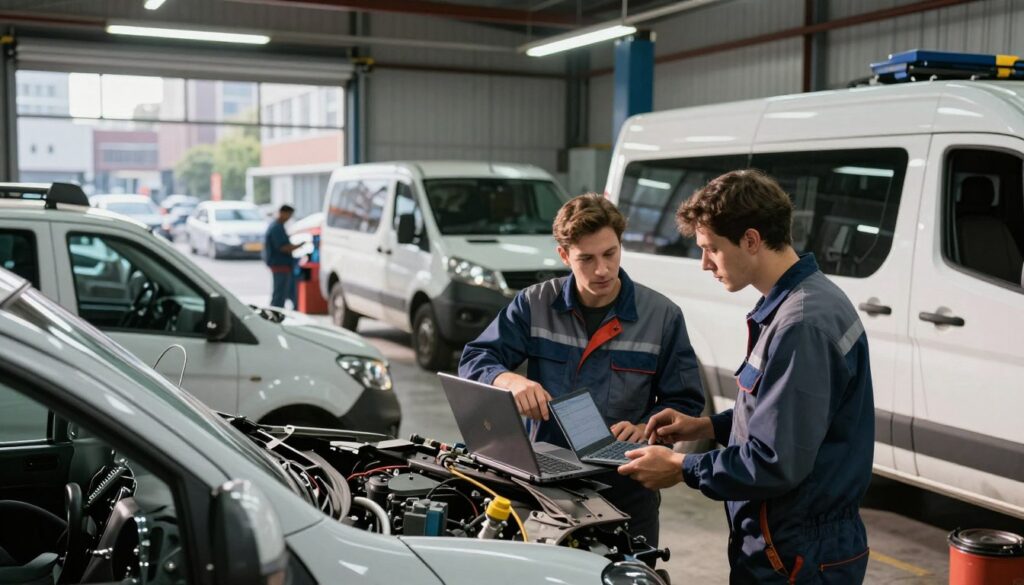
Today’s commercial vehicles are more complex than ever. Your business needs technicians who know how to handle fleet vehicle accident repair with care. They must be trained to work with every part of the vehicle with precision.
Certifications Required for Modern Fleet Repair
Technicians need to have the right certifications to work on commercial vehicles. The National Institute for Automotive Service Excellence (ASE) offers tests that prove their skills. These certifications show that your fleet is getting top-notch service.
Many manufacturers also offer special training for their vehicles. Shops that focus on these programs show they care about quality in fleet vehicle accident repair. By choosing a certified shop, you ensure your vehicles are in the best hands.
Staying Current with Vehicle Technology
The car world is changing fast, with more electronics and software. Modern technicians need to know how to work with these new systems. They must keep learning to stay up to date.
Keeping up with new repair methods helps find problems that older methods might miss. This way, your vehicles are less likely to have issues after they’re fixed. Having a team that keeps learning is key to keeping your fleet safe and reliable.
Coordinating Logistics for Multiple Fleet Units
Coordinating repairs for several commercial vehicles needs a smart plan to avoid delays. When your business has many assets, even small accidents can affect your fleet maintenance schedule. Good logistics management keeps your operations smooth, even with unexpected problems.
Managing Large-Scale Repairs Simultaneously
Dealing with many damaged units needs a clear communication plan. You should order repairs based on how important each vehicle is for your daily work. A skilled commercial vehicle repair partner will keep you updated on each vehicle’s repair status.
Grouping your repair needs can help. This way, the shop can plan better and use their resources more efficiently. Regular checks on repairs ensure no vehicle stays in the shop too long.
Scheduling Repairs to Minimize Operational Disruption
To keep your business running, try to stagger when you send vehicles for repairs. Instead of stopping everything at once, work with your service provider to send vehicles in batches. This keeps your fleet maintenance schedule steady and your business running smoothly.
Good commercial vehicle repair planning also means thinking about parts and technician availability. By matching your repair schedule with the shop’s capacity, you reduce downtime. Planning ahead is key to keeping your business profitable and ensuring all vehicles get the care they need.
Preventative Maintenance During the Repair Cycle
When your vehicles are in the shop, it’s a great time for maintenance. This way, you can reduce the time they’re off the road. It makes your operations run smoothly and efficiently.
Combining Collision Repair with Routine Service
Doing routine service while fixing fleet vehicle accident repair saves money. Technicians can easily get to parts that are hard to reach. This makes inspections and replacements faster.
Here are some maintenance tasks you can do at the same time:
- Oil changes and fluid flushes
- Brake pad and rotor inspections
- Tire rotation and alignment checks
- Battery health testing
Extending the Lifespan of Your Fleet
Looking after your fleet during repairs helps it last longer. You catch small problems before they get big. This keeps your investment safe and your resale values high.
The table below shows the benefits of doing these services together:
| Benefit | Impact on Operations | Cost Efficiency |
|---|---|---|
| Reduced Downtime | Higher vehicle availability | High |
| Lower Labor Costs | Consolidated service visits | Very High |
| Increased Reliability | Fewer unexpected breakdowns | Medium |
Your dedication to thorough care makes your fleet a competitive advantage. Seeing every repair as a chance to improve performance secures your business’s future.
Communication Strategies Between Repair Shops and Fleet Managers
Good communication is key for a successful commercial vehicle repair partnership. When your vehicles are out of commission, you need updates fast. This helps you adjust your plans and keep your business running.
Talking openly with the repair shop keeps everyone on the same page. This is important for every detail.
Real-Time Status Updates
Today’s repair shops use digital tools for quick updates. You don’t have to wait for a call. You can see real-time data on your repairs online.
This lets you plan your day without wondering when a vehicle will be ready. It’s all about minimizing downtime and keeping your fleet working.
Want to improve your workflow? Learn how to schedule repairs without disrupting your business.
Transparency in Repair Timelines
Knowing when repairs will be done is vital for your business. A good shop will give you a clear timeline. They’ll tell you about parts and labor needs.
Honesty about delays helps you plan better. It lets you schedule your routes and drivers with confidence.
When a shop is open and honest, you trust them more. You should get a detailed explanation of the commercial vehicle repair process. This way, there are no surprises when you get the bill.
Good communication is the best way to keep your fleet moving. It helps your business stay on track.
Adapting to Modern Vehicle Technology and ADAS
Vehicle technology is changing fast, and so must your fleet maintenance methods. Today’s commercial vehicles have many sensors, cameras, and radar units to make roads safer. These parts are key to the vehicle’s safety and need special care when fixed.
Repairing Advanced Driver Assistance Systems
Fixing ADAS systems is more than just fixing body panels. Technicians must handle electronic parts with great care to avoid damage. Precision is vital when working with the wiring and brackets of these safety features.
Even a small misalignment of a sensor can cause big problems. It might lead to blind spots or wrong collision warnings. So, your fleet maintenance needs to include tools that talk to the vehicle’s computer.
The Necessity of Post-Repair Calibration
After fixing ADAS, calibration is a must. It makes sure all sensors and cameras are right where they should be. Without it, the safety systems won’t work right in real driving.
Ignoring calibration is not safe for your drivers or others on the road. Professional calibration keeps your vehicles safe and reliable. Here’s a table showing the big differences between old repairs and new ADAS-focused services.
| Repair Aspect | Traditional Vehicle | ADAS-Equipped Vehicle |
|---|---|---|
| Diagnostic Focus | Mechanical Integrity | Electronic & Sensor Accuracy |
| Technician Skill | Body & Paint Expertise | Advanced Electronics Certification |
| Final Validation | Visual Inspection | Computerized System Calibration |
| Safety Priority | Structural Soundness | System-Wide Operational Safety |
Choosing the Right Partner for Commercial Vehicle Repair
Your choice of repair partner greatly affects your fleet’s return to service. It’s key to pick a shop that knows commercial vehicle repair well. A wrong choice can cause long downtime and poor quality, hurting your profits.
Evaluating Experience and Facility Capabilities
Look beyond basic services when choosing a shop. A good partner should have special tools for heavy-duty and modern vehicles. Experience is key for fixing complex damage.
Here are key things to check for your fleet vehicle accident repair needs:
- Technical Certification: Make sure techs are up-to-date with current vehicle systems.
- Facility Capacity: Check if the shop can handle your vehicle types with enough space.
- Diagnostic Technology: Confirm they have advanced tools for ADAS and sensor calibration.
- Supply Chain Access: Verify they can get OEM parts fast to avoid delays.
Why Miracle Body and Paint Collision Center is the Industry Leader
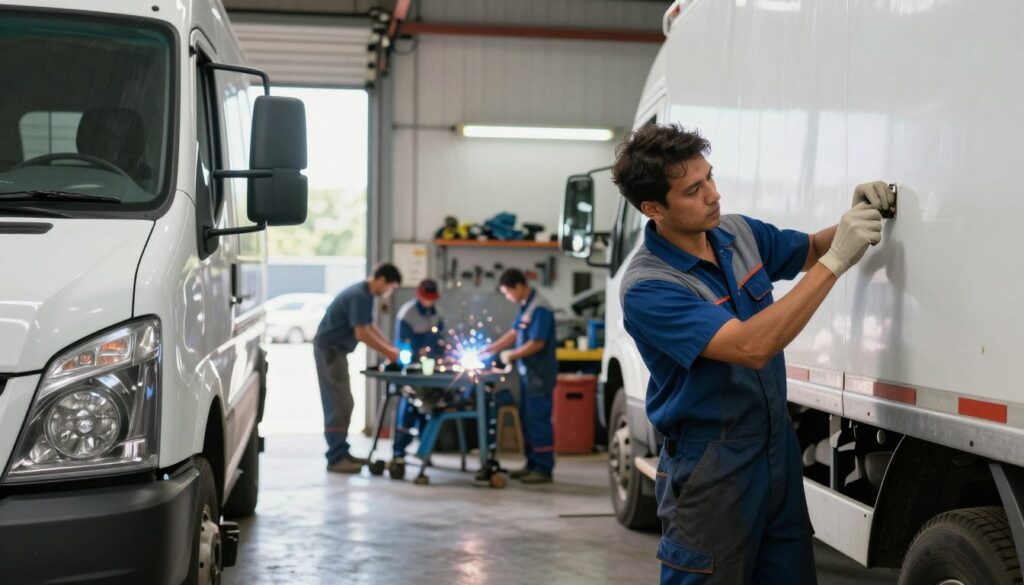
Miracle Body and Paint Collision Center is a top choice for businesses. We mix years of experience with the latest tech for top safety standards. We know your fleet is vital and treat each unit with urgency.
We’re known for clear communication and fast service. By choosing us, you get a partner focused on quick repairs. Ready for top commercial vehicle repair? Contact Miracle Body and Paint Collision Center today to talk about your fleet needs.
Conclusion
Managing a commercial fleet needs constant focus and a drive for efficiency. When accidents happen, your main aim is to get your assets back in use safely and quickly. Adding collision repair to your fleet maintenance plan keeps your vehicles reliable and productive for a long time.
You need a partner who gets the challenges of commercial logistics. Professional repairs protect your brand and keep drivers safe. Choosing experts who work fast and accurately helps reduce the cost of unexpected downtime.
Miracle Body and Paint Collision Center is here to help with your repair needs. Our team excels in restoring commercial vehicles to their original state with little disruption. We have two locations in San Antonio to meet your business needs.
Contact Miracle Body and Paint Collision Center today to book your repair. Let our skilled technicians handle your collision damage. This way, you can concentrate on running your business.

