


Effective fleet management is crucial for businesses that rely on vehicles to deliver their services. At Miracle Body and Paint Collision Center, we understand the importance of maintaining your vehicles to maximize efficiency and reduce unwanted repair costs. A well-maintained fleet is key to avoiding unplanned downtime, which can significantly impact your bottom line and customer satisfaction.
We will explore strategies for scheduling maintenance that keep your fleet in optimal condition without compromising your business operations. By balancing the need for regular maintenance with the demands of daily business, you can minimize operational disruptions. Our approach will help you develop systems that prioritize both vehicle health and productivity.
Key Takeaways
- Understand the importance of proactive maintenance in reducing operational disruptions.
- Learn how to balance regular maintenance with daily business demands.
- Discover strategies for creating a maintenance schedule that minimizes downtime.
- Find out how effective scheduling can transform maintenance into a strategic advantage.
- Develop systems that prioritize both vehicle health and business productivity.
The Critical Role of Fleet Maintenance in Business Continuity
Fleet maintenance plays a pivotal role in sustaining business operations without disruptions. A well-planned maintenance schedule is essential to prevent unforeseen breakdowns that can halt business activities.
Understanding the Impact of Vehicle Downtime on Operations
Vehicle downtime can significantly impact business operations, leading to delayed deliveries, lost productivity, and increased costs. When vehicles are not operational, businesses face not only the direct costs of repairs but also indirect costs such as lost revenue and compromised customer satisfaction. Effective maintenance is key to minimizing such downtime.
The Cost of Neglected Fleet Maintenance
Neglecting fleet maintenance can have severe financial implications. Poorly maintained vehicles consume more fuel, are at a higher risk of breakdowns, and pose significant safety risks. The associated costs, including potential liability issues and increased insurance premiums, can be substantial. Regular maintenance helps mitigate these risks and reduce overall operational expenses.
Assessing Your Fleet’s Current Maintenance Needs
Assessing the current state of your fleet’s maintenance is essential for smooth business operations. This process involves understanding the condition of your vehicles and the maintenance required to keep them operational.
Creating a Comprehensive Fleet Diagnosis
A thorough diagnosis of your fleet’s condition is the first step. This involves evaluating the maintenance history of each vehicle, identifying any existing issues, and determining the necessary repairs or maintenance tasks.
Identifying Priority Repairs vs. Routine Maintenance
Distinguishing between critical repairs and routine maintenance is crucial. Some tasks can be deferred, while others require immediate attention to prevent further problems. By categorizing tasks based on urgency and impact, you can create an effective schedule that balances immediate needs with long-term vehicle health.
Developing an Effective Fleet Repair Scheduling System
To minimize downtime and maximize productivity, developing a robust fleet repair scheduling system is essential. This involves striking a balance between preventative maintenance and emergency repairs, as well as creating customized maintenance plans for different vehicle types.
Balancing Preventative and Emergency Maintenance
A key aspect of an effective fleet repair scheduling system is balancing preventative maintenance with emergency repairs. Preventative maintenance helps in reducing the likelihood of unexpected breakdowns, while being prepared for emergency repairs ensures that business operations are not severely impacted when they do occur. By analyzing historical data and vehicle usage patterns, we can schedule maintenance during less critical periods, thus minimizing disruptions.
Creating Vehicle-Specific Maintenance Plans
Each vehicle in our fleet has unique maintenance requirements based on factors such as age, usage patterns, and operational demands. To address this, we create vehicle-specific maintenance plans that take into account the original equipment manufacturer’s suggested service intervals, as well as our specific operational conditions. For instance, vehicles operating in harsh environments or carrying heavy loads may require more frequent maintenance. By tailoring our maintenance plans to the needs of each vehicle, we can optimize our fleet’s performance and extend its lifespan.
Essential Fleet Repair Scheduling Tips for Minimal Disruption

Miracle Body and Paint Collision Center understands the importance of scheduling fleet repairs without disrupting business operations. Effective fleet maintenance scheduling is crucial to maintaining operational efficiency and reducing downtime.
Staggering Repairs to Maintain Operational Capacity
To maintain operational capacity, it’s essential to stagger repairs across your fleet. This involves assessing your fleet’s maintenance needs and creating a schedule that ensures vehicles are available when needed. By doing so, you can minimize the impact of repairs on your daily operations.
Utilizing Off-Hours and Downtime for Maintenance
Utilizing off-hours and downtime for maintenance is another effective strategy for minimizing disruptions. This can include scheduling maintenance during periods of low usage, such as weekends or seasonal slowdowns. By doing so, you can maximize vehicle availability during peak periods and reduce the likelihood of downtime.
Implementing a daily fleet maintenance checklist, as recommended by Miracle Body and Paint Collision Center, can help identify potential issues before they become major problems. Basic fleet maintenance consists of activities like walking around the vehicle, checking for body damage, and examining tires for uneven wear.
Implementing a Driver-Involved Maintenance Program
Engaging drivers in daily vehicle inspections and issue reporting can significantly enhance fleet reliability. By involving drivers in the maintenance process, we can identify potential issues before they become major problems, thus reducing downtime and improving overall maintenance efficiency.
Training Drivers for Daily Vehicle Inspections
Training drivers to conduct daily vehicle inspections is a critical step in maintaining a healthy fleet. Drivers should be trained to identify and report issues promptly, ensuring that problems are addressed before they escalate. This proactive approach not only enhances vehicle reliability but also contributes to a safer driving environment.
Creating an Efficient Issue Reporting Process
An efficient issue reporting process is vital for effective maintenance management. By establishing clear protocols for reporting issues, we can ensure that problems are identified and addressed promptly. This involves leveraging technology to simplify the reporting process and creating feedback loops to inform drivers about the outcomes of their reports, thus fostering a culture of transparency and continuous improvement.
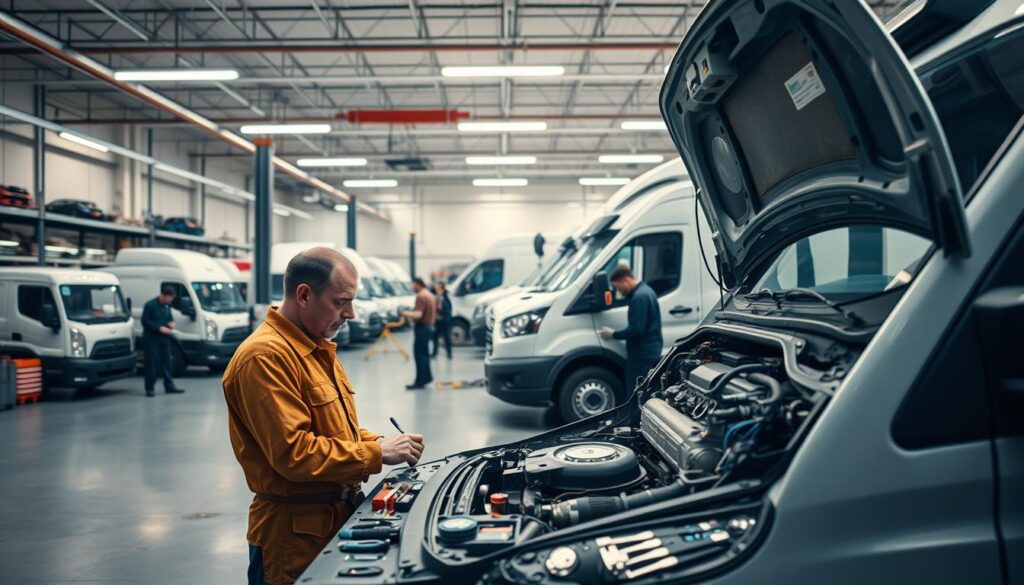
- Develop streamlined reporting systems that facilitate quick maintenance responses.
- Leverage technology to simplify and standardize the reporting process.
- Establish clear escalation protocols to ensure critical issues receive appropriate priority and attention.
By doing so, we can improvefleetreliability, reduceproblems, and enhance driver satisfaction through effectivemanagementofmaintenancedata.
Leveraging Technology for Smarter Fleet Maintenance
In today’s fast-paced logistics environment, leveraging technology is crucial for efficient fleet maintenance. By adopting advanced technologies, fleet managers can significantly reduce downtime and improve overall vehicle performance.
Fleet Management Software for Maintenance Tracking
Fleet management software is a powerful tool that helps track maintenance activities, schedule repairs, and monitor vehicle health. This software enables fleet managers to maintain detailed records of maintenance history, making it easier to identify patterns and predict future maintenance needs.
Using Telematics to Predict and Prevent Breakdowns
Telematics systems provide real-time data on vehicle activity, location, and condition, including metrics such as engine temperature, fuel consumption, and driver behavior. By analyzing this data, fleet managers can identify potential issues before they lead to breakdowns, allowing for proactive maintenance scheduling.
By integrating these technologies, fleets can move towards a more proactive maintenance strategy, reducing the likelihood of unexpected breakdowns and improving overall operational efficiency.
Building Strategic Relationships with Repair Providers
Establishing strong relationships with repair providers is crucial for maintaining an operational fleet. To achieve this, we must carefully select and negotiate with our maintenance partners.
Selecting the Right Maintenance Partner for Your Fleet
Before choosing a maintenance company, we should evaluate their expertise with our vehicles and their ability to meet our required turnaround times. This ensures we receive the necessary service to maintain an effective fleet maintenance plan. By doing so, we can minimize downtime and reduce costs associated with emergency repairs.
When selecting a partner, we consider their capacity to handle our fleet size and the complexity of our vehicles. A reliable partner like Miracle Body and Paint Collision Center can significantly enhance our operational efficiency.
Negotiating Priority Service Agreements
To ensure our fleet receives priority attention, we need to negotiate service agreements that meet our operational needs. This involves discussing key terms in the contract that protect our requirements, such as repair turnaround times and communication protocols.
By leveraging our fleet size and service volume, we can secure preferential treatment and minimize downtime. Miracle Body and Paint Collision Center offers priority service agreements for fleet customers, which can be tailored to our specific needs.

Conclusion: Keeping Your Fleet on the Road and Your Business Moving Forward
By prioritizing fleet maintenance, businesses can ensure continuity and minimize operational disruptions. Effective maintenance scheduling is crucial for keeping your fleet on the road and your business operations running smoothly.
Implementing best practices in fleet repair scheduling, such as staggering repairs and utilizing off-hours for maintenance, can significantly reduce downtime. By leveraging technology, like fleet management software, and building strategic relationships with repair providers, you can optimize your maintenance strategy.
When collision repairs are needed, Miracle Body and Paint Collision Center offers expert service at two convenient San Antonio locations. Contact them today to discuss your fleet’s collision repair needs and discover how they can minimize downtime while delivering exceptional results.

