


Getting your car back to showroom shine takes care and patience. Whether it’s small scratches or big damage, knowing the car paint repair process is key for a perfect finish.
This guide simplifies the automotive refinishing process into easy steps. You’ll learn about surface prep, applying body filler, primer, and buffing. These steps will make your car look new again.
At Miracle Body and Paint Collision Center in San Antonio, we’re experts in car restoration. Our team handles every detail of your car’s exterior. For top-notch results without DIY stress, contact us to book your service.
Key Takeaways
- Proper surface preparation is the foundation of a durable finish.
- Body filler application requires careful sanding to ensure smooth contours.
- Primer acts as a vital bonding agent between the metal and topcoat.
- The cut and buff stage removes imperfections for a mirror-like shine.
- Miracle Body and Paint Collision Center offers expert solutions for all your needs.
Understanding the Modern Car Paint Repair Process
When you bring your vehicle in for service, a detailed process starts to fix its look. The modern car paint repair process is more than just adding color. It uses advanced tech and skilled hands to make your car look new again.
The first step is a thorough check-up. Experts look closely at scratches, dents, and wear. They make a plan to fix your car, choosing the right tools and materials for it.
A key part of this process is the controlled environment of a pro facility. High-quality paint booth repair setups control air and temperature. This keeps dust away from the new paint, making the job top-notch.
To see how modern methods differ from old ones, look at this comparison:
| Repair Stage | Traditional Method | Modern Professional Method |
|---|---|---|
| Assessment | Visual inspection only | Digital scanning and mapping |
| Environment | Open-air garage | Filtered paint booth repair |
| Color Matching | Manual mixing | Computerized color formulas |
| Curing | Air drying | Infrared heat technology |
Got questions about your car’s needs? Our team is here to help. Call our service department at 555-0199 or visit our main office to book your professional check-up today.
Assessing Damage and Preparing the Vehicle Surface
Checking the damage is the first and most important step in the automotive refinishing process. Before you start, you need to know how much work is needed to fix your car’s look. A detailed check helps you figure out if you can do it yourself or if you need a pro like Maaco.
Identifying Paint Defects and Scratches
Maaco says it’s very important to know how deep a scratch is. If it’s just on the clear coat, it’s usually easy to fix without repainting.
But, if the scratch goes deeper, you’ll need more serious repairs. Ignoring these can lead to rust and damage. Knowing the depth of the scratch is key in the car paint repair process.
Common types of paint defects
Knowing what kind of damage you have helps you pick the right tools and methods. Here’s a table of common problems you might find:
| Defect Type | Description | Repair Difficulty |
|---|---|---|
| Clear Coat Scratch | Light mark on the top layer | Low |
| Deep Base Coat Gouge | Damage reaching the color layer | Medium |
| Oxidation | Faded or chalky appearance | Medium |
| Paint Chipping | Missing flakes of paint | High |
After finding these problems, clean the surface well. Make sure to remove wax, grease, and dirt. This step is essential for new paint to stick right. Doing this early helps avoid future problems and gives your car a professional look.
The Importance of Professional Paint Booth Repair Environments
Your success in the automotive refinishing process depends on where you work. Many try repairs in a garage, but pros use special equipment for perfection. A dedicated paint booth repair setup is key to avoiding common flaws.
Controlling Dust and Contaminants
Dust is the biggest enemy of a smooth paint job. Even tiny particles can cause bumps and texture issues. Professional booths have high-efficiency filters to clean the air constantly.
These booths keep the air pressure high, pushing contaminants away. This controlled environment keeps your paint perfect from start to finish. Following expert advice, like Eastwood.com, can save you from a lot of extra work.
Optimizing Temperature and Humidity for Curing
The automotive refinishing process is very sensitive to the environment. If it’s too cold, paint won’t flow right. Too much humidity can cause cloudiness or poor adhesion.
Professional booths let you control temperature and humidity precisely. By optimizing these factors, you ensure paint dries perfectly. This is key for a durable, shiny finish. Investing in a proper paint booth repair environment is the best way to get top-notch results.
Sanding Techniques for Smooth Surface Preparation
Starting a professional-grade repair means sanding the damaged area first. This step is key to the car paint repair process. It helps your primer and topcoats stick well. Without a smooth surface, even the best paint will peel or flake off.
Selecting the Right Grit for Sanding
Picking the right sandpaper grit is important for a smooth finish. Start with a coarse grit, like 80 or 180, to remove rust or old paint. Always move to finer grits, such as 320 or 400, to fix deep scratches.
In a paint booth repair setting, using the same grits helps avoid sand marks. A good sanding block keeps the surface flat, which is key for a pro look. Skipping a grit level can lead to uneven textures that show under the clear coat.
Feather-edging to Blend Old and New Paint
Feather-edging makes the edges of old paint blend with the new. You want a smooth transition to the metal or primer. This makes the car paint repair process look seamless, like the factory finish.
To do this, use fine-grit sandpaper and move in circles around the repair area. Carefully check your work by feeling it with your hand. It should be smooth. Good feather-edging is what makes paint booth repair look professional and avoids the “halo” effect.
Applying Primer and Sealer Layers
The secret to a top-notch paint job starts with the layers you apply before the base coat. These steps are key to the automotive refinishing process. They make sure your new paint sticks well to the car body.
Choosing the Correct Primer for Metal or Plastic
Choosing the right primer is critical. Different materials need special primers to bond well. For metal, use an etching or epoxy primer to stop rust and protect for a long time. Plastic parts need a special adhesion promoter to keep the paint from peeling.
Maaco’s guidelines say primer is a protective layer for exposed surfaces. The right primer keeps the surface safe from moisture and damage. This careful choice is what makes a car paint repair process top-notch.
| Primer Type | Best Use Case | Key Benefit |
|---|---|---|
| Epoxy Primer | Bare Metal | Superior Corrosion Resistance |
| Etching Primer | Aluminum/Steel | Strong Chemical Bond |
| Plastic Adhesion Promoter | Polyurethane/PP | Prevents Paint Flaking |
Ensuring Proper Adhesion with Sealer
After the primer dries and gets sanded, apply a sealer. A sealer connects the primer to the base coat, making sure the paint sticks well. It also stops old paint or primer from showing through.
Experts use a sealer for a uniform color base. This helps the topcoat cover better. Getting professional help ensures the layers work well together. This is what makes a DIY job look like a factory finish.
Spending time on these early layers makes your paint job smooth and strong. Applying primer and sealer right is essential for a lasting, beautiful finish. It’s a key part of the automotive refinishing process that keeps your car looking great for years.
Mastering the Automotive Refinishing Process
Getting a finish that looks like it came from the factory takes skill. At Miracle Body and Paint Collision Center, experts with years of experience work on your car. They know every step, from start to finish, affects the quality of the job.
Mixing Paint to Match Factory Specifications
The key to a great car paint repair process is matching the color perfectly. Technicians use special formulas to make sure the new paint looks just right with the old. Even a tiny mistake in the paint mix can cause color problems under different lights.
Top shops use digital scales and computer databases to get the color just right. This attention to detail helps keep your car looking like new. Using factory specs is the only way to get a perfect match on every part of the car.
Techniques for Even Spray Application
After mixing the paint, applying it evenly is the next step. Getting a smooth coat avoids problems like runs and uneven texture. It’s important to keep the same distance from the surface for even coverage.
Here are some tips for applying paint like a pro:
- Keep 6 to 8 inches between the spray gun and the panel.
- Overlap each stroke by 50% for full coverage.
- Always spray at a 90-degree angle to the surface.
- Adjust air pressure to match the paint’s thickness.
By using these techniques, the automotive refinishing process produces a smooth, lasting finish. Good technique not only makes your car look better but also helps the paint last longer.
Applying Clear Coat for Protection and Shine
Getting the clear coat right is key to a durable and shiny car finish. This final layer protects your car from damage caused by the environment. Doing this in a paint booth repair area keeps dust and debris away from the wet coat.
The Role of Clear Coat in UV Protection
The clear coat’s main job is to shield your car from UV rays. Without it, the sun’s rays can quickly fade, chalk, or oxidize your paint. A good clear coat helps your paint last longer.
This layer absorbs UV rays, protecting the paint underneath. It’s a vital part of the automotive refinishing process that keeps your car looking new. Regular upkeep of this layer prevents your car’s exterior from getting dull with age.
Achieving a High-Gloss Finish
To get that showroom shine, focus on even application and flow. A smooth finish comes from overlapping spray passes correctly. Professional results are marked by the depth and clarity of this final layer.
Using the right tools in your paint booth repair helps achieve a glass-like finish. Mastering the automotive refinishing process brings out the color and shine of your car. Proper technique ensures the light reflects evenly, giving you that mirror-like glow.
Curing and Drying Procedures
After applying the clear coat, how you dry it affects your car paint repair process. It’s not just waiting for it to feel dry. It’s a chemical change where solvents disappear and resins harden, creating a protective layer.
Knowing the details of the automotive refinishing process is key. It ensures your paint doesn’t become soft or peel off too soon. Whether you’re in a garage at home or a professional shop, controlling the environment is essential.

Infrared Curing vs Air Drying
Air drying is the old way, relying on room temperature and air to dry the paint. It’s cheap but needs a clean space and takes hours or days to fully harden.
Infrared (IR) curing uses special lamps to warm the paint from the inside. It makes the car paint repair process much faster. Many experts choose IR because it makes the paint harder and more durable in less time than air drying.
Avoiding Common Curing Mistakes
One big mistake is using too much heat too fast. This can cause “solvent pop,” where bubbles form in the paint, leaving small craters.
Always follow the paint manufacturer’s instructions for drying times and temperatures. Keeping the environment steady is critical for a successful automotive refinishing process. Don’t let the car get wet or expose it to extreme temperatures until the paint is fully dry.
| Feature | Air Drying | Infrared Curing |
|---|---|---|
| Curing Speed | Slow | Fast |
| Equipment Cost | Low | High |
| Finish Hardness | Moderate | Excellent |
| Risk of Solvent Pop | Low | High (if misused) |
Buffing and Polishing for a Showroom Finish
When your paint is fully dry, the magic happens. This is the most exciting part of the automotive refinishing process. It shows off the hard work and effort you put in.
Removing Orange Peel and Imperfections
Even with great care, orange peel might appear on the paint. To fix this, you need to do careful wet sanding with fine-grit sandpaper. This smooths out the clear coat.
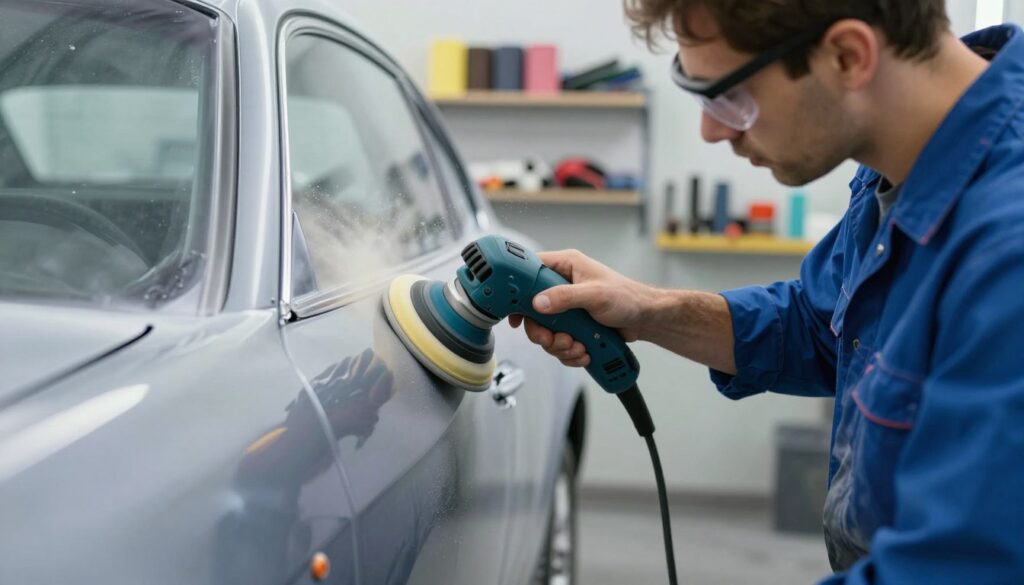
Next, use a top-notch buffing compound with a wool or foam pad to bring back the shine. Work in small areas, moving the buffer constantly. This prevents damage to the clear coat. It’s key to getting a smooth, glass-like finish.
Final Detailing and Inspection
After the main buffing, switch to a finer polish to get rid of swirl marks. This step brings out the deep, mirror-like gloss of a professional finish.
After polishing, clean the car well to get rid of any leftover dust. Apply a quality wax or sealant to protect your work and make it look even better. A final check in bright light will show if your automotive refinishing process reached the showroom quality you aimed for.
Common Mistakes to Avoid During DIY Paint Repair
Many car owners think fixing body damage at home is easy. But, it’s not as simple as it seems. Without a professional setup, you might face problems that are hard to fix.
Inadequate Surface Preparation
One big mistake is not cleaning the surface well enough. If you don’t remove wax, grease, or rust, the paint won’t stick. Proper cleaning and sanding are key for a good finish.
Ignoring these steps can cause peeling, bubbling, or an uneven look. Make sure the metal is smooth and clean before applying primer. Even a small speck of dust can ruin the paint job.
Using Low-Quality Paint Products
Choosing cheap paint is another mistake. Pros use high-quality paint for better UV protection and color. Cheap paint may not last long or look good.
It can fade fast or not handle the weather well. Plus, it might not be stable enough for a smooth paint booth repair. Spending more on paint means your work will last longer.
| Feature | DIY Approach | Professional Repair |
|---|---|---|
| Surface Prep | Manual/Limited | Deep Cleaning/Sanding |
| Paint Quality | Budget/Consumer Grade | Industrial/OEM Grade |
| Environment | Open Garage | Controlled Paint Booth |
| Longevity | Short-term | Long-term/Warranty |
The car paint repair process needs patience and the right tools. If you can’t use a paint booth repair setup, hiring pros might be better. Avoiding these mistakes can save you time and money.
The Benefits of Choosing Professional Collision Centers
While DIY repairs might seem tempting, professional collision centers offer unmatched precision for your vehicle. Facilities like Miracle Body and Paint Collision Center use specialized equipment. This ensures your car paint repair process is handled with expert care. By choosing a professional shop, you avoid the common pitfalls associated with home-based attempts.
Access to Advanced Color Matching Technology
One of the primary advantages of professional service is the use of sophisticated digital color matching systems. These tools analyze your vehicle’s existing paint to create a perfect blend. This blend is invisible to the naked eye. This technology eliminates the guesswork often found in manual mixing, ensuring a seamless transition between new and old paint.
Warranty and Quality Assurance
Professional centers provide comprehensive warranties that offer you long-term peace of mind. When you invest in a professional automotive refinishing process, you are paying for the assurance that the work meets strict industry standards. If any issues arise after the repair, these centers stand behind their craftsmanship. They protect your investment and maintain your vehicle’s resale value.
| Feature | Professional Center | DIY Approach |
|---|---|---|
| Color Accuracy | High (Digital Matching) | Low (Manual Guesswork) |
| Warranty | Included | None |
| Equipment | Industrial Grade | Basic Tools |
Safety Protocols in Automotive Paint Shops
Working in an automotive paint shop is more than just technical skills. It’s about strict safety rules. Whether you’re doing simple maintenance or paint booth repair, safety comes first. This keeps your work area safe and efficient.
Respiratory Protection and Ventilation
The automotive refinishing process uses harmful chemicals. Always wear top-notch respirators to filter out harmful particles and vapors. Good ventilation systems are also key, as they bring in fresh air to keep toxins away.
Good airflow stops flammable fumes from building up. This is key for a safe shop. For tips on keeping your car clean after repairs, check out this guide. Keeping your tools clean and air filters changed is part of the safety routine.
Handling Hazardous Chemicals Safely
Chemical safety is essential in any shop. Keep solvents, thinners, and paints in fire-safe cabinets. Always wear protective gloves and eye gear when working with chemicals to avoid irritation or accidents.
Properly disposing of chemical waste is just as important as storing it safely. Follow local rules to prevent pollution. By following these rules, you keep yourself safe and ensure top-quality work for every paint booth repair job.
Technological Advancements in Auto Paint Repair
Technology has greatly improved the car paint repair process in recent years. Modern body shops now use advanced tools for precision and efficiency. These tools help technicians achieve factory-quality results, making the automotive refinishing process smoother.
Digital Color Matching Systems
Manual color chips and paint codes are no longer the only options. Today, professionals use spectrophotometers to scan your vehicle’s paint. This device captures the exact pigment data, including changes from weather and sun.
The data is then analyzed by software to find the perfect paint formula for your vehicle. This digital accuracy means the new paint matches the original perfectly. Shops can now get it right on the first try, saving you time and money.
Eco-Friendly Waterborne Paint Systems
The industry has moved towards more eco-friendly practices. Waterborne paint systems are now the norm, replacing old solvent-based paints. These new paints are better for the environment and last longer.
Choosing a shop that uses these systems helps protect the planet. These paints dry fast and give a smooth, glossy finish. They resist chipping and fading, ensuring your vehicle looks great for years.
Conclusion
Getting a perfect finish needs careful work, patience, and the right tools. It’s not just about painting. You must also know how to prepare the surface, cure chemicals, and control the environment.
The car paint repair process is complex. It needs skilled professionals to do it right. They make sure each layer of paint is perfect. This keeps your car looking great and its value high.
You want your car to look new again. Miracle Body and Paint Collision Center can help. They use the latest technology to ensure top-notch results for everyone.
Check out Miracle Body and Paint Collision Center on Bandera Road or Huebner Road in San Antonio. Call their team to set up a time for your car’s makeover. Let them restore your vehicle to its former glory.

