

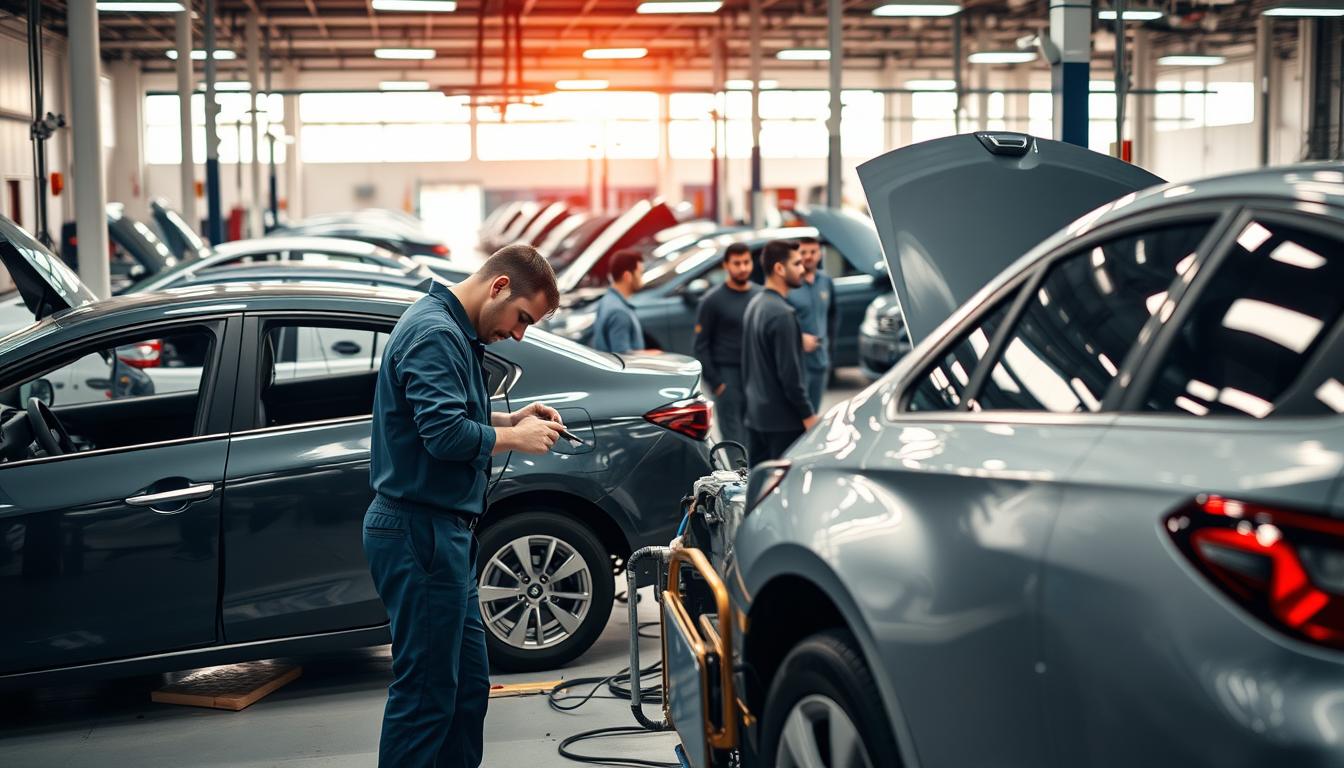
You need a practical roadmap to cut downtime and lower repair-related costs now. A strategic repair and coverage plan keeps your vehicles earning instead of sitting idle. This approach pairs targeted maintenance, telematics data, and streamlined approvals to speed returns to service.
Insurance consolidation for multiple units simplifies administration and can reduce premiums through economies of scale. Insurers also reward training and telematics that lower risk. TCO and cost‑per‑mile analysis reveal how collisions, downtime, and repeat repairs raise your variable costs.
Telematics alone can yield immediate reductions—often in the 15–20% range—by cutting idling, improving routes, and recording safer driving patterns. When you link that data to a fast repair workflow, approvals and parts sourcing move quicker and quality issues fall.
Apply simple policies—driver coaching, preventive maintenance, and aligned service partners—to drive measurable savings and protect your balance sheet while keeping operations on schedule.
Key Takeaways
- Combine telematics and training to lower incidents and reduce costs quickly.
- Use TCO and cost‑per‑mile models to measure repair and downtime impact.
- Consolidated coverage simplifies management and can cut premiums.
- Streamline approvals and parts sourcing to shorten time out of service.
- Adopt policies and partner workflows that prioritize uptime and quality.
The business case today: why fleet collisions drain time, money, and momentum
When a vehicle is damaged, your whole operation feels the drag of repairs, rentals, and paperwork. Small crashes turn into big interruptions that hit schedules and the bottom line.
Fixed and variable costs combine to make incidents expensive. Licenses and leases keep running while collisions add repair bills, rental needs, and overtime. Payroll inefficiencies and missed deliveries ripple through your teams.
Managers and administrators often lose hours coordinating tow trucks, adjusters, estimates, and approvals. That paperwork sprawl pulls focus away from core business tasks and strains drivers and supervisors.
- Lost time for tow, estimates, and approvals
- Direct repair bills plus indirect revenue loss
- Higher claims frequency that raises insurance exposure
- Scheduling strain as vehicles sit out of service
- Parts delays and inconsistent repair quality
Miracle Body and Paint Collision Center helps cut cycle time and administrative burden so you can re-focus on core operations. Consolidated coverage, tighter claims processes, and telematics-driven coaching reduce risk and keep your vehicles earning.
Know your numbers: fleet cost structure, TCO, and the collision impact
To manage costs well, you must first break down every line item that feeds into total cost of ownership. TCO combines acquisition, financing, licensing, maintenance, operations, and disposal. Use clear categories so you can spot what changes after an incident.
Fixed versus variable costs: licenses, leases, fuel, repairs, and collisions
Classify fixed items—licenses, leases, and allocated labor—separately from variable costs like fuel, tolls, unplanned repairs, and crash-related expenses. A single crash adds towing, storage, admin labor, rentals, and repair overruns that inflate cost‑per‑mile fast.
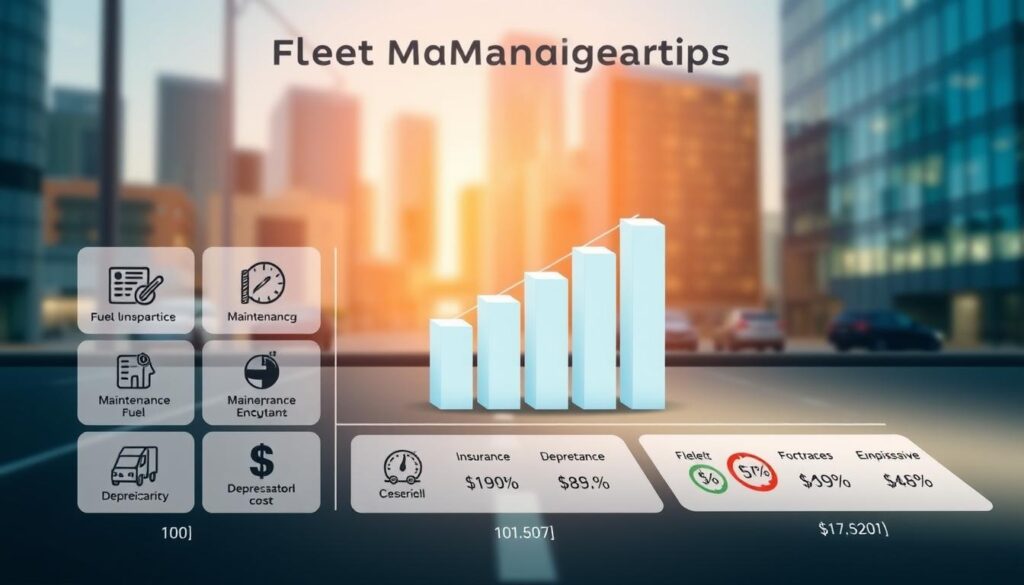
From TCO to Cost‑per‑Mile: how crashes and downtime spike CpM
Use timely data to track incident frequency, repair severity, and downtime. Compare leasing versus owning in your TCO model by accounting for depreciation, maintenance obligations, and utilization. Integrate claims and repair records into your fleet management dashboards so managers forecast budgets and set risk thresholds.
- Align SLAs with operations to protect asset value and reduce rework.
- Track parts prices and lead times to forecast cycle time.
- Plan PM to avoid unplanned maintenance that distorts CpM.
Miracle Body and Paint Collision Center supports your TCO goals by shortening repair cycles and protecting asset value through quality standards.
Fleet insurance as a savings engine, not just a safety net
Your insurance program can be a strategic lever to lower per-vehicle expenses and administrative drag. Consolidating multiple units under one plan creates real economies of scale and simplifies renewals, endorsements, and claims handling.
Economies and streamlined administration
When you insure many vehicles together, your per-unit rates typically fall and your management workload shrinks. One set of policies covers renewals, audits, and driver lists so you spend less time on paperwork.
Tailored coverage and smart deductibles
You can match coverage to operations with options like liability, comprehensive, roadside, and goods-in-transit. Align deductibles to your cash reserves and loss history to lower premiums without risky overexposure.
Shop, bundle, and review
Compare companies and request multi-policy discounts. Periodic policy audits remove outdated drivers or misclassified vehicles and keep rates honest.
- Define high-value equipment in policies to avoid gaps at claim time.
- Connect training and safety data to underwriting to improve terms.
- Standardize claims documentation so approvals and rentals shrink.
Miracle Body and Paint Collision Center coordinates with your insurer and adjusters to streamline estimates, documentation, and approvals to keep vehicles moving.
Telematics and technology that cut premiums, fuel, and repair frequency
Connected telematics and smart software turn route, idle, and engine signals into monthly cost reductions you can measure. You get telematics feeds, trip histories, and diagnostics that let you act fast on risk and waste.
Usage‑based insurance ties real driving data to policy terms so safe driving earns lower insurance premiums. Insurers reward verified behavior, and tying trip logs to claims speeds approvals.
Driver behavior insights monitor harsh braking, speeding, and cornering. Use that data to deliver targeted coaching that cuts incidents and lowers repair frequency.
- Connect systems to usage‑based programs so safe driving converts to cost savings.
- Set idling alerts and route optimization rules to cut fuel waste and improve efficiency.
- Trigger predictive maintenance from engine diagnostics and odometer/engine‑hour thresholds to prevent breakdowns.
- Integrate scorecards into management reviews to reinforce better driver behavior and reduce claims.
- Sync telematics trip and repair history with fleet insurance partners and a repair shop that accepts digital documentation for faster approvals.
Miracle Body and Paint Collision Center supports connected‑vehicle estimates and photo documentation to speed approvals for telematics‑enabled fleets. With these systems in place, many operators see 15–20% cost reductions within a month through routing, idle control, and coaching.
Build a safety culture: training, policies, and incentives that pay off
Embed safe driving as a daily habit so small choices protect vehicles and reduce downtime. You gain lower claims, stronger driver morale, and better asset life when training becomes routine.
Driver training should target high‑risk maneuvers and common near misses. Roll out short modules, in‑vehicle coaching, and manager ride‑alongs so lessons stick and behavior improves.
Clear policies that protect vehicle life
Define rules for idling, loading, and equipment use. These policies reduce wear on brakes, tires, and engines and cut maintenance events.
Incentives and performance management
Reward drivers for clean records and measurable improvements on scorecards. Tie safe driving to onboarding, quarterly reviews, and refresher courses.
- Post‑crash steps: photos, statements, and telematics downloads for faster claims.
- Manager ride‑alongs and targeted retraining based on incident data.
- Telematics reminders that drive daily inspections and PM compliance.
Miracle Body and Paint Collision Center reinforces your safety culture with OEM‑grade repairs, ADAS calibration coordination, and documented findings that feed training loops. Insurers often reward these programs with premium discounts, so safer behavior strengthens your business case and lowers downtime.
From crash to keys: a collision repair workflow that minimizes downtime
A clear repair workflow turns a disruptive incident into a predictable, short-term event that gets drivers back on the road. Standard steps reduce back-and-forth with insurers and cut time out of service.

Fast claims coordination and documentation to speed insurer approvals
Standardize first‑notice‑of‑loss with photos, VIN, mileage, and telematics event data so your claims move forward immediately.
Assign a single coordinator to handle adjusters, supplements, and rental days. That reduces admin burden for managers and shortens approval cycles.
Parts sourcing strategy and repair planning to shorten cycle time
Pre‑order parts after insurer authorization and source quality equivalents when OEM backorders threaten timelines. Sequence body, mechanical, paint, and ADAS calibration steps to avoid idle days between phases.
Quality controls that preserve vehicle value and reduce rework
Use QC checklists at tear‑down and reassembly to catch hidden damage and avoid comebacks. Verify structural and safety systems to protect resale value and ensure road‑ready performance.
- Documentation: photos and line items to speed supplements and approvals.
- Communication: proactive ETAs to dispatch and operations for smoother scheduling.
- Closeout: road test and delivery checklist so vehicles return to service immediately.
Miracle Body and Paint Collision Center manages estimates, photo documentation, insurer communication, calibrated timelines, and QC checks designed for fleets to cut cycle time and put keys back in your drivers’ hands faster.
Fleet Collision Savings: practical ways your company saves time and money
A clear, repeatable post-incident workflow turns disruptions into routine tasks you finish faster.
Time wins: simplified policies, smoother claims, faster repairs, and fewer breakdowns
Standardize one policy and FNOL systems so managers spend less time on paperwork and approvals.
Consolidated fleet insurance reduces admin hours and shortens claim cycles. Telematics and photo documentation speed approvals and help your repair partner move parts and labor faster.
Predictive maintenance from engine diagnostics and odometer triggers lowers breakdown risk and keeps vehicles on the road.
Money wins: lower insurance premiums, fuel and maintenance savings, higher resale value
You’ll save money by cutting idling, tightening routes, and coaching drivers with reliable data. Telematics can reduce fuel spend by roughly 14% and remove idle gallons per hour.
- Faster approvals: standardized estimates and coordinated parts sourcing shorten rental days.
- Lower premiums: fewer claims and better safety metrics improve underwriting outcomes over time.
- Reduced maintenance costs: condition‑based scheduling lowers unplanned work and repair severity.
- Preserved resale value: OEM‑grade repairs and QC reduce rework and protect asset value.
Miracle Body and Paint Collision Center delivers measurable time wins through fast cycle times and precise coordination, and money wins through quality that preserves resale value and reduces rework.
Conclusion
You now have a practical blueprint to align insurance, telematics, training, and repair partners so your vehicles spend more time working and less time in the shop.
Standardize policy, coverage, and claims documentation to speed approvals. Use data from telematics and inspections to target the top drivers of costs and downtime.
Reinforce habits and coaching to reduce accidents and improve driver behavior. Insist on quality repair methods and final QC to protect vehicle maintenance, resale value, and your bottom line.
Ready to get back on the road faster? Hire Miracle Body and Paint Collision Center. Two locations to serve you:
North West San Antonio – Leon Valley
(210) 680-1987
6217 Grissom Rd., San Antonio, TX 78238
North East San Antonio
(210) 858-3630
4650 Walzem Rd, San Antonio, TX 78218

