

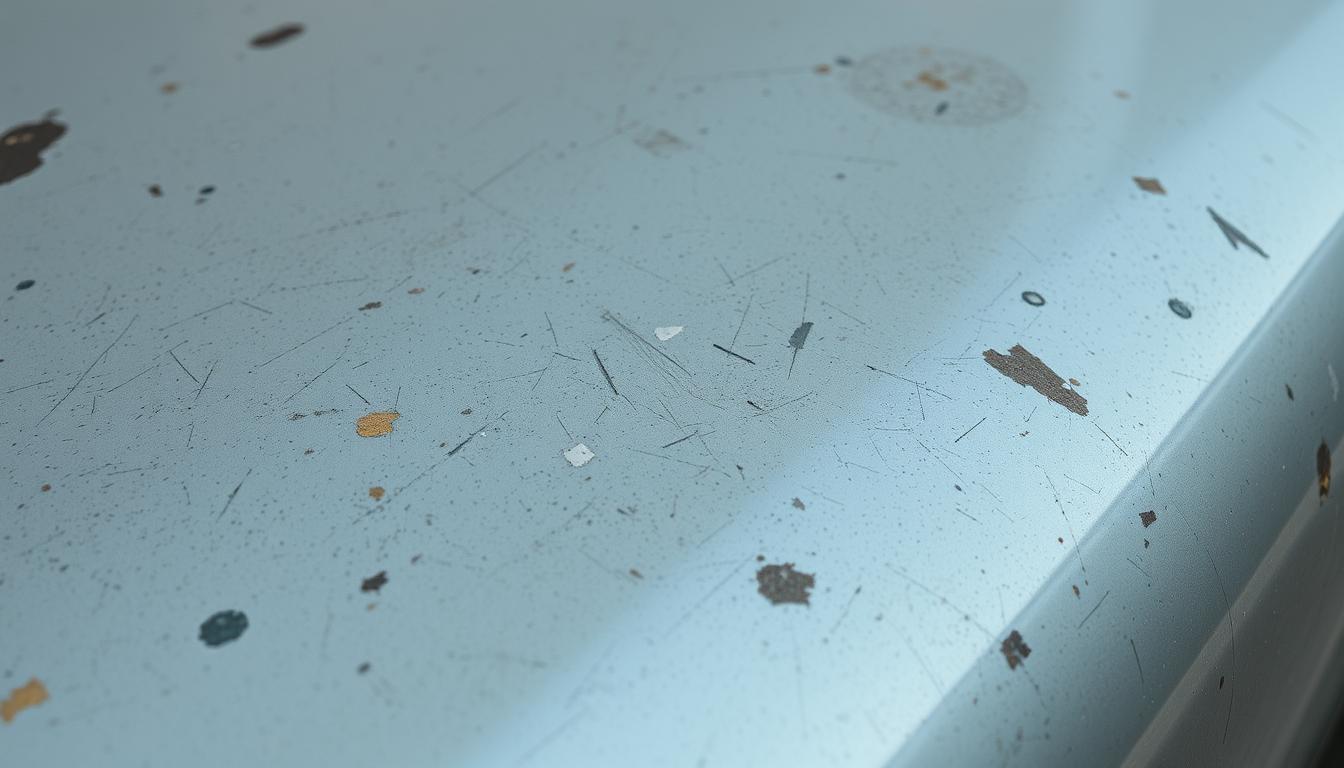
When your vehicle’s paint is damaged, deciding between a touch-up and a full repaint can be challenging. At Miracle Body and Paint Collision Center, we help you make an informed decision based on the extent of the damage.
For minor damage like small chips or scratches, a touch-up might be sufficient. However, widespread damage such as peeling or fading may require a full repaint to restore your vehicle’s appearance and resale value.
We will explore the differences between touch-up paint and a full repaint, and help you determine the best course of action for your vehicle’s paint damage.
Key Takeaways
- Assess the extent of paint damage to decide between touch-up and repaint.
- Consider factors like damage severity and vehicle age.
- Understand the cost implications of touch-up vs full repaint.
- Recognize when a touch-up can effectively address minor damage.
- Know when a comprehensive repaint is the more cost-effective solution.
Understanding Car Paint Damage
The paint on your car is more than just aesthetically pleasing; it’s a protective layer that can be damaged in various ways. Car paint damage can manifest in different forms, each affecting your vehicle’s appearance and value differently.
Common Types of Paint Damage
Surface-level damage includes light scratches and swirl marks that only affect the clear coat, often caused by improper washing techniques. Deep paint damage includes scratches that cut through to the primer or even expose bare metal, requiring immediate attention to prevent rust. Environmental factors like sun exposure, bird droppings, and tree sap can also wreak havoc on your car’s paint.
How Paint Damage Affects Your Vehicle’s Value
Paint damage can significantly impact your vehicle’s resale value. Visible defects can reduce the value by 10-20%, depending on the severity and location of the damage. In fact, 78% of car buyers say the exterior condition is a major factor when considering a used vehicle. Thus, maintaining your car’s paint is crucial for preserving its value.
Advanced paint defects like cracking, crow’s feet, lacquer peeling, orange peel, and pinholing are signs of deeper paint failure. These defects not only hurt your car’s appearance but also indicate potential underlying issues that may require comprehensive solutions beyond simple touch-ups.
What is a Paint Touch-Up?
A paint touch-up is a practical solution for addressing minor damage to your vehicle’s paintwork without the need for a full repaint. It works best for small chips, minor scratches limited to a single panel, and isolated spots of damage. This approach is ideal for maintaining your car’s appearance without incurring the cost and time associated with a full repaint.
When Touch-Ups Are Appropriate
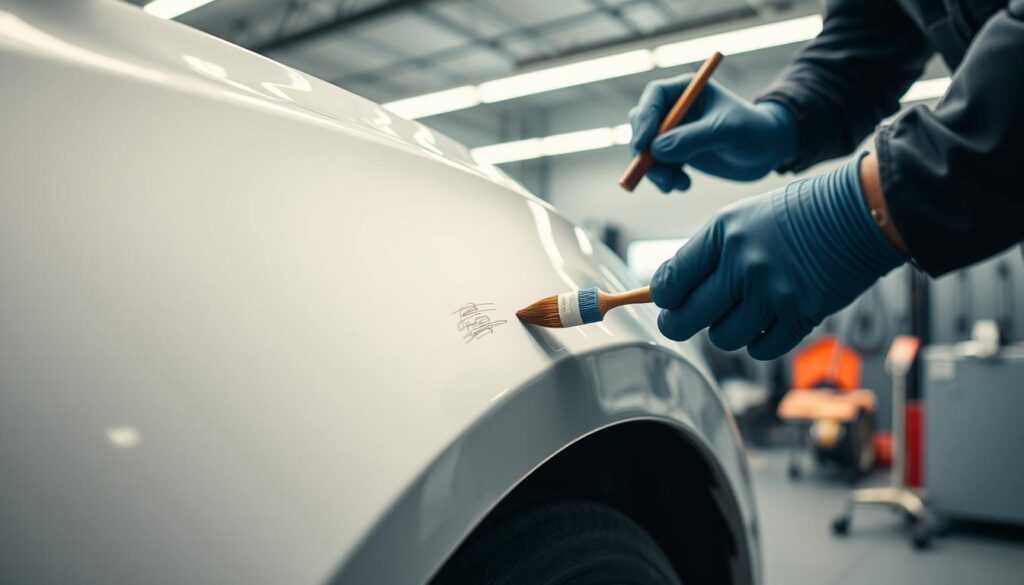
Touch-up paint applications are most suitable for minor damage, such as small chips (smaller than a pencil eraser) and shallow scratches that don’t penetrate beyond the clear coat. If the damage is confined to a specific area and is no larger than a dime, a touch-up is usually sufficient to restore your vehicle’s appearance.
Benefits and Limitations of Touch-Up Paint
The benefits of touch-up paint include its cost-effectiveness, quick completion time, and the ability to prevent further damage like rust formation in exposed metal areas. However, touch-up repairs may have limitations, including potential color matching challenges and visibility of repairs under certain lighting conditions.
The Touch-Up Process Explained
The touch-up process typically involves cleaning the damaged area, applying primer if necessary, carefully applying color-matched paint, and finishing with a clear coat to protect the repair. This process requires skill and technique to achieve a seamless blend with the surrounding paintwork, ensuring a professional-looking result.
When to Choose a Full Car Repainting
Knowing when to opt for a full car repainting can be crucial in maintaining your vehicle’s value and appearance. A full repaint can revitalize your car’s look, but it’s essential to identify when it’s truly needed.
Signs Your Vehicle Needs a Complete Repaint
Several signs indicate that your vehicle requires a complete repaint rather than localized touch-ups. These include:
- Paint Peeling or Flaking: When the paint is peeling, chipping, or flaking across multiple panels, it’s a clear sign that a full repaint is necessary.
- Widespread Fading or Oxidation: Large areas showing noticeable fading or oxidation are not just cosmetic issues; they can also indicate deeper problems.
- Visible Color Inconsistencies: Past touch-ups or repairs that have left visible color inconsistencies can detract from your vehicle’s appearance.
- Deep Scratches on Multiple Panels: Extensive scratch networks across several panels can compromise the paint’s integrity.
The Professional Repainting Process
A professional repaint typically involves two main phases: Preparation and Paint Application. During the Preparation Phase, the car is thoroughly cleaned, degreased, and stripped of accessories. Any dents, rust spots, and other imperfections are repaired, and the surface is sanded to create a smooth base.
In the Paint Application Phase, a primer is applied first, followed by multiple layers of base coat and a clear coat. The final steps involve buffing and polishing to achieve a flawless finish. This process usually takes 2-3 days and can cost between $2,020 and $5,000, depending on the vehicle size and the quality of materials used.
Car Repainting vs Touch-Up: Cost and Time Comparison
When deciding between a full car repaint and a touch-up, understanding the cost and time implications is crucial. Both options have their advantages and are suited to different scenarios, depending on the extent of the paint damage and the vehicle’s overall condition.
Costs and Timeframe for Touch-Up Paint
Touch-up paint jobs are generally more budget-friendly and quicker to complete. DIY touch-up kits can cost between $15 and $30, making them an attractive option for minor scratches and chips. For more precise or professional results, body shops offer touch-up services ranging from $500 to $800. These professional touch-ups are typically completed within a few hours, minimizing downtime for your vehicle.
Expenses and Duration for Full Repainting
A full car repaint, on the other hand, requires a significantly larger investment of both money and time. The cost can vary widely, from $2,020 for a basic respray to over $5,000 for premium finishes with advanced materials. This process usually takes 2-3 days to complete, depending on the complexity of the job and the shop’s workload. While more expensive and time-consuming, a full repaint can provide a like-new appearance and long-lasting protection for your vehicle’s surface.
In conclusion, when comparing the cost and time required for touch-up paint jobs versus full car repainting, it’s essential to consider the extent of the damage, the desired outcome, and your budget. By weighing these factors, you can make an informed decision that balances immediate needs with long-term value for your vehicle.
DIY vs Professional Paint Repairs
When it comes to car paint repairs, vehicle owners often face a dilemma: whether to attempt a DIY touch-up or seek professional help. The decision largely depends on the extent of the damage and the desired outcome.
Handling Minor Touch-Ups Yourself
For isolated damage like small chips or scratches, a DIY touch-up is a practical solution. To begin, you’ll need a touch-up paint pen, car wash soap, microfiber towels, a claybar, 3,000 grit paper, and clear coat. Start by washing the affected area with quality car wash soap and clean microfiber towels to prevent further damage. Use the abrasive tip of your pen or the grit paper to clean out the chip, ensuring a clean surface area to work with.
Knowing When to Trust Professionals
If the damage is extensive, covers multiple panels, or requires precise color matching, especially for older vehicles, it’s best to trust the professionals. Professional paint repair services can deliver superior results, ensuring a seamless blend with the surrounding paint. They have the expertise and equipment to handle complex repairs, making them the better choice for significant damage.
Essential Tools and Materials for DIY Touch-Ups
To successfully handle DIY touch-ups, you’ll need the right tools and materials. These include a touch-up paint pen that matches your car’s color, car wash soap, microfiber towels, a claybar for smoothing the surface, 3,000 grit paper for feathering the edges, and clear coat to protect the repair. By having these on hand, you can effectively repair minor scratches and chips, maintaining your car’s appearance without incurring significant costs.
Making the Right Decision for Your Vehicle
Deciding whether to touch up or completely repaint your vehicle involves considering several key factors, including the car’s age, the condition of the paint, costs, time, and your future plans for the vehicle.
Considering Your Car’s Age and Value
The age of your car and the state of its paint play a significant role in determining whether you should opt for a touch-up or a full repaint. Older cars, typically over five years old, often have more extensive paint issues that are harder to fix with simple touch-ups. For newer or high-value cars, a full repaint may be more appropriate to maintain their worth and appearance.
Evaluating the Extent of Damage
Evaluating the extent of paint damage on your car is crucial. Minor scratches and chips in localized areas may be suitable for touch-ups, while widespread damage, such as peeling across multiple panels or color mismatching from previous repairs, may require a full repaint. Assessing whether the damage is superficial or penetrating through multiple paint layers is also essential.
Long-Term Goals for Your Vehicle
Your long-term goals for the car should significantly influence your decision. If you’re keeping the vehicle, regular touch-ups can be a budget-friendly way to maintain its appearance, while a full repaint can be a long-term investment to restore its look and protect it from further damage. If you’re selling the vehicle, aesthetic repairs can increase its resale value by 10-20%, and professional paint jobs can help your car sell faster.
Conclusion: Protecting Your Vehicle’s Appearance and Value
Proper paint maintenance is essential to protect your vehicle’s body and overall look. When deciding between a touch-up and a full repaint, several factors come into play, including the extent of the damage, your car’s age, and its overall value.
For minor chips and scratches, a precise touch-up application may be sufficient. However, if your car is experiencing peeling, fading, or extensive damage, a full repaint is likely the better solution. It’s crucial to evaluate the damage carefully and consider your long-term goals for your vehicle.
At Miracle Body and Paint Collision Center, our experienced technicians have the specialized equipment and color-matching expertise to restore your vehicle’s finish to its original condition. We understand that proper preparation is key, whether you’re applying touch-up paint or performing a complete repaint. Our team ensures that the surface is properly cleaned, sanded, and primed for a flawless finish.
Key Considerations:
- Assess the extent of the damage to determine the best repair method.
- Consider your car’s age and value when deciding between touch-up and repaint.
- Proper surface preparation is crucial for a successful paint repair.
- Trust professionals for high-quality results, especially for complex repairs.
If your vehicle needs collision repair or paint restoration, don’t hesitate to contact us at Miracle Body and Paint Collision Center. With two convenient locations in San Antonio, we offer comprehensive services, including free estimates and expert advice on the best approach for your specific vehicle. Visit us at our North West San Antonio – Leon Valley location at 6217 Grissom Rd., San Antonio, TX 78238, or call us at (210) 680-1987 to schedule your appointment today.

