


Determining whether your car is a total loss vehicle can be a complex process, often involving an insurance appraisal. When your vehicle is damaged, the insurance company assesses the damage to decide whether it’s more cost-effective to repair or declare it a total loss.
You might be wondering how this decision is made and what it means for you. Understanding the criteria used by insurance companies is crucial in navigating this process. It’s essential to know your rights and the steps you can take if your car is declared a total loss.
Key Takeaways
- Understanding what constitutes a total loss vehicle can help you navigate insurance claims.
- Insurance appraisal plays a critical role in determining whether your car is a total loss.
- Knowing your rights as a policyholder is essential in dealing with total loss declarations.
- The process involves assessing the cost of repairs versus the vehicle’s value.
- Seeking professional advice can help you make informed decisions.
Understanding Total Loss Vehicle Designation
The term “total loss vehicle” is often used after an accident, but what does it really mean? Understanding this concept is crucial for vehicle owners to navigate the complexities of insurance claims and repairs.
Definition of Total Loss Vehicle
A total loss vehicle is typically defined as a vehicle that has been damaged to the point where the cost of repairs exceeds a certain percentage of the vehicle’s value. This percentage can vary depending on the insurance company and local regulations.
Key factors that determine if a vehicle is a total loss include the extent of the damage, the vehicle’s age, and its pre-accident value.
How Insurance Companies Define Total Loss
Insurance companies usually declare a vehicle a total loss when the repair costs are between 75% to 100% of the vehicle’s actual cash value (ACV). The exact threshold can vary by state and insurer.
- The vehicle’s ACV is assessed based on factors like make, model, year, and condition.
- Repair estimates are obtained from certified repair shops.
- The cost of repairs is compared to the vehicle’s ACV to make a determination.
Common Misconceptions About Total Loss
Many vehicle owners mistakenly believe that a total loss designation means their vehicle is beyond repair. However, it simply means that the cost of repairs is not economically viable.
It’s essential to understand that a total loss designation doesn’t necessarily mean the vehicle is undrivable or that it cannot be repaired.
By understanding what constitutes a total loss vehicle, you can better navigate the process of dealing with insurance claims and make informed decisions about your vehicle’s future.
Signs That Your Vehicle May Be a Total Loss
If your car has been in a collision, understanding the signs that indicate it may be a total loss is crucial. This knowledge can help you make informed decisions about the next steps, whether it’s filing an insurance claim or deciding between repairing or replacing your vehicle.
Significant Damage Indicators
One of the primary indicators that your vehicle may be a total loss is the extent of the damage. If the damage is extensive and affects critical components such as the frame, engine, or transmission, it may be more cost-effective to declare the vehicle a total loss. Significant damage indicators include:
- Collapsed or bent frame
- Extensive rust or corrosion
- Major engine or transmission damage
- Airbag deployment
For a more detailed understanding, you can refer to resources like Miracle Collision Center, which provides insights into determining whether your vehicle is a total loss or worth repairing.
Repair Costs vs. Vehicle Value
Another crucial factor is comparing the repair costs to the vehicle’s value. If the cost of repairs exceeds a certain percentage of the vehicle’s actual cash value (ACV), insurance companies may declare it a total loss. This percentage varies by state and insurance provider but is typically around 75% to 80%.
For instance, if your vehicle’s ACV is $10,000 and the repair costs are $7,500, it may be considered a total loss if the threshold is 75%. Understanding this ratio is essential for navigating the insurance appraisal process.
Severity of Damage Assessment
Assessing the severity of the damage involves evaluating both visible and hidden damages. Even if the visible damage seems minor, there could be underlying issues that are costly to repair. A thorough inspection by a professional mechanic or a collision repair expert is essential to determine the full extent of the damage.
During the assessment, consider factors such as the vehicle’s age, mileage, and overall condition before the accident. This comprehensive evaluation will help you and your insurance provider make an informed decision about whether to repair or total the vehicle.
The Importance of Vehicle Valuation
Accurately assessing your vehicle’s value is essential for a fair insurance settlement. When your car is involved in an accident, understanding its value helps you navigate the insurance claims process more effectively.
Methods Used to Assess Vehicle Value
Insurance companies use various methods to determine the value of your vehicle. These include:
- Assessing the vehicle’s make, model, and year
- Evaluating the vehicle’s condition before the accident
- Reviewing mileage and any pre-existing damage
- Using pricing guides to determine the vehicle’s worth
For a more detailed assessment, insurance adjusters may also consider additional factors such as any customizations or upgrades made to the vehicle.
Role of Kelley Blue Book and NADA Guides
Guides like Kelley Blue Book and NADA are crucial in determining vehicle values. They provide detailed pricing information based on national data, helping insurance companies and vehicle owners understand the market value of a vehicle.
For instance, Kelley Blue Book offers a range of values based on the vehicle’s condition, from excellent to fair. NADA Guides also provide comprehensive pricing information, including trade-in values and retail prices.
| Guide | Pricing Information | Usage |
|---|---|---|
| Kelley Blue Book | Provides values based on vehicle condition | Used by insurance companies and consumers |
| NADA Guides | Offers trade-in and retail prices | Utilized for vehicle valuation in insurance claims |
Importance of Accurate Valuation in Claims
Accurate vehicle valuation is vital for ensuring a fair insurance claim. If your vehicle is undervalued, you may not receive enough compensation to replace it. Conversely, overvaluation can lead to disputes with the insurance company.
To ensure an accurate valuation, it’s essential to provide detailed documentation about your vehicle, including maintenance records and any upgrades. You can also refer to guides like Kelley Blue Book and NADA to support your claim. For more information on what to check after collision repairs, visit Miracle Collision Center.
By understanding the importance of vehicle valuation and using the right resources, you can navigate the total loss claims process more effectively.
Insurance Companies and Total Loss Claims
If your vehicle has been declared a total loss, it’s essential to understand the insurance claims process to ensure you receive fair compensation.
Filing a Total Loss Claim
Filing a total loss claim involves several steps that you must follow carefully to ensure a smooth process. First, you need to notify your insurance company about the damage to your vehicle. This initial notification is crucial as it sets the stage for the entire claims process.
Step-by-Step Guide to Filing a Total Loss Claim:
- Notify your insurance company about the damage.
- Provide detailed information about the incident, including the date, time, and location.
- Submit the necessary documentation, such as the police report and photos of the damage.
- Cooperate with the insurance adjuster during the assessment.
Documentation Needed for Claims
The documentation required for a total loss claim is critical for a successful outcome. You will need to gather various documents, including:
- Police report
- Photos of the vehicle damage
- Proof of ownership and registration
- Any relevant medical reports if there were injuries
It’s crucial to keep these documents organized to facilitate a smooth claims process.
Timeline for Processing a Total Loss Claim
The timeline for processing a total loss claim can vary depending on several factors, including the complexity of the case and the efficiency of the insurance company. Generally, you can expect the process to take anywhere from a few days to several weeks.
| Stage | Typical Duration | Description |
|---|---|---|
| Initial Assessment | 1-3 days | Insurance company assesses the damage. |
| Documentation Review | 3-7 days | Review of submitted documents. |
| Claim Settlement | 7-14 days | Finalizing the claim and providing compensation. |
Understanding the process of handling total loss claims with insurance companies can significantly reduce the stress associated with vehicle damage. By knowing what to expect and how to prepare, you can navigate the claims process more effectively.
What Happens After Your Vehicle Is Declared a Total Loss
Knowing what to expect after your vehicle is declared a total loss can help you navigate the situation more effectively. A total loss declaration is a significant event, but it’s not the end of the process. There are several steps that follow, and being informed can make a big difference.
Next Steps After Total Loss Declaration
After your vehicle is declared a total loss, the insurance company will typically take the lead in handling the next steps. You can expect the following processes to occur:
- The insurance company will assess the vehicle’s value and settle the claim accordingly.
- You will be required to provide certain documentation to facilitate the claims process.
- The vehicle’s title will be handled according to state regulations regarding total loss vehicles.
It’s essential to stay in communication with your insurance provider to ensure a smooth process.
Options Available for Total Loss Vehicles
Once a vehicle is declared a total loss, there are several options available for its disposal or reuse. These include:
- Selling the vehicle to a salvage yard: The insurance company may sell the vehicle to a salvage yard, which can then repair and resell the vehicle or sell its parts.
- Dismantling for parts: The vehicle can be dismantled, and its usable parts can be sold to repair shops or individuals.
- Crushing the vehicle: In cases where the vehicle is beyond repair, it may be crushed and recycled.
The chosen option often depends on the vehicle’s condition and the regulations in your state.
Handling of Vehicle Titles
The handling of a total loss vehicle’s title is governed by state laws, which vary. Generally, the title will be branded as “salvage” or “total loss” to indicate its history. This branding is crucial for transparency and can affect the vehicle’s future resale value or insurability.
Understanding the specific regulations in your state regarding total loss titles is vital for compliance and for making informed decisions about the vehicle’s future.
Legal Rights and Obligations
Total loss vehicle declarations involve complex legal aspects that every vehicle owner should be familiar with. Understanding your legal rights and the obligations of your insurance company can make a significant difference in how you navigate the claims process.
Understanding Your Rights as a Vehicle Owner
As a vehicle owner, you have specific rights when your vehicle is declared a total loss. These rights include the right to a fair assessment of your vehicle’s value, the right to dispute the insurance company’s valuation, and the right to seek legal counsel if necessary.
Key Rights of Vehicle Owners:
- Right to a fair vehicle valuation
- Right to dispute the insurance company’s decision
- Right to seek legal representation
State Laws on Total Loss Vehicles
State laws regarding total loss vehicles vary significantly. Some states have specific thresholds for determining total loss, while others give insurance companies more flexibility. Understanding your state’s laws is crucial for navigating the total loss process.
| State | Total Loss Threshold | Insurance Company Obligations |
|---|---|---|
| California | Vehicle value exceeds repair costs by 75% | Must provide detailed repair estimate |
| Texas | Repair costs exceed 100% of vehicle’s actual cash value | Must offer settlement within 30 days |
| New York | Repair costs exceed 75% of vehicle’s value | Must provide written explanation for total loss declaration |
Obligations of Insurance Companies
Insurance companies have specific obligations when handling total loss claims. These include conducting a thorough investigation, providing a detailed assessment of the vehicle’s value, and offering a fair settlement.
Insurance companies must:
- Conduct a thorough investigation of the claim
- Provide a detailed and transparent assessment of the vehicle’s value
- Offer a fair and reasonable settlement

By understanding your legal rights and the obligations of your insurance company, you can better navigate the total loss process and ensure you receive a fair outcome.
Impact of Total Loss on Future Insurance
The aftermath of a total loss involves not just dealing with the immediate consequences but also understanding how it will affect your insurance going forward. When your vehicle is declared a total loss, several factors come into play that can influence your future insurance premiums and coverage options.
How Total Loss Affects Your Insurance Premium
A total loss can significantly impact your insurance premium. Insurance companies often view drivers who have had a total loss as higher risk, potentially leading to increased premiums. This is because the incident that led to the total loss may indicate a higher likelihood of future claims.
To understand how a total loss affects your premium, consider the following factors:
- The cause of the total loss: Was it an accident, theft, or natural disaster?
- Your driving history: Have you had previous accidents or claims?
- Your insurance history: Have you had continuous coverage, or are there gaps?
| Factor | Impact on Premium |
|---|---|
| Cause of Total Loss | Accidents may increase premiums more than other causes. |
| Driving History | A clean driving record can mitigate premium increases. |
| Insurance History | Continuous coverage can help keep premiums lower. |
Securing Insurance After a Total Loss
Securing insurance after a total loss can be challenging, but it’s not impossible. Insurance companies may offer different terms based on their assessment of risk. Shopping around and comparing quotes from multiple insurers can help you find the best available rates.
Tips for Securing Insurance:
- Compare quotes from multiple insurance providers.
- Consider increasing your deductible to lower premiums.
- Look into insurance companies that specialize in high-risk drivers.
Tips for Choosing Insurance After a Total Loss
When choosing insurance after a total loss, it’s essential to consider not just the premium but also the coverage and service quality. Look for insurers that offer comprehensive coverage and have a good reputation for handling claims.
Key Considerations:
- Coverage limits and deductibles.
- Customer service and claims handling reputation.
- Additional features like roadside assistance.
Determining Whether to Repair or Replace
When your vehicle is deemed a total loss, you face a crucial decision: whether to repair or replace it. This decision can be complex, involving several factors that need careful consideration.
Factors to Consider Before Repairing
Before deciding to repair your total loss vehicle, several factors come into play. You should assess the extent of the damage, the cost of repairs, and the vehicle’s overall condition before the accident. Additionally, consider the vehicle’s age, mileage, and market value to determine if repairs are economically viable.
Key considerations include:
- The severity of the damage and whether it affects the vehicle’s structural integrity.
- The cost of repairs compared to the vehicle’s value before the accident.
- The potential for hidden damages that may not be immediately apparent.
Cost-Benefit Analysis of Repairs vs. Replacement
Conducting a cost-benefit analysis is crucial in deciding whether to repair or replace your vehicle. This involves comparing the cost of repairs with the vehicle’s value and considering the potential benefits of each option. A thorough analysis will help you make an informed decision that suits your financial situation and needs.
| Factor | Repair | Replace |
|---|---|---|
| Cost | Repair costs can be high, potentially approaching the vehicle’s value. | Replacing involves purchasing a new vehicle, which can be costly. |
| Time | Repairs can take several weeks or months. | Replacing can be quicker, depending on the availability of the new vehicle. |
| Value | Repairs can restore the vehicle to its pre-accident condition. | A new vehicle comes with a manufacturer’s warranty and latest safety features. |
How Miracle Body and Paint Collision Center Can Help
Miracle Body and Paint Collision Center specializes in collision repair, offering expert services to restore your vehicle to its pre-accident condition. Their team of professionals can assess the damage, provide a detailed repair plan, and execute the repairs with precision and care, ensuring that your vehicle is safe and reliable.
By choosing Miracle Body and Paint Collision Center, you benefit from:
- Expert technicians with years of experience in collision repair.
- State-of-the-art equipment and techniques to ensure high-quality repairs.
- A commitment to customer satisfaction and transparency throughout the repair process.
Choosing the Right Collision Repair Shop
A reliable collision repair shop is vital for getting your car back on the road after a total loss. When your vehicle is damaged beyond repair or considered a total loss, you need a trustworthy shop to help you navigate the process.
Qualities of a Reliable Collision Repair Shop
A reliable collision repair shop should have several key qualities. Certifications and experience are crucial, as they indicate a shop’s ability to handle complex repairs. Look for shops certified by reputable organizations, such as the Inter-Industry Conference on Auto Collision Repair (I-CAR) or the National Institute for Automotive Service Excellence (ASE).
Good communication is also essential. The shop should be transparent about the repair process, provide clear estimates, and keep you informed throughout the repairs.
Customer Reviews and Testimonials
Customer reviews and testimonials can provide valuable insights into a collision repair shop’s quality of service. Look for reviews on multiple platforms, such as Google, Yelp, or Facebook, to get a well-rounded view of the shop’s reputation.
Pay attention to how the shop responds to both positive and negative reviews. A shop that engages with its customers and addresses concerns demonstrates a commitment to customer satisfaction.
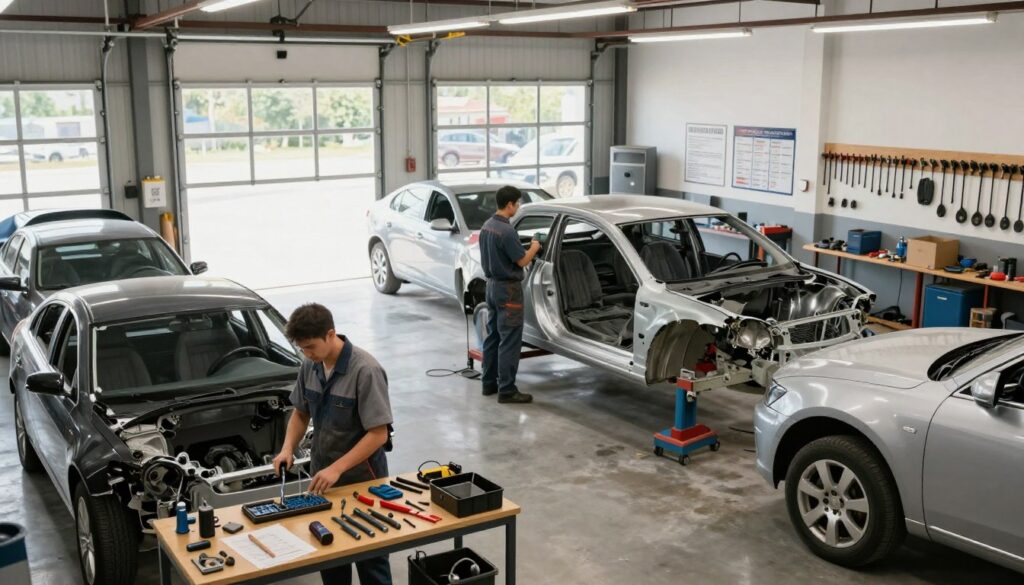
Why Miracle Body and Paint Collision Center Stands Out
Miracle Body and Paint Collision Center is a standout choice for collision repair due to its commitment to quality and customer service. With certifications from leading industry organizations and a team of experienced technicians, they have the expertise to handle even the most complex repairs.
Their transparent communication and detailed estimates ensure that you are always informed and confident in the repair process. Customer testimonials praise their professionalism and attention to detail, making them a trusted choice for totaled car help.
By choosing Miracle Body and Paint Collision Center, you can trust that your vehicle is in good hands, and you’ll be back on the road in no time.
Contact Miracle Body and Paint Collision Center
If your vehicle has been declared a total loss or you’re dealing with the aftermath of a collision, you need a reliable partner for your repair needs. At Miracle Body and Paint Collision Center, we understand the intricacies involved in total loss vehicle claims and collision repair.
Convenient Locations in San Antonio
With two locations in San Antonio, we are well-positioned to serve your needs. You can reach us at our North West San Antonio – Leon Valley location at (210) 680-1987, 6217 Grissom Rd., San Antonio, TX 78238, or visit our North East San Antonio location at (210) 858-3630, 4650 Walzem Rd, San Antonio, TX 78218.
Quality Repairs You Can Trust
Our commitment to quality repairs is unwavering. We use the latest technology and techniques to restore your vehicle to its pre-accident condition. Whether you’re dealing with a total loss vehicle or need collision repair services, we’re here to help you navigate the process and get back on the road.
Don’t let a total loss vehicle or collision repair overwhelm you. Contact Miracle Body and Paint Collision Center today to experience the difference that quality repair and exceptional service can make.

