


Remember when protecting yourself on the road meant just buckling up and checking your mirrors? Automotive technology has come a long way. Today, your car is equipped with intelligent features that actively work to prevent accidents.
These advanced driver assistance tools use sensors and cameras to monitor your surroundings. They provide alerts and can even take corrective action. This represents a fundamental shift in how we think about automotive protection.
Leading models like the 2024 Acura Integra and the 2024 Mazda 3 showcase this progress. Both earned the IIHS Top Safety Pick+ award for their superior performance. This rating proves that robust driver aids are now standard in many modern vehicles.
For you, the driver, this means an extra layer of security during your daily commute. Understanding how these complex features function is the first step. It ensures you and your family get the full benefit of this innovative technology on every trip.
Key Takeaways
- Modern cars use advanced technology to actively help prevent collisions.
- Features like automatic emergency braking and lane-keeping assist are now common.
- Awards like the IIHS Top Safety Pick+ highlight vehicles with top-tier protective systems.
- Understanding your car’s features maximizes your safety on the road.
- Professional maintenance is crucial for these sensitive electronic systems to work correctly.
- These innovations benefit all drivers by creating a safer driving environment for everyone.
Understanding Advanced Driver Assistance Systems (ADAS)
Think of your car as a vigilant co-pilot, constantly scanning the road with a network of electronic eyes and ears. This network forms the backbone of modern advanced driver assistance technology.
Overview of ADAS Technologies and Functions
These features work together as a cohesive suite. Core components include automatic emergency braking and adaptive cruise control.
They rely on precise input from cameras and radar sensors. Here are some primary functions:
- Maintaining a set speed and distance from other vehicles.
- Providing warnings if you drift from your lane.
- Applying the brakes automatically to prevent a collision.
The Role of AI and Sensor Fusion in Enhancing Driving Safety
AI is the brain behind the operation. It processes data from all the sensors in real-time.
This sensor fusion creates a complete picture of your driving environment. The AI can then make split-second decisions.
It adapts to changing road conditions and complex surroundings. This continuous analysis is what makes the technology so effective for every driver.
The Critical Process of ADAS Calibration
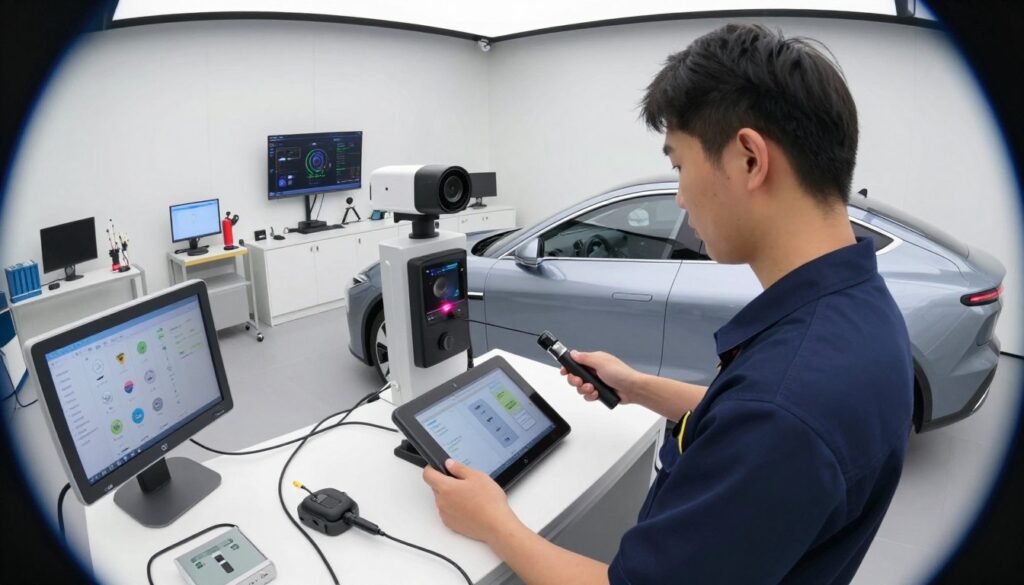
Calibration is the meticulous procedure that ensures your car’s assistance features work as intended. This precise alignment of cameras and radar units is non-negotiable for reliable performance.
Even a minor misalignment can cause these features to misinterpret your road environment. Proper setup maintains the integrity of your vehicle’s advanced driver assistance suite.
Static vs Dynamic Calibration Methods
Technicians use two primary methods. Static calibration happens in a controlled shop.
The vehicle remains stationary. Specialized targets are positioned to align the sensors with laser-like accuracy.
Dynamic calibration requires driving on a clear road. A connected scan tool gathers real-world data to fine-tune the system.
Essential Tools and Optimal Conditions for Accurate Calibration
This work demands specific equipment. Technicians use advanced alignment racks, diagnostic scanners, and manufacturer-approved software.
The environment must be level and well-lit. Any repair to the front end, windshield, or suspension typically triggers this necessary service.
Following these steps guarantees your driver assistance safety systems respond correctly. It restores your car’s protective capabilities fully.
ADAS safety systems Walzem: Enhancing Local Road Safety
The integration of protective automotive technology is transforming daily commutes in our community. Modern vehicles bring award-winning safety systems to your neighborhood streets.
Models like the 2024 Honda Accord, with its Top Safety Pick+ rating, and the 2024 Toyota Camry, a Top Safety Pick, lead this charge. They showcase how robust driver assistance is now accessible.
Benefits for Drivers in the Walzem Area
These intelligent features offer tangible advantages for every driver. They actively work to reduce accidents caused by simple human error.
Your vehicle can now warn you if you unintentionally drift from your lane. It can also maintain a safe distance on the road with adaptive cruise control.
For families, this means a more reliable and secure driving experience. You gain peace of mind knowing your car’s sensors are constantly monitoring your surroundings.
Key community benefits include:
- Reduced accident frequency through proactive collision prevention.
- Enhanced protection for all passengers during daily trips.
- Increased readiness for unexpected traffic situations.
Prioritizing regular checks for your car’s sensors ensures these features function flawlessly. Investing in professional care for this technology is a proactive step.
It helps create a more secure environment for everyone on our local roads.
Common ADAS Sensors and When Calibration is Required
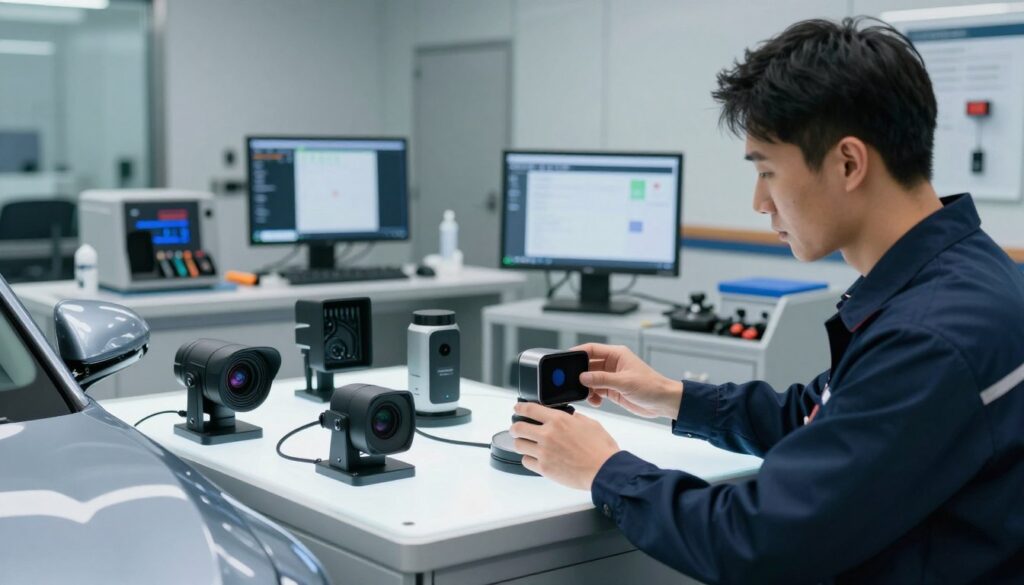
Modern protective features depend on a suite of sensors that must be perfectly aligned. These components are the eyes and ears of your vehicle’s advanced driver assistance technology.
Even a tiny misalignment can cause them to misread the road. This makes precise calibration absolutely essential for reliable performance.
Steering Angle and Front-Facing Camera Sensors
The steering angle sensor monitors your wheel’s position. It tells the computer exactly which way your vehicle is pointing.
The front-facing camera typically sits behind the windshield. It reads lane markings and identifies traffic signs.
Both sensors require exact calibration after any front-end repair or wheel alignment. This ensures your car understands its direction and surroundings.
Forward and Rear Radar Sensors for Collision Avoidance
Forward-facing radar units are often behind the bumper or grille. They measure the distance and speed of vehicles ahead.
This data enables crucial features like adaptive cruise control and automatic emergency braking. Rear radar sensors perform a similar function for blind-spot monitoring.
These units must be aimed with extreme accuracy. Proper setup is what allows them to prevent a potential collision.
Indicators for Post-Repair Recalibration
How do you know your car needs this service? Certain repairs are clear triggers.
Windshield replacement or any suspension work almost always requires recalibration. The vehicle’s sensors are very sensitive to changes in angle and position.
Warning lights on your dashboard or erratic feature behavior are other signs. For a detailed look at this critical process, learn how we recalibrate ADAS after body.
Staying aware of these indicators helps keep your car’s protective suite functioning correctly.
Professional ADAS Calibration Services at Miracle Body and Paint
When your vehicle’s protective technology needs precise alignment, you need a service center with the right tools and training. Our team at Miracle Body and Paint provides this essential service for your modern car.
We are located at 4650 Walzem Rd, San Antonio, TX 78218. Our facility is equipped to handle the complex needs of today’s advanced driver assistance suites.
Certified Technicians and Specialized Equipment
Our technicians hold certifications specific to automotive calibration. They use manufacturer-approved diagnostic tools and alignment targets.
This specialized equipment ensures every sensor is aimed correctly. Whether your car needs static or dynamic calibration, our team follows the exact procedure.
We service all models, including the 2024 Genesis G90 with its forward collision-avoidance assist. Your vehicle’s features will function as designed.
Adhering to Manufacturer Specifications for Safety
Each automaker sets strict guidelines for their advanced driver aids. We follow these specifications without exception.
This commitment guarantees that automatic emergency braking and adaptive cruise control operate reliably. Your driving experience depends on this precision.
The table below outlines our core service standards for calibration work.
| Service Aspect | Our Standard | Benefit to You |
|---|---|---|
| Technician Certification | Factory-trained & certified | Expert knowledge for accurate setup |
| Equipment Used | OEM-approved scanners & targets | Meets exact manufacturer tolerances |
| Calibration Validation | Comprehensive road test & scan | Confirms all features are active and correct |
| Documentation | Detailed service report provided | Complete record for your vehicle history |
Choosing our professional service restores your car’s ability to detect and react to road conditions. We ensure every driver in San Antonio receives the highest level of care.
Conclusion
The true value of your vehicle’s intelligent technology is realized only when every component is perfectly tuned. Proper calibration is not just a recommendation; it’s a critical step for features like automatic emergency braking and adaptive cruise control to perform as designed.
Regular checks ensure these sensitive sensors deliver accurate data. This maintains the integrity of your car’s advanced safety systems and enhances your overall driving experience.
As automotive innovation evolves, prioritizing this maintenance remains essential for every responsible owner. It directly contributes to a more secure environment on our roads.
We encourage you to schedule professional calibration after a collision. This ensures your vehicle operates at its peak, keeping you and your community protected.

