

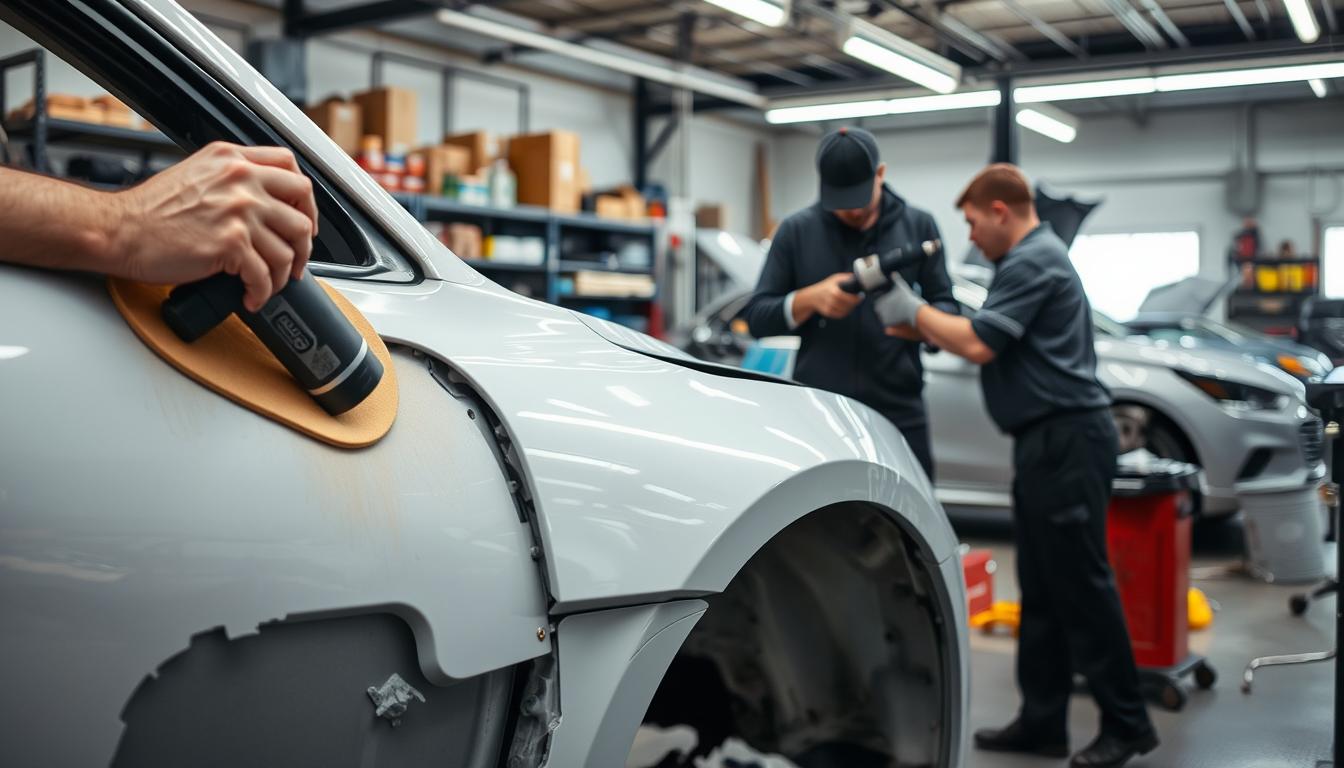
Collision repair is a complex process. It needs a deep understanding of when to use body filler and when to replace panels. I-CAR, a leading authority, says body fillers should be used minimally. Panels should be restored using proper metalworking tools and techniques.
At Miracle Body and Paint Collision Center in North East San Antonio, experts know how important it is to make the right decisions. Whether it’s a small scratch or a big collision, knowing when to use body filler and when to replace panels is key. This ensures a safe and effective repair.
Key Takeaways
- Understand the role of body filler in collision repair
- Learn when to replace panels entirely
- Discover the importance of proper metalworking techniques
- Find out how Miracle Body and Paint Collision Center can help with your vehicle’s repair
- Make informed decisions about your vehicle’s collision repair
Understanding Collision Damage Assessment
Knowing how much damage a car has is key to fixing it right and keeping it safe. We look at both the looks and the structure of the car.
Types of Vehicle Body Damage
Car body damage can be split into levels based on how bad it is and how it affects the car’s structure.
Cosmetic vs. Structural Damage
Cosmetic damage is just surface stuff like scratches and dents. It doesn’t hurt the car’s safety or how it works. But, structural damage is serious. It can make the car unsafe and affect how it runs.
Impact Severity Classification
How bad the impact is helps decide how to fix the car. This helps us choose the best way to repair it.
Professional Evaluation Process
Getting a pro to check the damage is very important. At Miracle Body and Paint, our experts use special ways to look and measure the damage.
Visual Inspection Techniques
Our team looks closely at the car’s body to find any damage. They can spot even the smallest problems.
Measurement and Testing Methods
We use special tools to check if the car’s structure is okay. This makes sure we find and fix all the damage.
For a detailed check of collision damage, call Miracle Body and Paint at (210) 858-3630. Or, visit us at 4650 Walzem Rd, San Antonio, TX 78218.
The Science Behind Body Fillers
Knowing how body fillers work is key in fixing cars. At Miracle Body and Paint, we’re experts in car repair. We share our knowledge on what body fillers are made of, how they work, and how to use them.
Composition and Properties
Body fillers fix dents and scratches on cars. They’ve changed a lot over the years. Now, they’re better at lasting longer and sticking to the car’s surface.
Traditional vs. Modern Formulations
Old body fillers used polyester resins. They worked but didn’t last as long or stick as well. Today’s body fillers use new materials. These improve their longevity and how well they stick.
How body fillers harden is important for their job. Modern ones need a hardener to harden. The mix of hardener and filler, and the environment, affect how well they work.
Application Techniques
Using body fillers right takes skill and knowledge. It’s all about how you prepare the surface and apply the filler. This ensures a strong and smooth finish.
Surface Preparation Requirements
Before you start, clean and prepare the surface well. Remove rust, old paint, and dirt. A clean surface helps the filler stick better and last longer.
Layering and Building Methods
Apply body filler in thin layers. Let each layer dry before adding more. This layering technique helps avoid shrinkage and ensures a strong bond.
When Body Filler Is the Right Choice
Body filler is a great tool for fixing cars, but you need to know when to use it. It’s best for certain types of damage.
Minor Dents and Surface Imperfections
Body filler works well for small dents and surface issues. These problems often happen when driving, like in parking lots or minor crashes.
Optimal Damage Size Parameters
The size of the damage matters a lot. Damages under 1 inch are usually fixed with body filler.
Metal Condition Assessment
Before using body filler, check the metal. It should be rust-free and not too thin or weak.
Cosmetic Damage Scenarios
Body filler is good for cosmetic issues like door dings and light impacts. These don’t hurt the car’s structure.
Door Dings and Light Impacts
Door dings and light impacts are perfect for body filler. Just make sure the damage isn’t too deep.
Surface Rust Repair Applications
Body filler can fix surface rust too. But, you must remove all rust and clean the area first.
Cost-Effective Repair Situations
Body filler is a cheap fix for small damages. It’s less expensive than replacing panels.
| Damage Type | Suitable for Body Filler | Cost-Effectiveness |
|---|---|---|
| Minor Dents | Yes | High |
| Surface Imperfections | Yes | High |
| Cosmetic Damage | Yes | Medium |
| Structural Damage | No | Low |
If you’re not sure how to fix your car, talk to experts. At Miracle Body and Paint Collision Center, our team can help. They’ll find the best and cheapest way to fix your car.
Limitations of Body Filler Applications
Knowing the limits of body filler is key for good car repairs. It’s a useful tool for fixing car surfaces, but it’s not for everything. Technicians need to know when to use it to get the best results.
Maximum Surface Area Considerations
Body filler can only cover so much area. Using it on big areas can make the repair look bad and not last long.
The “Quarter-Inch Rule” Explained
The “Quarter-Inch Rule” says don’t use body filler more than a quarter-inch thick. This rule helps avoid cracks and makes the repair stronger.
Depth Restrictions
There are limits to how deep you can use body filler. Using it too deep can hurt the car’s structure.
Multi-Layer Application Limits
You can use body filler in layers, but there’s a limit. Too many layers can make the repair weak and not last.
Structural Integrity Concerns
Using body filler can affect a car’s strength. Areas that carry weight or stress need extra care.
Stress Points and Load-Bearing Areas
Stress points and areas that carry weight need special attention. In these spots, use body filler carefully or avoid it to keep the car safe and strong.
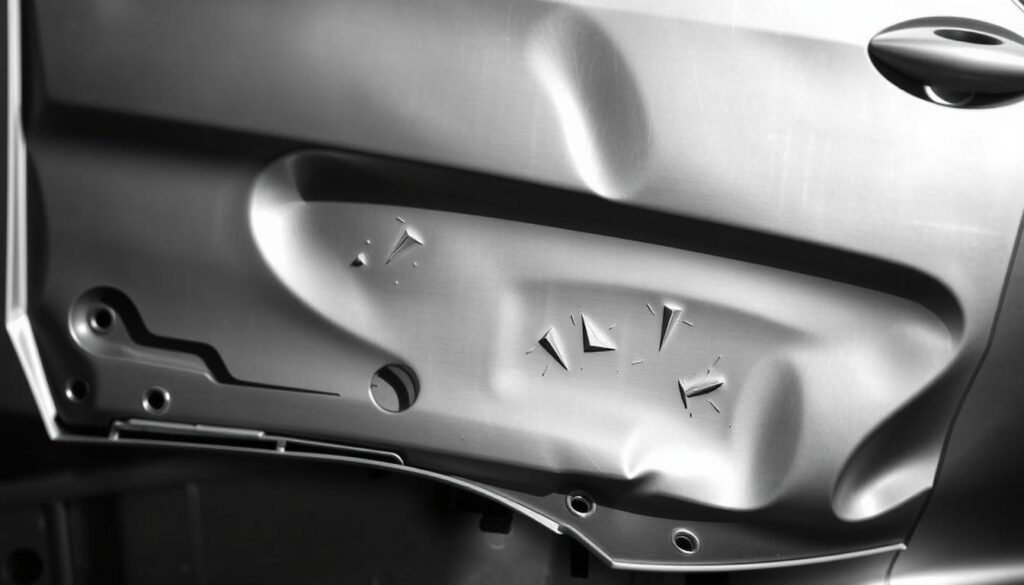
In summary, body filler is helpful in car repairs, but its limits must be respected. Experts should decide when to use it and when to choose other methods. This ensures the car’s structural integrity and repair quality.
Body Filler vs Replacement: Making the Right Decision
Choosing between body filler and panel replacement is a big decision in car repairs. At Miracle Body and Paint Collision Center, our experts help you make the best choice for your car.
Comparative Analysis of Repair Methods
When you compare body filler and panel replacement, several things matter. The damage’s extent, the car’s age, and how long you want the repair to last are key.
Short-Term vs. Long-Term Outcomes
Body filler is cheaper in the short term but might not last as long as replacing a panel. Replacing a panel is a more durable option, which could save you money and trouble later.
Performance Under Various Conditions
How body filler and panel replacement hold up in different situations is important. Body filler might crack under extreme temperatures or stress. But a replaced panel is more likely to stay strong.
| Repair Method | Short-Term Cost | Long-Term Durability |
|---|---|---|
| Body Filler | Lower | Lower |
| Panel Replacement | Higher | Higher |
Repair Quality Considerations
At Miracle Body and Paint Collision Center, we focus on repair quality. The repair’s finish, appearance, durability, and weather resistance are all important to us.
Finish and Appearance Factors
A good body filler repair can look almost like new. But panel replacement often looks more seamless.
Durability and Weather Resistance
Durability and weather resistance are big pluses for panel replacement. A new panel is made to last, even in tough weather.
Insurance and Cost Implications
It’s important to understand the insurance and cost differences between body filler and panel replacement. Body filler might be cheaper at first, but the long-term costs and need for more repairs can add up.
Choosing between body filler and panel replacement needs expert advice. At Miracle Body and Paint Collision Center, our team is here to give you the best advice and service. We make sure your car’s repair is done right the first time.
When Panel Replacement Becomes Necessary
Knowing when to replace a panel is key for a vehicle’s safety and structure after a crash. This choice depends on the damage’s extent and its effect on safety features.
Structural Damage Indicators
Structural damage shows up in different ways, each hinting at weaknesses in the vehicle’s frame or body. Look out for crease lines and severe deformation, as well as metal fatigue and stretching.
Crease Lines and Severe Deformation
Crease lines are metal folds or bends that weaken a panel’s structure. Severe deformation changes a panel’s shape, often requiring replacement for safety and performance.
Metal Fatigue and Stretching
Metal fatigue happens when metal cracks or weakens from repeated stress. Stretching pulls metal beyond its original shape, also weakening it. Both can harm a vehicle’s safety.
Safety Compromising Scenarios
Certain damage can directly affect a vehicle’s safety features, making panel replacement essential for safety, not just looks.
Crumple Zone Damage
The crumple zone absorbs crash impact, protecting occupants. Damage here can reduce its effectiveness, requiring careful evaluation and possibly replacement.
Airbag Deployment Areas
Areas where airbags deploy are vital for safety. Damage here can impact airbag function, making panel inspection and replacement critical.
Manufacturer Recommendations and Standards
Vehicle makers give specific repair and replacement guidelines to restore safety and performance. Following these guidelines is vital for maintaining the vehicle’s integrity.
For more on body filler in auto repairs, visit Miracle Collision Center.
| Damage Type | Indicators | Recommended Action |
|---|---|---|
| Structural Damage | Crease lines, severe deformation, metal fatigue | Panel Replacement |
| Safety Compromising | Crumple zone damage, airbag deployment area damage | Panel Replacement |
| Cosmetic Damage | Minor dents, surface imperfections | Body Filler or Minor Repairs |
The Panel Replacement Process Explained
Knowing how to replace panels is key for a car’s safety and looks after a crash. This process includes making important choices that affect the repair’s quality.
OEM vs. Aftermarket Panels
Choosing between OEM and aftermarket panels is a big decision. OEM panels match the car’s original parts perfectly, keeping its performance and look.
Quality and Fitment Differences
OEM panels are better in quality and fit than aftermarket ones. They are made to fit the car just right, avoiding problems.
Material Composition Comparison
OEM panels use the same materials as the car’s original parts. This means they last longer and work better. Aftermarket panels might not be as good, affecting their durability and fit.
Modern Welding and Bonding Techniques
Replacing panels also means using new welding and bonding methods. Shops use spot welding and MIG welding to make strong bonds.
Spot Welding vs. MIG Welding
Spot welding joins metal at specific points. MIG welding welds along a seam. The choice depends on the repair and materials.
Adhesive Technologies
Modern repairs also use advanced adhesives. These adhesives add strength and help keep the car’s structure safe.
Miracle Body and Paint’s Replacement Standards
Miracle Body and Paint Collision Center follows strict standards for panel replacement. Their team picks the right panels and uses the best welding and bonding methods. They aim to meet or beat the manufacturer’s specs.
Longevity and Durability Factors in Collision Repair
Things like weather and how well you take care of your car affect how long repairs last. Knowing this can help you choose the best repair for your car.
Environmental Impact on Repairs
Weather can really impact how long repairs last. Two big things to think about are temperature changes and how well repairs hold up to moisture.
Temperature Fluctuations
Very hot or cold weather can make materials expand and shrink. This can cause cracks or weaken repairs. Using materials that don’t change much with temperature can help.
Moisture and Corrosion Resistance
Moisture can cause metal to rust, which is bad for repairs. It’s important to use corrosion-resistant materials and methods to prevent this.
Maintenance Requirements
Keeping up with regular maintenance is key to making repairs last longer. This includes taking care of body filler and the panels that were replaced.
Body Filler Maintenance
Keeping the body filler area clean and waxed helps protect it. Regular checks can spot problems early.
Replaced Panel Care
Washing and waxing replaced panels helps prevent rust and keeps your car looking good. It’s also important to watch for any damage or wear.
Expected Lifespan of Different Repair Methods
The life of a repair can vary a lot based on the method used. Here’s a table showing how long different methods last:
| Repair Method | Expected Lifespan |
|---|---|
| Body Filler Repair | 5-7 years |
| Panel Replacement | 10-15 years or more |
| Advanced Welding Techniques | 15 years or more |
Impact on Vehicle Value and Safety
Keeping a vehicle’s value and safety after a crash is key. Miracle Body and Paint Collision Center focuses on more than just fixing the damage. They aim to keep the vehicle’s value and safety intact.
Resale Value Considerations
The resale value of a vehicle can change based on repair quality. Proper repair techniques and high-quality materials are vital. They help keep the vehicle’s value as close to original as possible.
Carfax Reports and Disclosure
It’s important to tell buyers about any repairs through Carfax. Being open about the vehicle’s history helps build trust. It also supports the vehicle’s resale value.
Buyer Perception of Repairs
Buyers might see a vehicle with a repair history as less valuable. But, if repairs are done right and history is clear, the negative view can lessen.
Crash Performance After Repairs
It’s important for a vehicle to perform well in another crash. Safety certification standards must be met. This ensures the vehicle is safe in crashes.
Structural Integrity Testing
After repairs, it’s essential to test the vehicle’s structure. This confirms its safety and integrity. It’s a critical step for ensuring the vehicle’s safety.
Safety Certification Standards
Following safety standards is more than just following rules. It’s about making sure the vehicle is safe for everyone inside. Miracle Body and Paint Collision Center follows these standards closely.
Documentation Importance
Keeping detailed records of repairs is important. It helps with resale value and safety. These records show the work done and materials used. They are very useful for future reference or when selling the vehicle.
Advanced Technologies in Collision Repair
Advanced technologies are changing the game in collision repair. They make the process more precise and efficient. This change is making the industry better, allowing repair shops to offer top-notch services.
Computer-Aided Measurement Systems
Today’s collision repair shops use computer-aided systems for accurate assessments and repairs. These systems include:
- 3D Scanning Applications: They capture detailed data about the vehicle’s structure, helping to assess damage accurately.
- Precision Alignment Tools: These tools ensure repairs are done with high standards, keeping the vehicle’s original specifications intact.
Innovations in Repair Materials
New materials are also key in improving collision repair. Some of the main innovations are:
- High-Strength Composites: They offer better durability and resistance to damage.
- Aluminum and Carbon Fiber Solutions: These provide strong yet lightweight options for repairs.
Miracle Body and Paint’s Technology Investment
Miracle Body and Paint Collision Center is leading the way in using these advanced technologies. They invest in the latest equipment and training. This ensures customers get the best repairs possible. Here’s a look at some key technologies and their benefits:
| Technology | Benefits |
|---|---|
| 3D Scanning | Precise damage assessment, reduced repair time |
| Precision Alignment Tools | Ensures accurate repairs, maintains vehicle integrity |
| High-Strength Composites | Enhanced durability, improved safety |
Professional Assessment Process at Miracle Body and Paint
Miracle Body and Paint Collision Center starts with a detailed professional assessment. This step is key to ensuring quality and being open. It helps figure out the best way to fix the vehicle.
Comprehensive Damage Evaluation
The center checks the vehicle thoroughly. They look at every part to find all damage.
Multi-Point Inspection Protocol
They use a special method to check the car’s body. This makes sure they don’t miss any damage.
Digital Documentation Methods
They use digital tools to document the damage. This gives a clear picture for both the tech and the customer.
Transparent Repair Recommendations
After checking, Miracle Body and Paint shares clear repair plans. They make sure customers know what needs to be done.
Customer Education Approach
The center teaches customers about their options. They explain things in a simple way.
Cost-Benefit Analysis Presentation
They also show a detailed cost analysis. This helps customers see the best value for their money.
Quality Assurance Procedures
Miracle Body and Paint is all about quality. They follow strict quality assurance steps. This ensures every fix meets their high standards.
Conclusion: Trust Your Vehicle to the Experts
Choosing the right service for collision repair is key. Miracle Body and Paint Collision Center offers top-notch service. They focus on quality and safety.
They use the latest tech and have a team of experts. Miracle Body and Paint makes sure your car looks new again. They check the damage carefully and give clear repair plans.
Going with Miracle Body and Paint means your car is in good hands. They pay close attention to every detail. Contact them today for the best in collision repair.

