

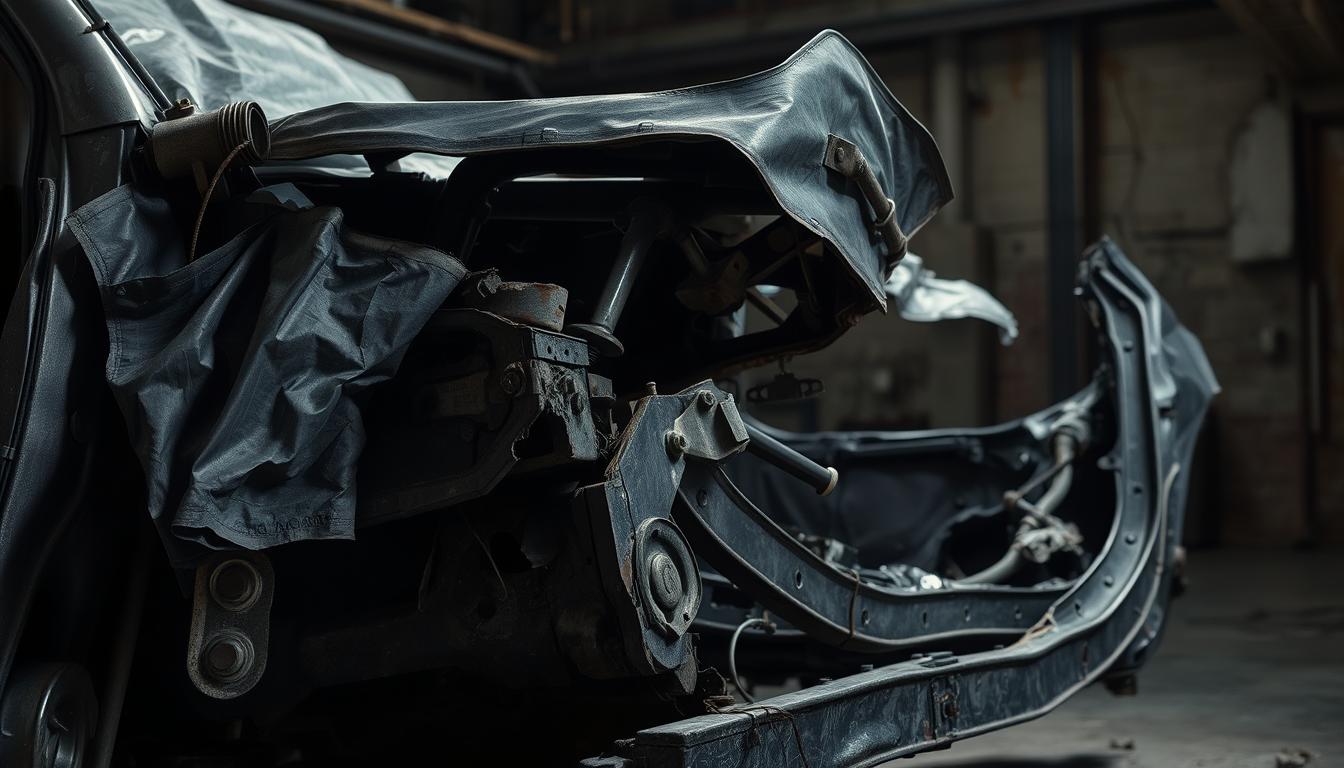
Your car’s frame is the structural backbone that keeps the body, engine, and suspension aligned and helps absorb crash forces to protect people inside. After an impact, even small deformities can harm safety and performance. Watch for obvious crumples, shifted panel gaps, or doors that don’t close the way they used to.
Listen for new knocks or creaks, and feel for pulling, vibrations, or uneven tire wear—these are common signs that the structure may not be true. Prompt, professional inspection prevents small repairs from becoming costly problems and restores alignment and ride quality.
Need help? Miracle Body and Paint Collision Center offers expert collision diagnostics and structural repairs in San Antonio. Schedule an inspection at North West San Antonio – Leon Valley, (210) 680-1987, 6217 Grissom Rd., or North East San Antonio, (210) 858-3630, 4650 Walzem Rd.
Key Takeaways
- Know that the frame supports major systems and protects the cabin.
- Spot visual cues like crumples and uneven panel gaps early.
- Drivability issues—pulling, vibration, abnormal noises—signal structural concerns.
- Quick professional checks limit repair costs and restore safety.
- Choose a reputable auto body partner for precise measurement and repair.
- Contact Miracle Body and Paint in San Antonio for inspections and repairs.
What Your Car’s Frame Does and Why It Matters
Your car’s under-structure does more than hold panels together — it shapes how the whole vehicle behaves in a crash and on the road. Understanding basic construction helps you spot real issues and know when to seek professional help.
Unibody vs. Ladder: the backbone of modern cars
Unibody designs integrate body and frame for rigidity, lighter weight, and engineered crumple zones that absorb and redirect impact energy to protect occupants.
By contrast, ladder frames use two long rails and cross-members. They excel under heavy loads and towing, which is why trucks and some SUVs still use them.
How the chassis preserves safety and integrity
The chassis supports engine, suspension, and body components, and channels forces from braking, accelerating, and cornering. Proper alignment keeps suspension geometry correct and preserves overall performance.
- Safety systems rely on predictable energy paths so crumple zones and reinforcements work as designed.
- Hidden structural issues can mimic cosmetic problems, so precise inspection with the right tools matters.
- Miracle Body and Paint Collision Center can assess unibody or ladder constructions and explain repair choices at either San Antonio location.
Signs Your Vehicle Frame Is Damaged After a Collision
Look beyond dents: structural shifts often reveal themselves through steering, gaps, and noises. Spotting these signs early helps you avoid bigger problems and keeps you safer while driving.
Common visual cues include visible bends, cracks, buckling, or crumpled sections. Check doors, trunk, and hood for sticking, rubbing paint, or poor alignment—these often signal misalignment rather than just cosmetic issues.
- Uneven body panel gaps and shifted seams that don’t match mirror sides.
- Car pulls to one side or needs constant steering correction; the wheel may sit off-center.
- Uneven tire wear—cupping or bald spots—and new noises like creaks or rattles from the body.
- Vibrations that worsen with speed, poor handling, and a rough or unstable ride.
- Advanced rust or corrosion on structural sections that reduce load paths and safety.
Treat even subtle signs seriously. If you notice any of these issues, schedule a professional inspection with Miracle Body and Paint Collision Center at either San Antonio location to prevent safety compromises and further car frame damage.
Common Causes of Frame Damage
Even small impacts can twist structural rails and hide serious alignment issues. A low-speed collision or a multi-car crash can bend, buckle, or crack rails and cross-members, creating hidden frame damage you may not see at first.
Collisions and impacts
Collisions of any speed transfer energy into the chassis. That force travels into suspension pick-up points and supporting components, producing progressive problems over time.
Road hazards and curbs
Striking curbs, deep potholes, or off-road obstacles jars alignment and can shift structural members. These hits commonly lead to creeping misalignment that shows up as steering pull or uneven tire wear.
Corrosion, repairs, and wear
Rust weakens metal, reducing load paths and safety. Improper past repairs or poor maintenance can lock in misalignment and speed up wear across systems.
- If your car experienced any of these causes, contact Miracle Body and Paint Collision Center for a thorough structural check at either San Antonio location.
Is It Safe to Drive with Vehicle Frame Damage?
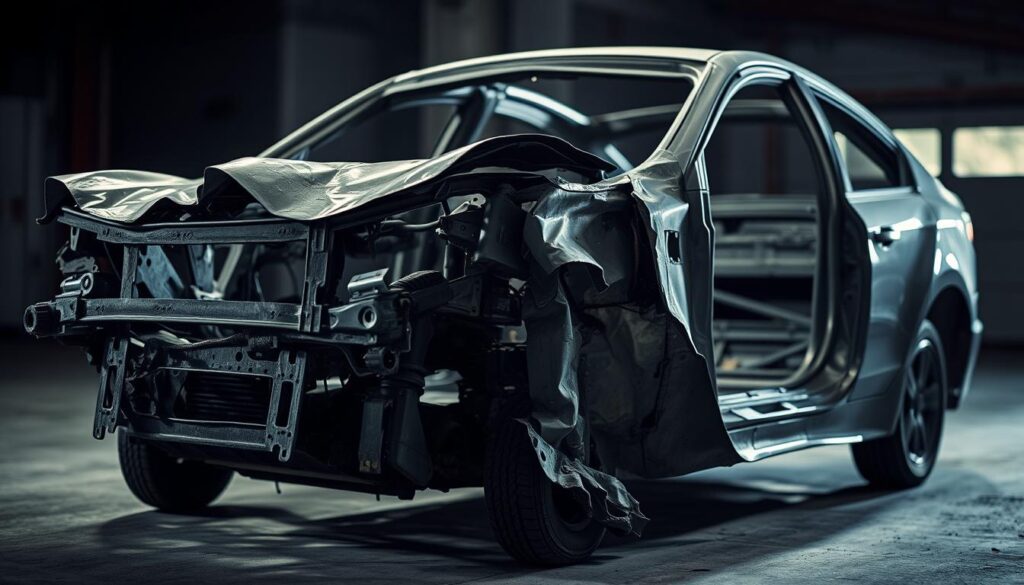
Continuing to drive with suspected structural faults raises both injury and insurance risks. A weakened support rail changes how crash energy flows and can increase the chance of sudden component failure. That raises the immediate risk to occupants if you are in another accident.
Occupant risk and sudden failures
If the structure no longer absorbs impact as designed, injury risk grows. Parts that rely on true alignment can fail without warning. For your safety, avoid driving until a shop confirms the car is safe.
Handling, tires, and fuel efficiency
Misalignment harms handling, makes steering unstable, and creates uneven tire wear. That leads to faster wear on suspension parts and worse fuel economy. New noises over bumps or at speed are red flags you should not ignore.
Legal and insurance complications
Driving with known frame damage can violate safety rules and jeopardize claims after another accident. To protect yourself and reduce future costs, book an inspection with Miracle Body and Paint Collision Center at either San Antonio location today.
- You will understand a weakened structure cannot manage crash forces properly.
- You will see how misalignment degrades handling and shortens stopping distance.
- You will learn continuing to drive can increase fuel consumption and legal exposure.
What You Should Do Immediately After a Collision
Stay calm. After an accident, do a quick 360-degree walkaround to spot major crumples, fluid leaks, and obvious wheel or tire deformation.
Make an initial walkaround: Look for major crumples and leaks
Check closures—doors, hood, and trunk should open and latch. Binding or misalignment is a common sign of structural shift and means you should not drive the car.
Decide to drive or tow based on drivability and safety
Test steering response and brake feel only if the road is safe and the car seems stable. If the car pulls, vibrates, makes new noises, or lights and panels sit unevenly, choose a tow to avoid compounding problems.
Document damage and seek a professional inspection promptly
Take clear photos of all exterior and interior signs. Note skid marks, fluid color, and anything unusual so your shop and insurer can assess problems accurately.
- You will perform a quick but thorough walkaround for crumples, leaks, and tire issues.
- You will decide whether to drive or tow by checking steering, brakes, and roll alignment.
- You will document closures and take photos for the shop and insurer.
- You will avoid driving if you feel pulling, vibrations, or hear new noises.
- You will contact a trusted shop to schedule an inspection immediately.
After any accident, call Miracle Body and Paint Collision Center for guidance. We can help you decide whether to tow and schedule a same-day inspection at either San Antonio location.
Professional Inspection and Repair at an Auto Body Shop
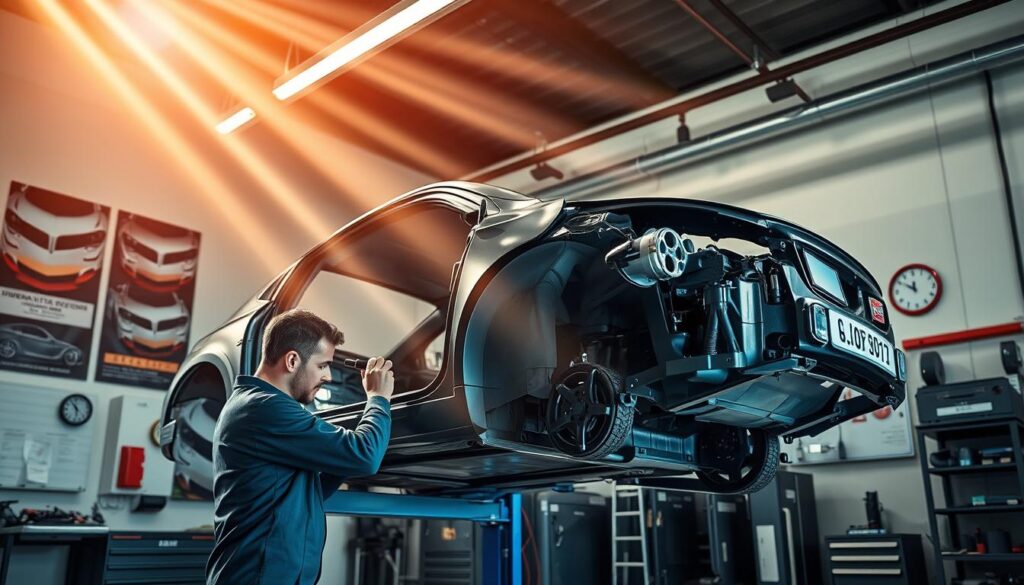
Start with a precise inspection: your repair begins when a technician uses digital measuring systems to compare actual dimensions to factory specs. These tools identify misalignments that are invisible to the eye and guide the entire correction plan.
Precision diagnostics and measuring systems
Laser and sensor-based systems map critical points and report deviations in millimeters. That data tells the shop which components need pulls, replacement, or further testing.
Frame straightening on repair benches
On a repair bench, controlled pulls and anchoring restore structure within tolerances. Skilled technicians use calibrated machines to perform frame straightening and verify alignment at each step.
Welding, anchoring, and component replacement
When sections are compromised, certified welders perform sectioning and replace pillars, rails, or other components with OEM-quality parts. Anchoring fixtures, lifts, and spot welders keep repairs safe and consistent.
Choosing a reputable shop and warranties
Evaluate a shop by certifications, clean facilities, documented processes, and clear warranties. Miracle Body and Paint Collision Center uses advanced systems, factory parts, and offers estimates and insurance coordination at its San Antonio locations.
- You will see inspections start with digital measuring systems to pinpoint misalignment.
- You will learn how controlled pulls on repair benches achieve frame straightening within specs.
- You will understand how welding and component replacement restore structural integrity and performance.
- You will appreciate tools like lifts, anchoring fixtures, and precision spot welders in safe repairs.
Conclusion
Prompt inspection and corrective work stop small issues from becoming major repairs.
Early identification preserves safety, alignment, and resale value. Timely repairs restore structural integrity and prevent extra costs from uneven wear or failing parts.
You will:
– prioritize safety by addressing suspected frame damage right away.
– protect your car’s value with precise inspection, measurement, and repair to factory specs.
– avoid repeat problems by choosing documented processes that confirm fit and alignment.
– save long-term costs by fixing issues before they cause tire or suspension wear.
Hire Miracle Body and Paint Collision Center for expert diagnosis, frame repair, and refinishing. Two San Antonio locations serve you: North West San Antonio – Leon Valley, (210) 680-1987, 6217 Grissom Rd., San Antonio, TX 78238; North East San Antonio, (210) 858-3630, 4650 Walzem Rd, San Antonio, TX 78218.

