

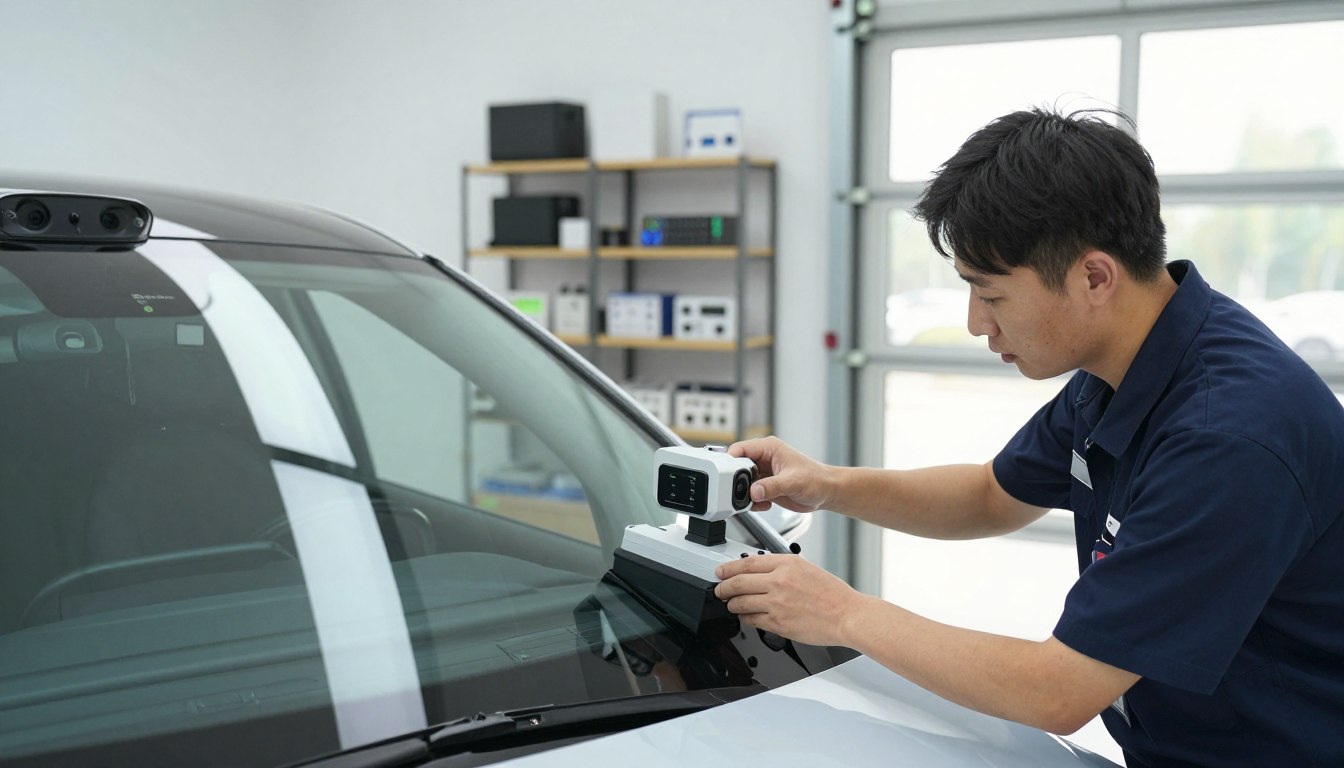
When you replace your vehicle’s windshield, it’s not just about installing a new glass; it’s about ensuring that the Advanced Driver Assistance Systems (ADAS) continue to function correctly. ADAS features, such as lane departure warning and adaptive cruise control, rely on sensors and cameras mounted on the windshield.
After a windshield replacement, these sensors and cameras must be recalibrated to guarantee they work as intended. This is where ADAS calibration comes into play. Choosing a qualified collision repair shop like Miracle Body and Paint Collision Center is crucial for a successful windshield calibration process.
Key Takeaways
- ADAS features rely on sensors and cameras mounted on the windshield.
- Windshield replacement requires recalibration of these sensors and cameras.
- Miracle Body and Paint Collision Center is a qualified shop for ADAS calibration.
- Proper calibration ensures ADAS features function correctly.
- Incorrect calibration can lead to safety issues.
Understanding Windshield Calibration
The process of windshield calibration is essential for the proper functioning of advanced driver-assistance systems (ADAS) in modern vehicles. After a windshield replacement, the sensors and cameras connected to the windshield need to be recalibrated to ensure they are aligned correctly. This alignment is crucial because even a slight misalignment can cause the ADAS features to malfunction.
What is Windshield Calibration?
Windshield calibration involves adjusting the sensors and cameras on your vehicle’s windshield so that they can accurately detect and respond to the environment around you. This process ensures that safety features like lane departure warning, adaptive cruise control, and automatic emergency braking work as intended.
Proper calibration is necessary to maintain the integrity of these safety systems. It requires specialized equipment and trained technicians who understand the complexities of ADAS.
Why is Calibration Necessary?
Calibration is necessary because the installation of a new windshield can slightly alter the position of the sensors and cameras. If these are not recalibrated, the vehicle’s safety features may not function correctly, potentially leading to accidents. Ensuring that your vehicle’s ADAS features are calibrated after a windshield replacement is a critical step in maintaining your vehicle’s safety and performance.
By understanding the importance of windshield calibration, you can take the necessary steps to ensure your vehicle remains safe to drive. It’s not just about replacing the windshield; it’s about ensuring that all the associated safety systems are working in harmony.
The Role of ADAS in Modern Vehicles
Advanced Driver Assistance Systems (ADAS) have become a crucial component of modern vehicles, significantly improving road safety. As you drive your vehicle, ADAS works tirelessly behind the scenes to prevent accidents and enhance your overall driving experience.
Overview of Advanced Driver Assistance Systems
ADAS encompasses a range of technologies designed to improve vehicle safety. These include lane departure warning systems, adaptive cruise control, and automatic emergency braking. By integrating sensors, cameras, and radar, ADAS provides a comprehensive safety net for drivers.
How ADAS Enhances Safety
The primary function of ADAS is to enhance safety on the road. By providing real-time alerts and interventions, these systems help prevent accidents. For instance, lane departure warning systems alert you if your vehicle drifts out of its lane, while automatic emergency braking can stop your vehicle to prevent a collision.
| ADAS Feature | Function | Benefit |
|---|---|---|
| Lane Departure Warning | Alerts driver if vehicle drifts out of lane | Prevents unintended lane changes |
| Adaptive Cruise Control | Adjusts speed to maintain safe distance | Reduces driver fatigue on long trips |
| Automatic Emergency Braking | Applies brakes to prevent or mitigate collision | Significantly reduces risk of accidents |
By understanding the role of ADAS in modern vehicles, you can appreciate the advanced safety features that are now standard in many cars. As vehicle technology continues to evolve, the importance of ADAS will only continue to grow, making our roads safer for everyone.
Consequences of Improper Calibration
Failing to calibrate your vehicle’s ADAS correctly can lead to a myriad of problems, including decreased vehicle performance and increased risk of accidents. Proper calibration is essential to ensure that your vehicle’s safety features function as intended.
Risks of Incorrect Sensor Alignment
Incorrect sensor alignment can significantly impair your vehicle’s ability to detect and respond to its surroundings. This misalignment can lead to:
- False or missed detections of obstacles or pedestrians
- Inaccurate lane-keeping assistance
- Compromised adaptive cruise control functionality
These issues can result in a heightened risk of accidents, putting you and your passengers at risk. Ensuring that your vehicle’s sensors are correctly aligned is crucial for maintaining the safety features that modern vehicles offer.
Impact on Vehicle Performance
The impact of improper calibration on vehicle performance can be significant. Some of the effects include:
| System | Impact of Improper Calibration |
|---|---|
| Adaptive Cruise Control | Inconsistent speed adjustments, potentially leading to rear-end collisions |
| Lane-Keeping Assistance | Inaccurate steering corrections, drifting out of lane |
| Automatic Emergency Braking | Delayed or false braking, increasing stopping distances |
As shown in the table, improper calibration can affect various aspects of your vehicle’s performance, compromising both safety and driving experience. Regular checks and proper calibration are essential to maintain your vehicle’s optimal performance.
The Calibration Process
Understanding the calibration process is crucial for ensuring your vehicle’s Advanced Driver Assistance Systems (ADAS) function correctly after a windshield replacement. This process involves a series of precise steps to align the ADAS sensors and cameras properly.
Step-by-Step Calibration Overview
The calibration process typically begins with a thorough inspection of your vehicle’s ADAS components. Technicians then use specialized equipment to adjust and calibrate the sensors and cameras according to the manufacturer’s specifications.
- Initial inspection of ADAS components
- Connection to calibration equipment
- Adjustment and calibration of sensors and cameras
- Verification of calibration accuracy
Tools and Technologies Used
Various tools and technologies are employed during the calibration process, including:
- Diagnostic scanners to interface with your vehicle’s computer system
- Specialized calibration targets and equipment
- High-precision cameras and sensors
For more information on handling cracked auto glass after a collision, you can visit Miracle Collision Center’s guide.
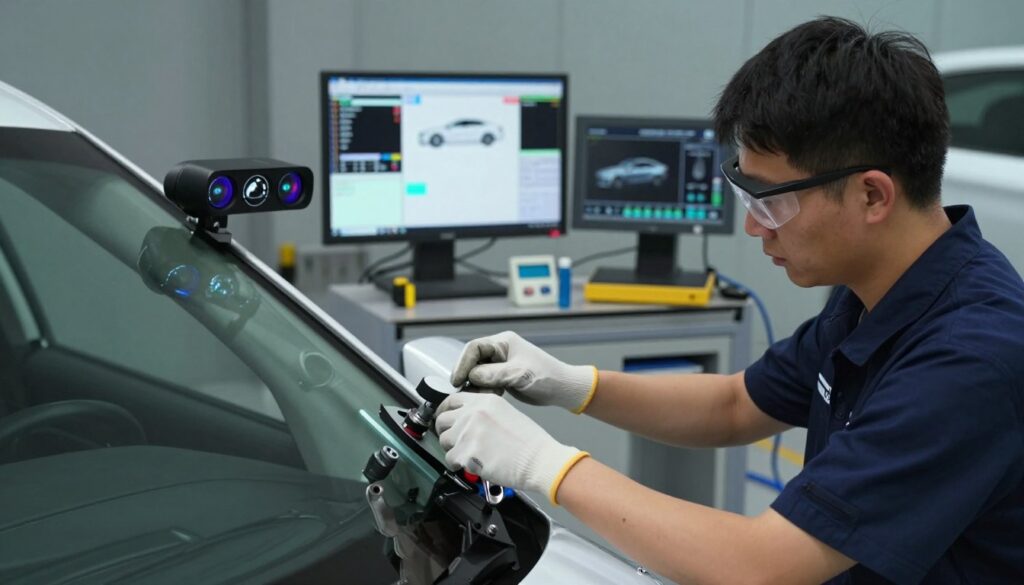
By utilizing these advanced tools and following a meticulous step-by-step process, technicians can ensure that your vehicle’s ADAS features are functioning correctly, providing you with enhanced safety on the road.
When is Calibration Required?
Understanding when calibration is necessary after a windshield replacement is vital for your vehicle’s safety features to function correctly. Calibration is not always required, but there are specific signs and regulations that indicate when it’s necessary.
Signs You Need Calibration After Replacement
After a windshield replacement, you should look out for signs that may indicate the need for ADAS calibration. These include:
- Warning lights on your dashboard indicating a problem with your ADAS.
- Unusual behavior from your vehicle’s safety features, such as lane departure warning or adaptive cruise control.
- Recent repairs or replacements involving ADAS components, like cameras or sensors.
If you notice any of these signs, it’s essential to consult with a professional to determine if calibration is required.
State Regulations on Calibration
State regulations regarding ADAS calibration vary across the United States. Some states have specific laws mandating calibration after certain types of repairs, including windshield replacements. For instance, some states require calibration if the replacement involves vehicles equipped with advanced safety features.
It’s crucial to familiarize yourself with the regulations in your state to ensure compliance and maintain your vehicle’s safety features. You can check with your state’s Department of Motor Vehicles (DMV) or consult with a reputable collision repair shop for guidance.
By understanding the signs that indicate the need for calibration and being aware of state regulations, you can ensure your vehicle remains safe and functional after a windshield replacement.
Choosing the Right Collision Repair Shop
The process of windshield replacement is not just about fixing the glass; it’s also about ensuring that your vehicle’s ADAS is properly calibrated, which requires a skilled collision repair shop. When your vehicle needs repairs, especially after a collision, the choice of repair shop can significantly impact the safety and functionality of your vehicle.
What to Look For in a Collision Center
When searching for a collision repair shop, there are several factors to consider to ensure that your vehicle is in good hands. Here are some key aspects to look for:
- Experience with your vehicle’s make and model
- Certifications and qualifications of the technicians
- State-of-the-art equipment for repairs and calibration
- Good customer service and reputation
| Feature | Basic Repair Shop | Advanced Collision Center |
|---|---|---|
| ADAS Calibration Capability | No | Yes |
| Technician Certification | Limited | Extensive |
| Customer Service | Variable | Excellent |
Importance of Expertise in ADAS Calibration
Expertise in ADAS calibration is crucial because improper calibration can lead to safety issues and potentially cause accidents. A collision repair shop with ADAS calibration expertise ensures that your vehicle’s advanced safety features are functioning as intended.
By choosing a reputable collision repair shop like Miracle Body and Paint Collision Center, you can trust that your vehicle is being handled by professionals who have the necessary expertise in ADAS calibration.
Miracle Body and Paint Collision Center Overview
At Miracle Body and Paint Collision Center, we pride ourselves on delivering top-notch service to our clients. With a strong commitment to quality, we ensure that every vehicle that comes through our doors is restored to its original condition.
Our Commitment to Quality Service
Our team of experienced technicians and state-of-the-art equipment enable us to provide exceptional collision repair services. We understand the importance of safety and aesthetics, ensuring that every repair is done with precision and care.
We take pride in our work, using only the highest quality materials and adhering to strict industry standards. Our goal is to provide you with a seamless experience, from the initial assessment to the final delivery of your vehicle.
Locations and Facilities
Miracle Body and Paint Collision Center has two conveniently located facilities in San Antonio, making it easy for you to access our services. Our modern facilities are equipped with the latest technology, allowing us to efficiently handle a wide range of collision repairs.
| Location | Address | Phone Number |
|---|---|---|
| San Antonio North | 1234 North Loop, San Antonio, TX 78232 | (210) 123-4567 |
| San Antonio South | 5678 South Loop, San Antonio, TX 78211 | (210) 901-2345 |
Our facilities are designed to accommodate your needs, providing a comfortable waiting area and ensuring that your vehicle is repaired to the highest standards.
Benefits of Choosing Miracle Body and Paint Collision Center
Miracle Body and Paint Collision Center stands out as a premier choice for windshield replacement and ADAS calibration due to its exceptional service and expertise. By choosing our center, you can benefit from a comprehensive range of services designed to ensure your vehicle’s safety and performance.
Experienced Technicians for Calibration
Our team is comprised of experienced technicians who are trained to the highest standards in ADAS calibration. Their expertise ensures that your vehicle’s advanced safety features are functioning correctly after windshield replacement.
The technicians at Miracle Body and Paint Collision Center undergo rigorous training to stay updated with the latest technologies and methodologies in ADAS calibration. This commitment to ongoing education guarantees that your vehicle receives the best possible care.
State-of-the-Art Technology for Repairs
We utilize state-of-the-art technology to perform repairs and calibrations. Our equipment is the latest in the industry, ensuring precise and efficient service.
| Technology | Description | Benefit |
|---|---|---|
| ADAS Calibration Tools | Advanced software and hardware for precise calibration | Ensures accurate alignment of safety features |
| Windshield Replacement Equipment | Specialized tools for safe and efficient windshield removal and installation | Minimizes risk of damage to vehicle |
| Diagnostic Scanners | State-of-the-art scanners for vehicle system diagnostics | Identifies potential issues before they become major problems |
By combining experienced technicians with state-of-the-art technology, Miracle Body and Paint Collision Center provides a superior service that prioritizes your safety and satisfaction.
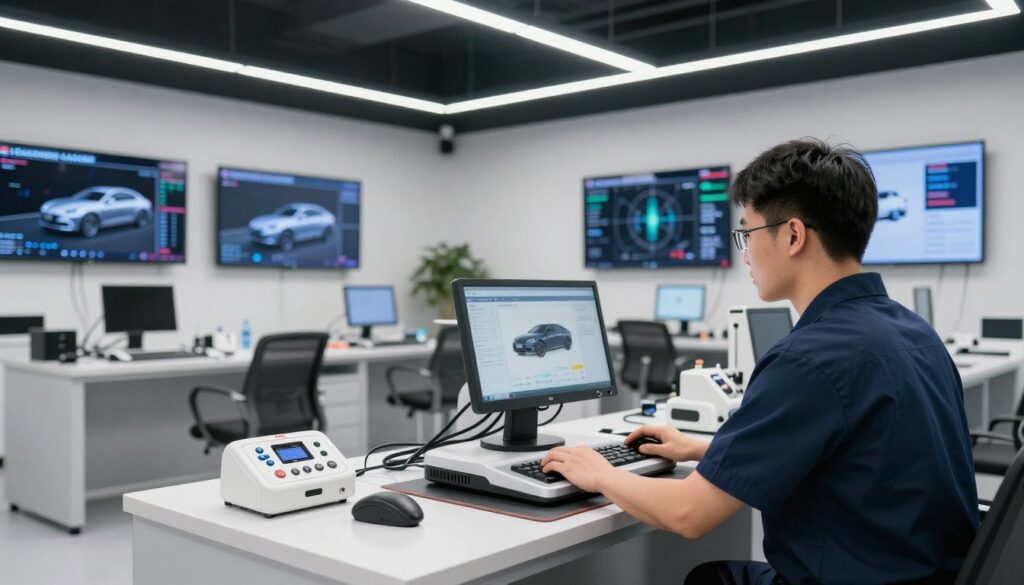
Our commitment to using the latest technology and techniques ensures that your vehicle is restored to its original condition, with all safety features functioning as intended.
Customer Testimonials and Success Stories
Our reputation is built on the trust and satisfaction of our customers, reflected in their testimonials. At Miracle Body and Paint Collision Center, we pride ourselves on delivering exceptional service and ensuring our clients are completely satisfied with our work.
Real Experiences from Our Clients
Our clients have experienced the benefits of our quality service and expertise in ADAS calibration firsthand. Here are some of their stories:
- Exceptional Service: “The team at Miracle Body and Paint Collision Center was professional and efficient. They explained everything clearly and made sure I was comfortable throughout the process.” – John D.
- Expert Technicians: “I was impressed by the knowledge and skill of the technicians. They took the time to ensure everything was done correctly.” – Emily R.
- Quick Turnaround: “I was back on the road quickly, thanks to the fast and reliable service. I’m grateful for the convenience they offered.” – Michael T.
Trusted Community Reputation
We’ve built a trusted reputation in the community through our commitment to quality and customer satisfaction. Our success stories are a testament to our dedication to excellence in windshield replacement and ADAS calibration.
Key Highlights:
- High customer satisfaction ratings
- Expertise in ADAS calibration
- State-of-the-art technology for repairs
By choosing Miracle Body and Paint Collision Center, you’re not just getting a service; you’re experiencing the trust and reliability that comes with our commitment to your safety and satisfaction.
Frequently Asked Questions About Calibration
The calibration process, especially after a windshield replacement, is vital for the proper functioning of your vehicle’s advanced safety features. As you consider this process, you likely have several questions about what it entails and its importance.
Common Questions About Windshield Replacement
One of the most common questions is whether calibration is always necessary after a windshield replacement. The answer is yes, if your vehicle is equipped with Advanced Driver Assistance Systems (ADAS). Calibration ensures that the cameras and sensors are properly aligned to function correctly.
Another frequent question is about the signs that indicate you need calibration. If you’ve had a windshield replacement, it’s a clear sign that calibration might be necessary, especially if your vehicle has ADAS features like lane departure warning or adaptive cruise control.
Understanding Costs and Timeframes
Understanding the costs associated with calibration is also a common query. The cost can vary depending on the vehicle make, model, and the technology used. On average, you can expect to pay between $100 to $300 for the calibration process.
As for the timeframe, calibration typically takes anywhere from 30 minutes to a few hours, depending on the complexity of the system and whether it’s a static or dynamic calibration.
| Service | Average Cost | Average Time |
|---|---|---|
| Static Calibration | $100-$200 | 30 minutes – 1 hour |
| Dynamic Calibration | $200-$300 | 1-3 hours |
It’s essential to consult with a professional and certified collision repair shop like Miracle Body and Paint Collision Center to get an accurate estimate for your specific needs. They can guide you through the process, ensuring that your vehicle’s safety features are functioning as intended.
Maintenance After Windshield Calibration
Proper maintenance of your windshield is vital after calibration to guarantee that your ADAS features continue to function as intended. The calibration process ensures that your vehicle’s safety features are accurately aligned, but without proper care, these features can become compromised.
Caring for Your Windshield Post-Calibration
To maintain your windshield’s integrity, it’s essential to avoid using harsh chemicals or abrasive materials that could damage the glass or the ADAS sensors. Regular cleaning with a mild soap solution and a soft cloth is recommended. Additionally, avoiding extreme temperatures and ensuring that your windshield wipers are in good condition can help prevent damage.
Inspecting your windshield regularly for any signs of damage, such as chips or cracks, is also crucial. If you notice any damage, it’s advisable to have it repaired or replaced promptly to prevent further issues.
Importance of Regular Checks
Regular checks are vital to ensure that your ADAS features continue to function correctly. Scheduling regular maintenance checks with a professional can help identify any potential issues before they become major problems.
During these checks, technicians can inspect the calibration of your ADAS sensors, ensuring that they remain accurately aligned. This not only helps maintain the effectiveness of your vehicle’s safety features but also contributes to your overall safety on the road.
- Regularly inspect your windshield for damage.
- Clean your windshield with mild soap and a soft cloth.
- Avoid extreme temperatures.
- Schedule regular maintenance checks with a professional.
By following these guidelines and maintaining your windshield properly, you can ensure that your vehicle’s ADAS features continue to provide the highest level of safety and protection.
Get Your Vehicle Back in Shape Today
If you’re dealing with collision damage, getting your vehicle back on the road requires more than just a quick fix. At Miracle Body and Paint Collision Center, you can trust that your vehicle is in good hands. With two convenient locations in San Antonio, we’re well-equipped to handle all your collision repair needs, including advanced ADAS calibration.
Expert Collision Repair Services
Our team of experienced technicians is dedicated to providing top-notch service, ensuring that your vehicle is restored to its original condition. From the initial assessment to the final inspection, we use state-of-the-art technology to guarantee a precise and efficient repair process. Whether you’re located in North West San Antonio or North East San Antonio, you can count on us to get the job done right. Contact us today at (210) 680-1987 or (210) 858-3630 to schedule an appointment.
By choosing Miracle Body and Paint Collision Center, you’re not just getting a repair – you’re getting a commitment to quality and customer satisfaction. Let us help you get back on the road safely and efficiently.

