

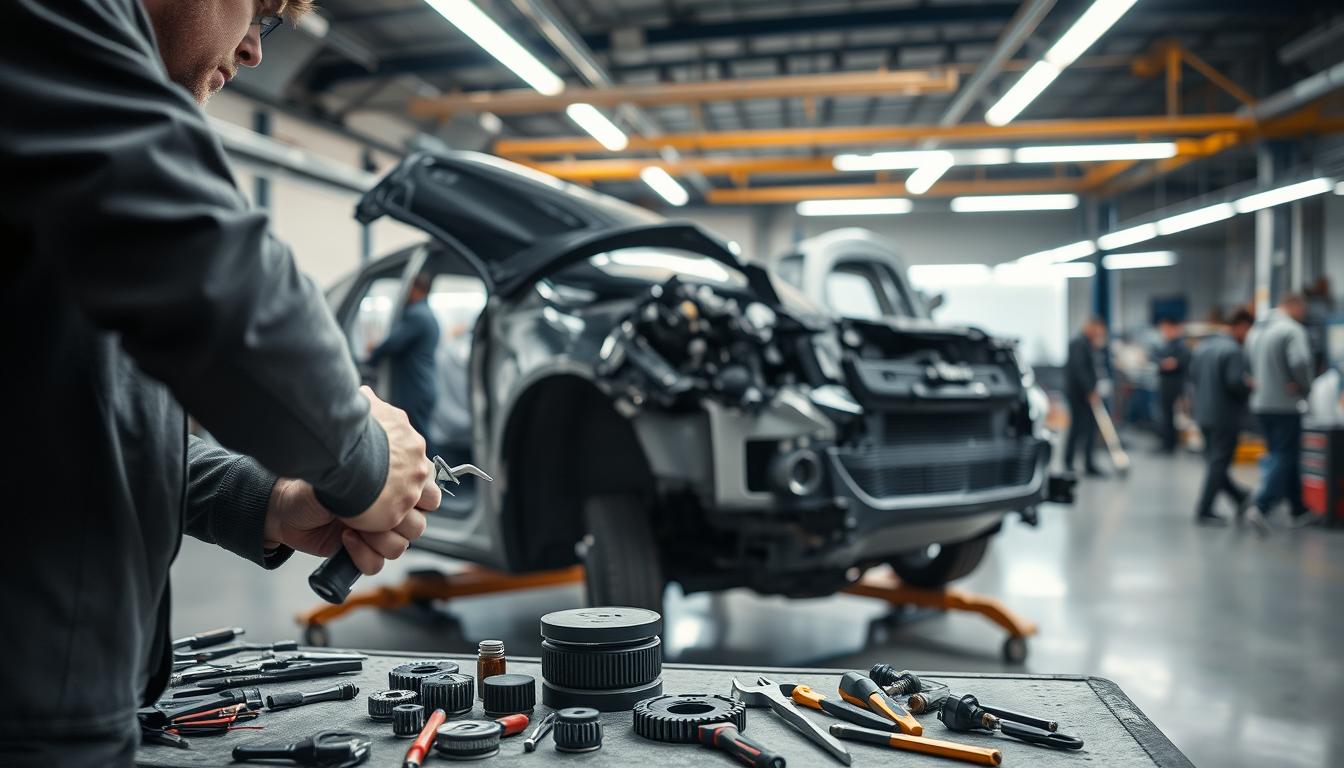
At Miracle Body and Paint Collision Center, we understand that the quality of vehicle repairs is directly linked to the expertise of our technicians. As the automotive industry evolves, modern vehicles are becoming increasingly complex, making specialized knowledge and training essential for proper repairs.
The importance of technician training cannot be overstated. With the right certification and knowledge, technicians can identify and address hidden damage that might otherwise go unnoticed, potentially preventing future safety issues.
By prioritizing ongoing technician training, we ensure that our customers receive the highest quality repairs, meeting the industry’s gold class standards and staying up-to-date with the latest advancements in automotive technology.
Key Takeaways
- Technician training is crucial for ensuring high-quality vehicle repairs.
- Modern vehicles require specialized knowledge and training for proper repairs.
- Certified technicians can identify and address hidden damage.
- Ongoing training is essential for meeting industry standards.
- Prioritizing technician training ensures customer safety and satisfaction.
The Evolution of Modern Vehicle Repair
The modern vehicle repair landscape is characterized by advanced driver-assist systems and complex electronics, challenging traditional repair methods. Today’s vehicles are far more sophisticated than their predecessors, featuring a myriad of technologies that enhance safety, efficiency, and performance.
Today’s Complex Vehicle Technology
Modern vehicles are equipped with advanced driver assist systems (ADAS), complex electronics, and specialized materials that require specific repair procedures. These technologies include features like automatic emergency braking, lane departure warning systems, and adaptive cruise control, all of which rely on sophisticated sensors and software. The complexity of these systems demands that technicians have a deep understanding of electronics and computer systems, not just mechanical components.
Why Standard Repair Knowledge Is No Longer Enough
The traditional apprenticeship model of learning collision repair is no longer sufficient on its own due to the increasing complexity of modern vehicles. Technicians now require specialized training in areas such as electronics, materials science, and manufacturer-specific repair procedures to ensure that repairs are done correctly and safely. Without this technical training, there’s a risk of compromising vehicle safety systems, potentially putting drivers and passengers at risk in subsequent accidents.
To stay current with rapidly evolving vehicle technology, technicians must commit to continuous education and training, going beyond one-time certification. This ongoing training is crucial for maintaining the high standards required in the automotive service industry.
Understanding Collision Repair Training Standards
As vehicles become increasingly sophisticated, the importance of adhering to rigorous collision repair training standards cannot be overstated. The automotive industry is rapidly evolving, with new technologies and materials being introduced regularly.
To keep pace, collision repair technicians must undergo comprehensive training that meets industry standards. This training is crucial for ensuring that repairs are done correctly and safely.
Industry-Recognized Certification Programs
Industry-recognized certification programs, such as those offered by I-CAR, play a vital role in establishing a baseline of competence for collision repair technicians. These programs provide specialized training in areas such as vehicle structural analysis, welding, and advanced materials.
By completing these courses, technicians demonstrate their ability to perform complex repairs according to the latest industry standards.
The Role of Continuing Education in Collision Repair
Continuing education is essential in the collision repair industry, where technology and repair methods are constantly evolving. I-CAR’s training system, for example, requires annual continuing education to maintain certification, ensuring that technicians stay current with the latest developments.
Various formats of continuing education are available, including hands-on training, online courses, and manufacturer-specific workshops. At Miracle Body and Paint Collision Center, we invest in ongoing education for our technicians to ensure they’re equipped with the latest knowledge and skills.
The I-CAR Gold Class Recognition
The I-CAR Gold Class program sets a high standard for excellence in collision repair training. This prestigious recognition is awarded to shops that demonstrate a strong commitment to technician development and comprehensive training.
ProLevel System and Technician Development
The ProLevel system is a cornerstone of the I-CAR Gold Class program, providing a structured approach to technician development. To achieve Gold Class status, technicians must complete ProLevel 2 or higher in their respective roles. This ensures that they possess the necessary skills and knowledge to perform complex repairs.
The ProLevel system includes a range of courses and skills demonstrations that technicians must complete to advance through the levels. These courses cover various aspects of collision repair, from estimating and refinishing to structural and non-structural repairs.
- Estimator: Responsible for accurately assessing damage and creating detailed repair plans.
- Refinish Technician: Specializes in paint and refinishing techniques to restore vehicles to their original finish.
- Structural Technician: Focuses on repairing and replacing structural components of vehicles.
- Non-Structural Technician: Handles repairs related to non-structural components, such as electrical systems and interior parts.
Required Roles and Training Requirements
To achieve Gold Class recognition, shops must ensure that their technicians meet the training requirements for their specific roles. I-CAR mandates that technicians reach ProLevel 2 or higher in their designated roles. Technicians may hold up to two roles, but they must meet the training requirements for each role.
The training requirements are designed to ensure that technicians have the specialized knowledge needed for each aspect of the repair process. By completing the required courses and skills demonstrations, technicians demonstrate their competence and commitment to delivering high-quality repairs.
I-CAR scales the requirements based on shop size, ensuring that facilities of all sizes can achieve Gold Class status while maintaining appropriate training levels. This flexibility allows shops to adapt the program to their specific needs and resources.
ASE Certification and Its Importance
In the collision repair industry, the significance of ASE certification cannot be overstated. ASE certification provides motorists with the benefit of choosing the right professional for the job, ensuring that their vehicle is in skilled hands. At Miracle Body and Paint Collision Center, we prioritize hiring and supporting ASE-certified technicians as part of our commitment to quality repairs and service excellence.
The Testing and Certification Process
The ASE certification process involves rigorous testing to verify a technician’s knowledge and skills in specific repair areas. This process ensures that ASE-certified technicians have demonstrated both theoretical understanding and practical experience, reducing the risk of improper repairs. The certification is a testament to a technician’s expertise and commitment to staying updated with the latest technologies and repair methods.
Benefits of Choosing ASE-Certified Technicians
Choosing ASE-certified technicians offers numerous benefits, including more accurate estimates, more efficient repairs, and better quality outcomes. Repair facilities with a high percentage of ASE-certified technicians are recognized through the ASE Blue Seal of Excellence Recognition Program, helping consumers identify quality-focused shops. By opting for ASE-certified technicians, consumers can have peace of mind knowing their vehicle is being repaired by skilled professionals.
At our facility, we understand the value of ASE certification and its implications for collision repair technicians and repair technicians alike. Our commitment to employing ASE-certified technicians reflects our dedication to delivering exceptional service and ensuring that our customers receive the highest quality repairs.
Manufacturer-Specific Training Programs
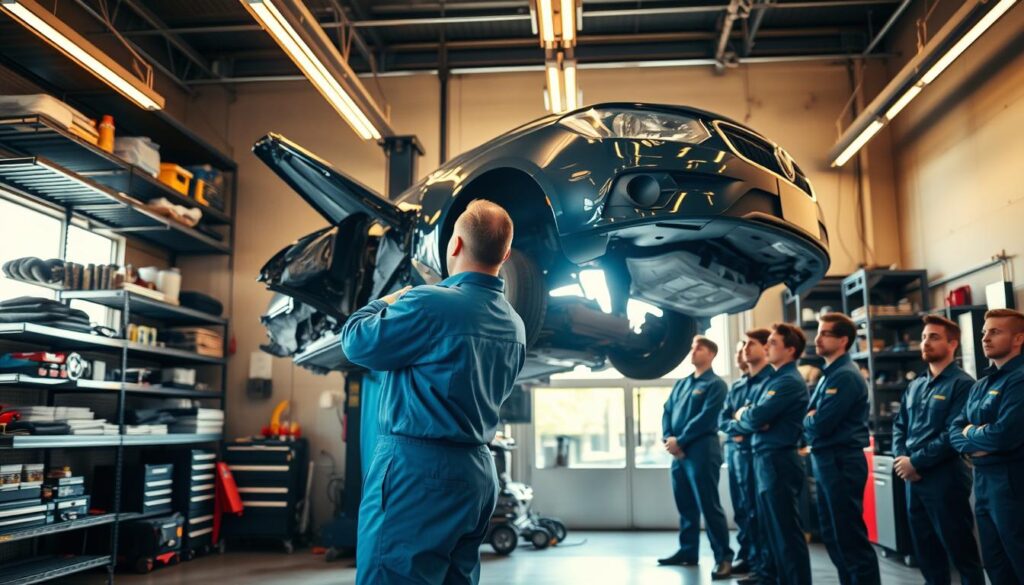
As vehicles become increasingly complex, manufacturer-specific training programs have become essential for collision repair technicians. These programs ensure that technicians have the necessary skills and knowledge to repair modern vehicles correctly.
Why Manufacturer Certifications Matter
Manufacturer certifications are crucial because they validate a technician’s ability to work with specific vehicle technologies and repair procedures. This is particularly important for Advanced Driver Assistance Systems (ADAS) like adaptive cruise control and lane departure warning systems. Technicians must be trained to calibrate and repair these complex systems accurately. Manufacturer certification programs require training on advanced vehicle systems, including specialized materials handling and the proper use of manufacturer-specific diagnostic equipment.
By obtaining manufacturer certifications, technicians demonstrate their commitment to staying up-to-date with the latest technologies and repair methods. This not only enhances their skills but also ensures that repairs are done to the manufacturer’s standards, maintaining vehicle safety and performance.
Advanced Technology Training Requirements
The training programs provided by manufacturers cover a range of advanced technologies and repair techniques. Technicians learn how to properly use specialized diagnostic equipment that communicates with vehicle computers to identify and address electronic issues. They also receive training on working with advanced materials like aluminum, carbon fiber, and ultra-high-strength steel, which are increasingly common in modern vehicles.
- Calibration and repair of ADAS, such as adaptive cruise control and automatic emergency braking
- Proper use of manufacturer-specific diagnostic equipment for electronic issue resolution
- Techniques for working with advanced materials, including sectioning, welding, and structural repairs
- Procedures for maintaining engineered crash management systems during repairs
As vehicle technology continues to evolve, the importance of manufacturer-specific training programs will only grow. By investing in these programs, collision repair shops can ensure that their technicians are equipped to handle the latest vehicle technologies, providing safe and effective repairs.
How Proper Training Impacts Your Vehicle Repair
Proper training for collision repair technicians is essential for ensuring that repairs are done correctly and safely. When technicians are properly trained, they are better equipped to handle complex repairs, use the correct parts, and follow manufacturer-approved procedures.
Safety Implications of Proper Repairs
Properly trained technicians understand the safety implications of their work. They know how to repair vehicles using approved parts and procedures, ensuring that the vehicle is safe to return to the road. This not only protects the vehicle’s occupants but also other road users.
Maintaining Vehicle Value and Performance
Technicians who receive proper training can maintain a vehicle’s value and performance by using the correct repair techniques and parts. This is crucial for ensuring that the vehicle operates as intended and retains its value over time. Proper repairs also help in maintaining the vehicle’s warranty, which can be a significant factor for vehicle owners.
Insurance Considerations and Warranty Protection
Insurance companies increasingly recognize the importance of proper training and certifications when approving repair facilities for their direct repair programs. Choosing a repair facility with properly trained technicians can help ensure that insurance claims are processed correctly and that all necessary repairs are identified and included in the estimate. Moreover, many manufacturer warranties require repairs to be performed by properly trained technicians using approved procedures and parts to maintain warranty coverage.
Our Commitment to Excellence at Miracle Body and Paint Collision Center
At Miracle Body and Paint Collision Center, our commitment to excellence is evident in every aspect of our work. We understand that proper training and the right tools are crucial for delivering high-quality collision repair services.
Technicians’ Training and Certifications
Our technicians undergo rigorous training and certification programs to ensure they have the knowledge and skills required for modern vehicle repair. We’ve invested in their development through programs like I-CAR and ASE certifications, which equip them with the latest techniques and standards in collision repair. Our team is dedicated to staying up-to-date with the latest advancements in vehicle technology, ensuring that our customers receive the best possible service.
- Comprehensive training in the latest repair techniques and technologies
- Certifications from industry-recognized organizations like I-CAR and ASE
- Continuous education to stay current with evolving vehicle designs and repair methods
Investment in Tools, Equipment, and Technology
To complement our technicians’ knowledge, we’ve invested heavily in state-of-the-art tools, equipment, and technology. Our shop is equipped with advanced machinery, including computerized measuring systems, specialized welding equipment, and sophisticated paint mixing and application technology. This enables us to perform repairs to exact OEM specifications, ensuring that our work meets the highest standards.
Some of the key equipment we use includes:
- Computerized measuring systems for precise damage assessment
- Specialized welding equipment for strong and safe repairs
- Advanced paint mixing and application technology for a flawless finish
- Dedicated frame straightening equipment to restore vehicle structural integrity
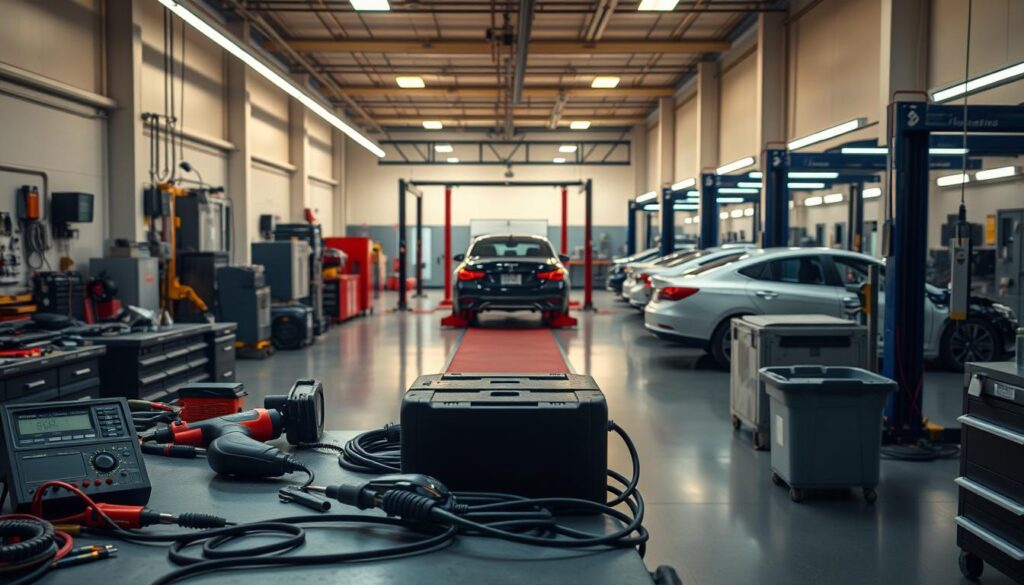
By combining well-trained technicians with the right tools and technology, we ensure that every repair is done correctly and efficiently. At Miracle Body and Paint Collision Center, we’re committed to providing service excellence and maintaining the trust our customers have placed in us.
Conclusion: Trust Your Vehicle to Trained Professionals
Ultimately, the quality of collision repair depends on the training and expertise of the technicians involved. Throughout this article, we’ve highlighted the critical importance of technician training in delivering safe, high-quality repairs. From understanding collision repair training standards to the role of industry-recognized certification programs, we’ve explored the various aspects that contribute to a successful repair process.
At Miracle Body and Paint Collision Center, we’re committed to excellence in collision repair. Our technicians undergo rigorous training and certification programs, ensuring they’re equipped to handle the complexities of modern vehicle technology. By choosing a shop with properly trained technicians, you’re investing in both your safety and your vehicle’s value.
We invite you to trust your collision repair needs to our trained professionals. With two locations in San Antonio to serve you, you can count on us for superior repair quality. Contact us today at (210) 680-1987 or visit our North West San Antonio – Leon Valley location at 6217 Grissom Rd., San Antonio, TX 78238.

