

After a collision, keeping your vehicle safe is very important. Advanced driver assistance systems help prevent accidents and reduce damage. At Miracle Body and Paint Collision Center, we know how vital it is for these systems to work right.
When a car gets into a crash, its advanced safety features might not work as they should. That’s why fixing and re-calibrating these systems is key to their proper function. Our team is ready to fix all collision damage, including the re-calibration of advanced driver assistance systems.
We have two places in San Antonio to help you. We aim to make your vehicle safe and good as new. You can count on us to do a great job.
Key Takeaways
- Proper functioning of advanced driver assistance systems is key after a crash.
- Our team is ready to fix all collision damage.
- Re-calibration of safety features is vital for your safety.
- Miracle Body and Paint Collision Center has two locations in San Antonio.
- We can make your vehicle safe and good as new.
Understanding ADAS and Its Importance
Advanced Driver Assistance Systems (ADAS) are key in today’s cars. They make driving safer. These systems use sensors and tech to help drivers stay safe.
What is Advanced Driver Assistance Systems (ADAS)?
ADAS are tech tools that make cars safer. They give drivers important info and help. Features like lane departure warning, adaptive cruise control, and automatic emergency braking use safety sensors.
Key Functions of ADAS Technologies
ADAS tech has many important jobs. They help keep cars safe. Some main jobs are:
- Watching the car’s area with cameras and radar sensors.
- Alerting drivers to dangers right away.
- Changing speed to keep a safe gap from other cars.
- Helping drivers stay in their lane.
The Role of Calibration in Vehicle Safety
Calibration is very important for ADAS. It makes sure these systems work right. Safety sensors need to be set up just right for features like automatic emergency braking and lane departure warning to work.
If you need ADAS calibration or repair, pick a trusted service. At our places in [locations], we have the best tech and know-how. We make sure your car’s ADAS systems are set up right.
Consequences of Skipping ADAS Calibration
Not calibrating ADAS after a collision can be very dangerous. It can make the car’s safety systems not work right. This might cause accidents or other safety problems.
Let’s look at the possible problems:
Increased Risk of Accidents
Not calibrating ADAS can lead to wrong sensor readings. This can make the car’s safety features not work right. For example, if the radar is not set up right, it might not see things or get the distance wrong. This could lead to a crash.
- Inaccurate distance detection
- Failure to detect obstacles
- Malfunctioning of automatic emergency braking systems
Potential Liability Issues for Repair Shops
Repair shops that don’t calibrate ADAS right might get in trouble if there’s an accident. This shows why it’s key to pick a shop that knows how important ADAS calibration is, including radar.

Impact on Insurance Claims
If there’s an accident after a repair and the shop didn’t calibrate ADAS right, insurance claims can be affected. This might cause problems with who is to blame and could hurt the shop’s reputation.
- Investigation into the cause of the accident
- Determination of liability
- Potential impact on insurance payouts
In short, not calibrating ADAS can lead to big problems. It can increase the chance of accidents, cause trouble with who is to blame, and affect insurance claims. It’s very important to choose a trustworthy repair shop that makes sure ADAS, including radar, is calibrated right. This keeps the car safe and avoids future problems.
The Calibration Process Explained
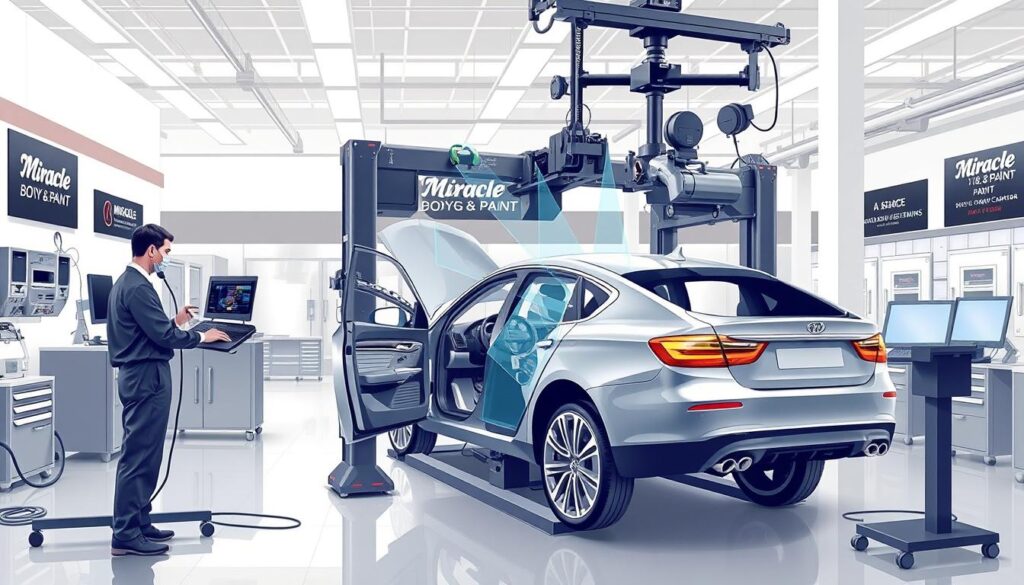
ADAS calibration is a detailed process. It needs precision and the right tools to make safety sensors work right. This is key for advanced driver assistance systems to work well.
The process has many steps. It makes sure the vehicle’s safety features work best after a crash. It’s not just fixing the damage. It’s making sure the systems that prevent accidents are working right.
Types of Calibration Methods
There are two main ways to calibrate ADAS: static and dynamic. Static calibration uses special targets and tools in a controlled area. Dynamic calibration needs the car to move to calibrate the system.
- Static calibration is used for systems like lane departure warning and adaptive cruise control.
- Dynamic calibration is needed for systems that must be calibrated while the car moves.
Tools and Equipment Used for Calibration
Calibrating ADAS needs special tools and equipment. This includes calibration targets, scan tools, and software for ADAS. The tools needed depend on the car’s make and the ADAS technology it has.
Places like Miracle Body and Paint Collision Center have the latest tools and training. Their technicians can calibrate ADAS systems well. This makes sure the car’s safety features work right, giving drivers peace of mind.
Who Should Perform ADAS Calibration?
Only trained technicians should do ADAS calibration. It’s important to pick a repair shop with a good track record in ADAS calibration. This ensures the job is done right.
When choosing a repair shop, look for places that train their technicians well. They should also have the latest equipment for ADAS calibration. This ensures your car is fixed right and its safety features are calibrated well.
Best Practices for ADAS Calibration Post-Repair
After a crash, it’s key to make sure your car’s ADAS works right. This means doing a good job of radar calibration and checking safety sensors. This ensures they work as they should.
Proper Shop Selection
It’s important to pick a repair shop that knows how to calibrate ADAS. Look for places with experience and the right tools for your car’s safety sensors.
Regular Checks
Regular checks are key to keep your car’s safety sensors working well. This helps avoid problems from ADAS parts that are not set up right.
Driver Education
Teaching drivers about their car’s ADAS is also important. Knowing what these systems can do helps them work better. If you need repair or calibration, contact Miracle Body and Paint Collision Center. We have two places in San Antonio ready to help you.
Trust us to make your car safe and good as new again.

