

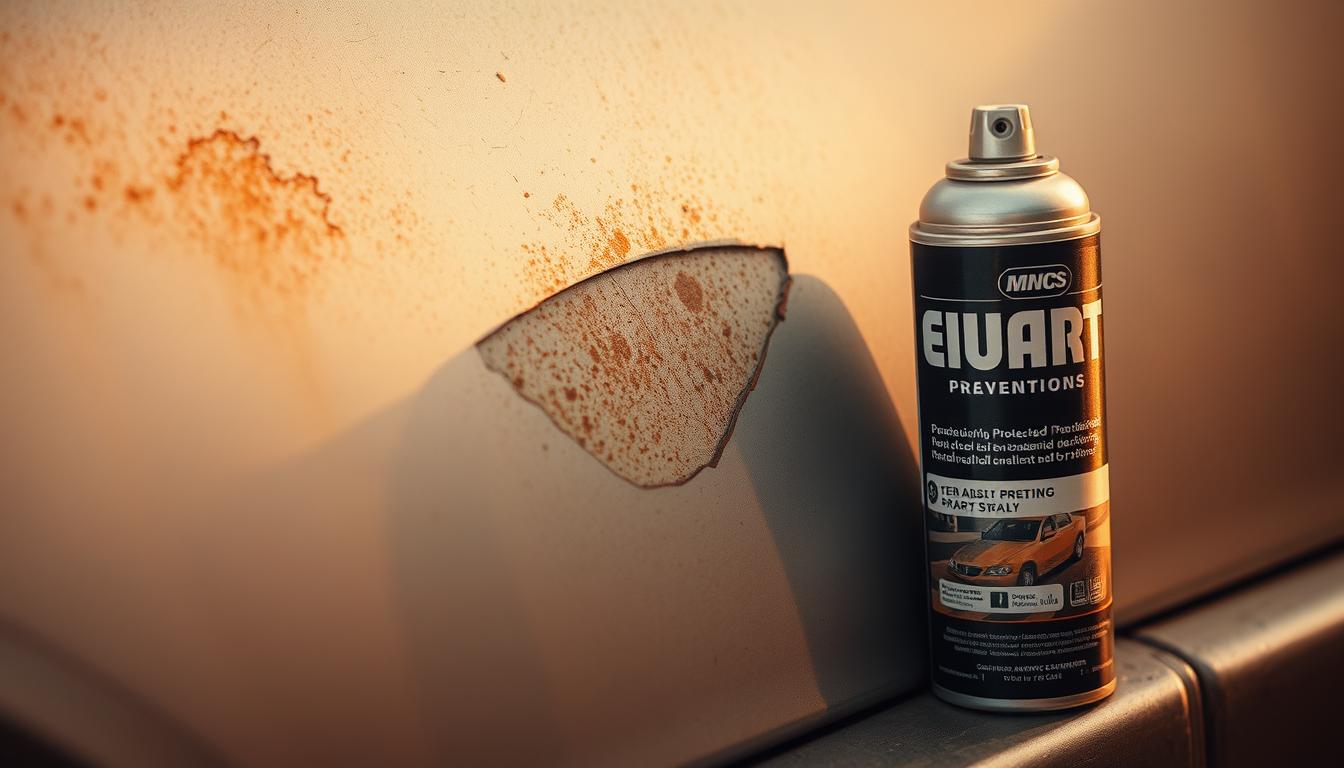
After a car crash, keeping your vehicle in good shape is key. Rust can form when metal meets moisture and oxygen. If not stopped, rust can make your car unsafe.
Act fast to avoid more harm. Regular checks can spot rust early. For the best care, look into corrosion control and repair services.
Key Takeaways
- Regular inspections are key to catching rust early.
- Rust can harm your car’s safety and look.
- Experts offer top rust prevention and repair.
- Quick action is vital after a crash.
- Good corrosion control keeps your car safe.
Understanding Rust Formation
Knowing how rust forms is key to stopping it on your car. Rust is a common problem that happens when metal meets certain conditions. This leads to corrosion and damage.
The Science Behind Rust
Rust comes from a chemical reaction called oxidation. This happens when metal meets oxygen and moisture. Things like humidity, rain, and chemicals like road salt speed up this reaction.
Oxidation Process: The oxidation process is when metal and oxygen swap electrons. This creates iron oxide, or rust. Over time, this weakens the metal.
Common Causes of Rust in Vehicles
Several things can cause rust on cars, including:
- Exposure to moisture and humidity
- Contact with road salt and other chemicals
- Damage from collisions, leading to exposed metal
Knowing these causes helps us prevent rust.
| Cause | Description | Prevention Method |
|---|---|---|
| Moisture and Humidity | High humidity and rain speed up rust. | Regular washing and waxing |
| Road Salt and Chemicals | Road salt used in winter can cause rust. | Avoiding areas where salt is used, regular cleaning |
| Collision Damage | Exposed metal after a collision can rust. | Prompt repair of damaged areas |
By understanding rust and its causes, car owners can prevent it. This protects their investment.
Importance of Rust Prevention
The importance of rust prevention is huge. It keeps your vehicle in top shape. Rust can cause big damage, affecting how your car looks and its safety.
By focusing on rust prevention, you keep your car safe and looking good. It’s not just about looks. It’s about keeping your car healthy.
Protecting Your Investment
One big reason to prevent rust is to save money. Rust can cause expensive repairs later on. This includes fixing damaged parts or dealing with rust failures.
- Rust can weaken metal, leading to failures.
- Stopping rust saves you money on repairs.
- A rust-free car keeps its value better.
Ensuring Vehicle Safety
Rust prevention is also key for safety. Rust can damage important parts like brake lines and suspension. This can lead to accidents.
Keeping your car rust-free means you can drive safely. You won’t worry about rust failures. Regular checks and maintenance are important for rust prevention.
By preventing rust, you make driving safer for everyone. It’s about being proactive. Regular checks and quick action help keep your car safe and your driving experience better.
Steps to Take Immediately After a Collision
A collision can expose your vehicle’s metal to the elements, making it essential to take immediate steps to prevent rust. The process begins with a thorough inspection of the damaged area. This is to identify any exposed metal that could be susceptible to rust formation.
Inspecting for Damage
Inspecting your vehicle after a collision is key. Look for any signs of damage, such as dents, scratches, or areas where the paint has been chipped or cracked. These areas are vulnerable to rust, if the damage exposes the underlying metal.
Key areas to inspect include:
- Bumper and surrounding body panels
- Doors and door frames
- Trunk lid and surrounding areas
- Any area with visible damage or scratches
Cleaning Exposed Areas
Once you’ve identified the damaged areas, clean them thoroughly. Use a mild soap and water to remove dirt or debris. For more severe damage, a wire brush might be needed to remove loose rust or debris. After cleaning, dry the area completely to prevent water spots.
It’s also recommended to apply a rust inhibitor or rust-preventive coating to the cleaned areas. These products can provide a protective barrier against moisture, significantly reducing the risk of rust formation.
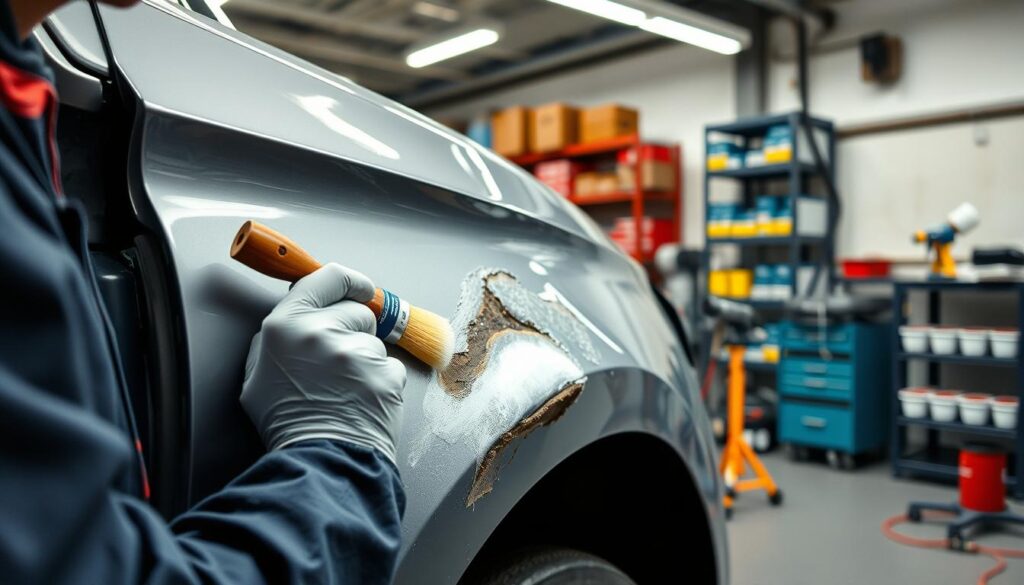
By taking these steps immediately after a collision, you can significantly reduce the risk of rust forming on your vehicle’s damaged metal parts. Regular maintenance and inspections will further enhance your vehicle’s longevity and appearance.
The Role of Quality Auto Body Repair
Quality auto body repair boosts rust prevention by fixing both looks and structure. After a crash, damage goes beyond what you see. It can weaken the car’s fight against rust.
Choosing a Trusted Repair Shop
Finding a reliable auto body repair shop is key. It ensures repairs are done right and keeps rust away. A good shop has the skills and tools for top-notch fixes.
Key factors to consider when choosing a repair shop include:
- Experience with similar repairs
- Use of modern equipment and techniques
- Customer reviews and reputation
- Warranty offered on repairs
Importance of Professional Techniques
Using expert techniques in auto body repair is vital for rust prevention. This means cleaning the surface right, applying the right coatings, and fixing or replacing damaged parts.
A comparison of different auto body repair methods and their effectiveness in rust prevention is shown in the table below:
| Repair Method | Rust Prevention Effectiveness | Cost |
|---|---|---|
| Basic Repair | Low | $500 |
| Standard Repair | Medium | $1,000 |
| Advanced Repair with Coatings | High | $1,500 |
Advanced repair methods with protective coatings are the best at preventing rust. But, they cost more.
Protective Coatings for Your Vehicle
Applying protective coatings is a great way to keep your vehicle safe from rust. These coatings block moisture and oxygen from reaching your vehicle’s metal parts.
There are many types of protective coatings out there. Each one has its own benefits. Knowing about them can help you choose the best option for your vehicle.
What Are Rust Inhibitors?
Rust inhibitors are chemicals that stop rust from forming on metal surfaces. They create a protective layer that keeps moisture and oxygen away. This stops the chemical reaction that causes rust.
- They are great for protecting areas of your vehicle that are more likely to rust, like the undercarriage and wheel wells.
- Rust inhibitors can be used during manufacturing or as an after-market treatment.
Benefits of Paint Sealants
Paint sealants add an extra layer of protection for your vehicle’s paint. They keep it safe from dirt and minor scratches. They also help prevent moisture from reaching the metal.
- They make your vehicle look better by giving it a shiny finish.
- Paint sealants are easy to apply and can be reapplied when needed to keep them working.
For more info on how professional paint repair can boost your car’s value, check out Miracle Collision Center. Using protective coatings and regular care can make your vehicle last longer and look great.
Regular Maintenance Tips
Keeping your vehicle in top shape after a collision is more than just fixing the damage. It’s about preventing rust too. Regular care is key to keeping your car looking and running great.
Importance of Regular Inspections
Regular checks are essential to spot rust early. By inspecting your car often, you can catch rust before it gets worse. Look closely at areas like the undercarriage, wheel wells, and any spots that were fixed.
Key areas to inspect include:
- The undercarriage for any signs of rust or damage
- Wheel wells for rust or corrosion
- Any damaged or repaired areas for signs of rust
| Inspection Area | What to Look For | Action to Take |
|---|---|---|
| Undercarriage | Signs of rust, damage, or wear | Clean and apply rust inhibitor |
| Wheel Wells | Rust, corrosion, or debris buildup | Clean and apply rust-resistant coating |
| Damaged or Repaired Areas | Signs of rust or corrosion | Touch up with paint and apply clear coat |
Washing and Waxing Your Vehicle
Washing and waxing your car regularly can help prevent rust. Washing gets rid of dirt that can cause rust. Waxing adds a protective layer against the weather.
Tips for effective washing and waxing:
- Wash your vehicle regularly, after being exposed to salt or sand
- Use a mild soap and avoid harsh chemicals
- Wax your vehicle every few months to keep the protective coating
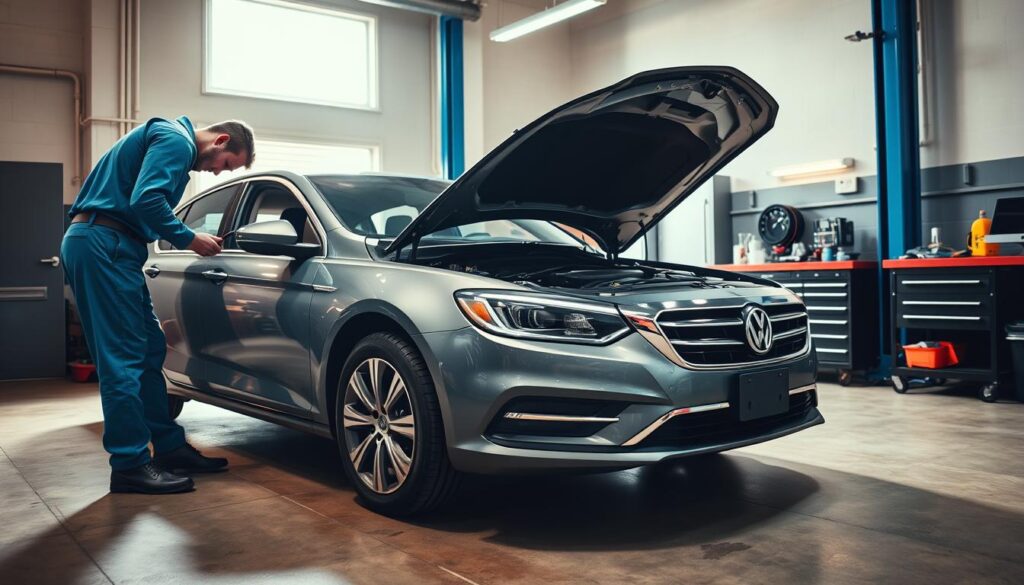
By following these tips, you can prevent rust and keep your car in great shape. Regular checks and washing and waxing are important for your car’s health and appearance.
Seasonal Considerations for Rust Prevention
Knowing how seasons affect rust is key to preventing it. Each season brings unique challenges, like winter’s salt and summer’s humidity.
Preparing for Winter
Winter is tough on cars because of salt and cold. To keep your car safe:
- Check your car’s underside for damage or weak spots that winter can make worse.
- Use a rust inhibitor on areas at risk to protect against salt and moisture.
- Wash your car often, focusing on the underside, to remove salt and dirt.
Here’s a look at common winter rust prevention methods:
| Method | Effectiveness | Cost |
|---|---|---|
| Rust Inhibitor Application | High | Moderate |
| Frequent Washing | Moderate | Low |
| Undercarriage Coating | High | High |
Dealing with Humid Conditions
Moisture in humid areas speeds up rust. To fight this:
- Check your car often for rust, looking at places like the trunk and hood.
- Use a dehumidifier in your garage to cut down on moisture.
- Apply a paint sealant to keep your car’s paint and metal dry.
By tackling seasonal rust prevention challenges, car owners can make their vehicles last longer.
Importance of Prompt Repairs
The importance of quick repairs for rust prevention is huge. After a crash, your car’s body is open to rust, mainly if metal is exposed.
Even small dents and scratches can turn into big problems if not fixed right away. Exposed metal is a prime target for rust, which can spread fast and cause a lot of damage.
Addressing Minor Dents and Scratches
It’s key to fix even the smallest dents and scratches fast. These small damages can expose metal under the paint, making it perfect for rust to start. Quick repairs stop rust from growing and causing more harm.
Regular checks can spot areas needing repair. Look for any damage like dents, scratches, or chipped paint. Fixing these quickly keeps your car strong and rust-free.
Long-Term Damage from Delayed Repairs
Waiting to fix things can cause big problems later. Rust can spread fast, weakening your car’s structure. This can lead to expensive fixes and safety risks.
By focusing on prompt repairs, you dodge these issues and keep your car in top shape. Remember, fixing small problems early stops rust and keeps your car healthy.
In short, quick repairs are vital for stopping rust and keeping your car running well. By fixing small issues early and checking your car often, you protect it from serious damage.
Hire Miracle Body and Paint Collision Center
Choosing the right repair center after a collision is key. Miracle Body and Paint Collision Center focuses on both fixing your car’s exterior and preventing rust. We know how important quality repair and rust prevention are.
Expertise You Can Trust
Our team is committed to excellent collision repair. We make sure your car looks and works like new. We use the latest methods and materials to stop rust, keeping your car safe and your investment secure.
Get in Touch with Us
Need reliable collision repair in North East San Antonio? Miracle Body and Paint Collision Center is here for you. Call us at (210) 858-3630 or visit 4650 Walzem Rd, San Antonio, TX 78218. Let us repair your car and protect it from rust.

