

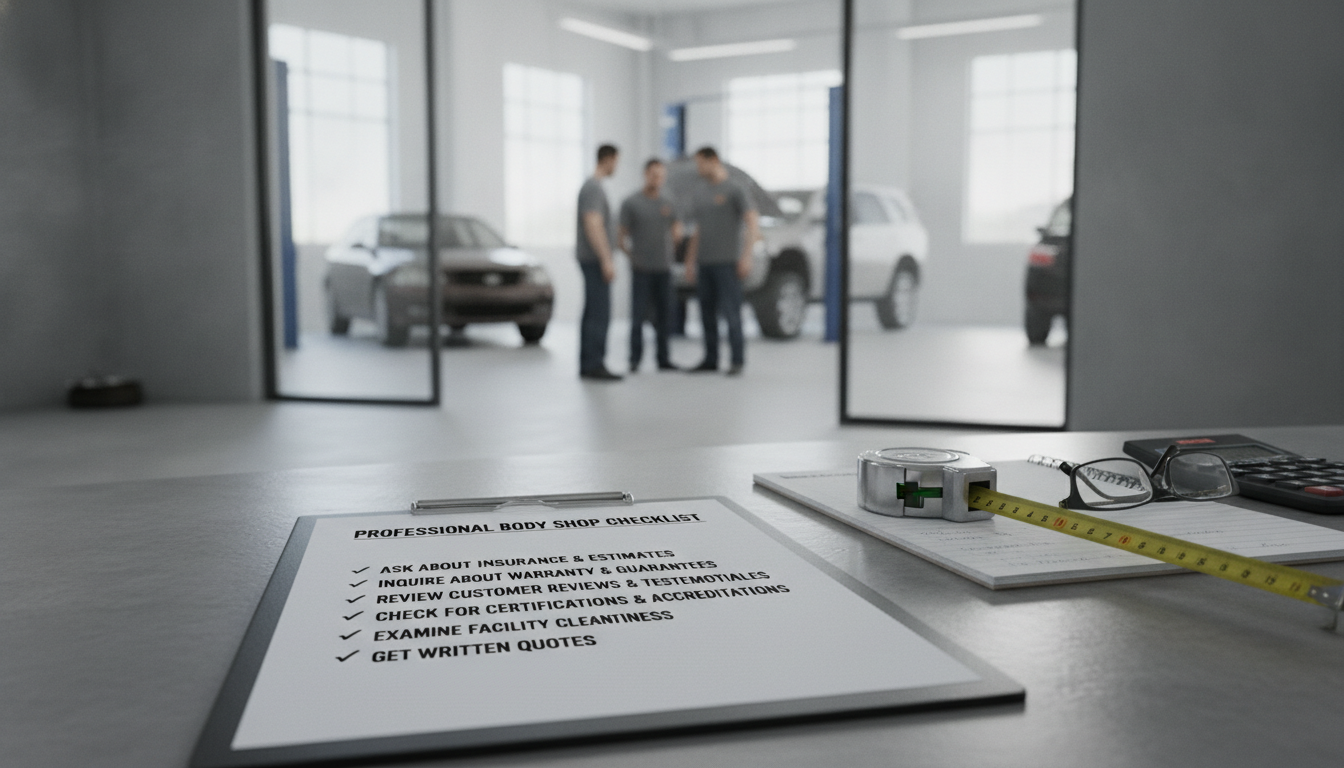
An accident can feel stressful, but choosing the right repair facility should not add to your burden. You deserve clear information and expert care as your vehicle returns to its pre-crash condition. Learning the initial evaluation process helps protect your investment.
Repair choices can overwhelm many drivers. Use a best body shop checklist to compare facilities for technical skill, honesty, and customer service. This preparation helps you get an accurate damage assessment and a clear path forward.
During your visit, professionals will inspect hidden damage and explain the repair timeline. Knowing how to choose a body shop with strong quality control and insurance help can save time and money. Use this guide to understand your estimate and feel confident about the next steps.
Key Takeaways
- Prepare for your estimate by documenting all visible vehicle damage beforehand.
- Ask about specific certifications to ensure technicians meet industry safety standards.
- Inquire about the use of original equipment manufacturer parts for your repairs.
- Verify that the facility offers a written warranty on all labor and paint work.
- Confirm the shop handles direct communication with your insurance provider.
Understanding the Importance of a Free Collision Repair Estimate
After damage, a free collision estimate becomes your roadmap for recovery. It shows the work needed to return your vehicle to its pre-accident condition. At a certified collision center, trained professionals account for each detail in modern automotive engineering.
Why You Should Get an Estimate
A professional assessment does more than show the price. It also supports safety and transparency. A careful inspection can find structural issues hidden from an untrained eye. A reputable shop offers several key advantages:
- Accurate Scope: You receive a detailed list of necessary parts and labor.
- Safety Assurance: Technicians identify hidden damage that could compromise your vehicle’s integrity.
- Informed Decisions: You can weigh the cost of repairs against your vehicle’s current value.
Remember, a preliminary estimate often marks only the starting point. During a teardown, technicians may find damage hidden behind panels or bumpers. A certified collision center will update your repair plan, helping keep your car safe to drive.
The Impact on Your Insurance Claim
Your estimate serves as the main document for your insurance provider. A professional, itemized report helps you communicate with adjusters and speed approval. Clear documentation prevents confusion and helps your insurer cover needed repairs under industry standards.
A certified collision center can advocate for you during complex insurance claims. They can explain your repairs’ technical needs and help your claim reflect the actual restoration cost. This support is valuable while you manage the stress of an accident claim.
The Process of Getting a Collision Estimate
When you visit a repair facility, its first review guides your vehicle’s recovery. A trustworthy auto body shop values clear details and careful work from your arrival. This process checks every detail and gives you a clear plan for restoring your vehicle.
Initial Assessment of Vehicle Damage
The technician checks the outside for every visible impact point. They check panel alignment to confirm the frame stays square and sound. Safety is the top priority, so they examine your vehicle’s advanced driver-assistance systems and sensors for hidden malfunctions.
To keep the estimate accurate, the shop records each finding with detailed photographs. These images give you and your insurance provider an important record. Photos from many angles create a solid foundation for the final repair plan.
Documentation Needed for the Estimate
To make your visit easier, bring the needed paperwork. Have your insurance policy information and claim number ready for communication with your provider. Also bring your vehicle registration and a valid driver’s license to confirm ownership and identity.
Records of previous repairs or maintenance can also help. A trustworthy auto body shop uses them to separate new collision damage from pre-existing wear. Complete information helps the team create a more accurate, reliable estimate for your needs.
What to Expect During Your Estimate Appointment
Knowing what happens during your collision repair appointment helps you stay in control. When you arrive, a professional technician will inspect your vehicle carefully. This meeting guides your repair plan and keeps everyone clear about the work.
Duration of the Estimate Process
The estimate time depends on the damage. For minor cosmetic scratches or small dents, the process may take fifteen to thirty minutes. If the accident caused possible structural, electronic, or hidden damage, the technician needs more time for a comprehensive assessment.
Plan extra time if the vehicle needs a lift inspection or trim panels removed. Patience matters because a careful inspection helps prevent unexpected costs later. The best body shop checklist helps you avoid feeling rushed as the technician gathers needed data.
Key Details the Technician Will Provide
After the inspection, the technician will present a detailed report. It should list the needed parts, estimated labor hours, and projected timeline for completion. Ask questions if any detail seems unclear or you want to understand the repair techniques.
To help ensure high-quality service, keep this best body shop checklist in mind during your review:
- Written Estimates: Always request a printed or digital copy of the findings.
- Realistic Timelines: Ask for a clear start and end date for the repairs.
- Repair Explanations: Ensure the technician explains why specific parts or methods are necessary.
- Communication Expectations: Confirm how the shop will update you on the progress of your vehicle.
Following this best body shop checklist can help you choose a repair facility with confidence. Clear communication shows a professional shop values your time and your vehicle’s safety.
Common Types of Damage Assessed
After an accident, inspect your vehicle for obvious damage and hidden collision damage. Only a professional collision damage assessment can confirm your car is safe for the road. Technicians inspect beyond the surface for problems that could weaken your vehicle.
Cosmetic vs. Structural Damage
Cosmetic damage usually affects your vehicle’s exterior panels. It includes scratches, small dents, and paint chips that harm your car’s appearance. These visible issues rarely affect mechanical performance or vehicle safety.
In contrast, structural damage affects the core parts that protect you. It can involve frame rails, pillars, and other critical support structures. Bent or weakened parts may fail to protect you during a future impact.
Identification of Hidden Damages
Many drivers think a drivable car is safe to use. However, hidden collision damage may hide behind bumpers, inside door panels, or in the engine bay. Technicians use advanced tools to find these problems before they become dangerous.
The process often includes a full teardown of internal brackets and mounts. Modern vehicles use complex sensors, electronic systems, airbags, and collision avoidance systems requiring precise tests. Experts use a complete collision damage assessment to confirm all safety features work as the manufacturer intended.
Preparing for Your Collision Estimate Appointment
Proper collision estimate preparation helps technicians assess your vehicle precisely. Organize materials early so the shop can inspect your car’s mechanical and structural condition. This preparation makes your visit more efficient and productive.
Collecting Necessary Documentation
Having the right paperwork ready makes your visit smoother. Bring your auto insurance documentation, including policy details and the claim number from your insurer. These papers help the shop discuss coverage and billing with your insurance provider.
Also, bring your vehicle registration and a valid driver’s license to verify ownership. Keep photographs of the accident scene or initial damage handy for helpful context. Past repair records can help the technician understand your vehicle’s maintenance history.
What to Bring to the Meeting
Preparing your vehicle also matters. Please remove all personal belongings from the interior and trunk so the technician can reach damaged areas. Point out any dashboard warning lights during the inspection.
Clear access to damaged areas helps reveal hidden issues. Use the following checklist to bring everything needed for a successful appointment.
| Category | Item | Purpose |
|---|---|---|
| Documentation | Insurance Policy | Verify coverage details |
| Identification | Driver’s License | Confirm identity |
| Evidence | Accident Photos | Document initial impact |
| Vehicle Prep | Clear Interior | Allow full inspection |
Questions to Ask Your Collision Estimate Technician
Clear questions help you understand what your car needs before it returns to the road. Your goal is full honesty about the vehicle’s repairs and recovery. These collision repair questions move past price and explain the work.
Understanding Repair Costs and Parts
Ask how the technician finds hidden damage missed during the first walk-around. Also ask whether the shop will use Original Equipment Manufacturer (OEM) parts or aftermarket options. Ask whether insurance rules require non-factory parts, which may affect your vehicle’s long-term strength.
Ask the shop to explain its labor rates for your repair. Learn why the team would repair some parts but replace others. Request these details in writing to prevent confusion later.
Clarifying Timeline and Warranty Information
Ask for a realistic completion date. Also ask how the team will update you during the process. Knowing when reports arrive helps you plan while your car is serviced.
Before approving work, get complete repair warranty information. Ask what the warranty covers and how long it lasts. Use the table below to track details you should confirm during your consultation.
| Category | Key Question to Ask | Why It Matters |
|---|---|---|
| Parts Quality | Are you using OEM or aftermarket parts? | Ensures safety and fitment standards. |
| Hidden Damage | How do you account for internal damage? | Prevents surprise costs later. |
| Timeline | What is the estimated completion date? | Helps you plan your transportation. |
| Warranty | What is your repair warranty information? | Protects your investment long-term. |
Understanding Repair Options Offered
Repair estimates can list several parts and methods. Each choice can affect cost and your vehicle’s long-term safety. Ask your technician why the choice fits your situation.
OEM vs. Aftermarket Parts
The main choice is between OEM collision repair parts and aftermarket auto parts. Original Equipment Manufacturer (OEM) parts come from your vehicle’s brand, fit well, and support factory safety standards. They are reliable and work smoothly with your car’s systems.
Conversely, aftermarket auto parts come from third-party companies. They can cost less, but quality and fit may vary widely. Ask your shop whether insurance requires non-OEM parts or lets you request original parts.
Types of Repair Techniques Used
Besides parts, repair methods affect the final result. For minor dings without paint damage, paintless dent repair is efficient and less invasive. It preserves the original factory finish while removing imperfections.
For greater damage, technicians may use conventional bodywork, which sands, fills, and repaints panels. Severe impacts may require structural measurement and panel replacement to restore the safety cage. Make sure your shop uses industry-standard equipment to verify all safety requirements after complex repairs.
| Repair Method | Best For | Key Benefit |
|---|---|---|
| Paintless Dent Repair | Minor dings | Preserves factory paint |
| Panel Replacement | Heavy damage | Restores structural integrity |
| Conventional Bodywork | Surface scratches | Cost-effective restoration |
Do not assume the least expensive option is best for safety. Prioritize quality and durability when discussing repair paths with your technician. This helps keep your vehicle in peak condition.
How to Interpret Your Estimate Report
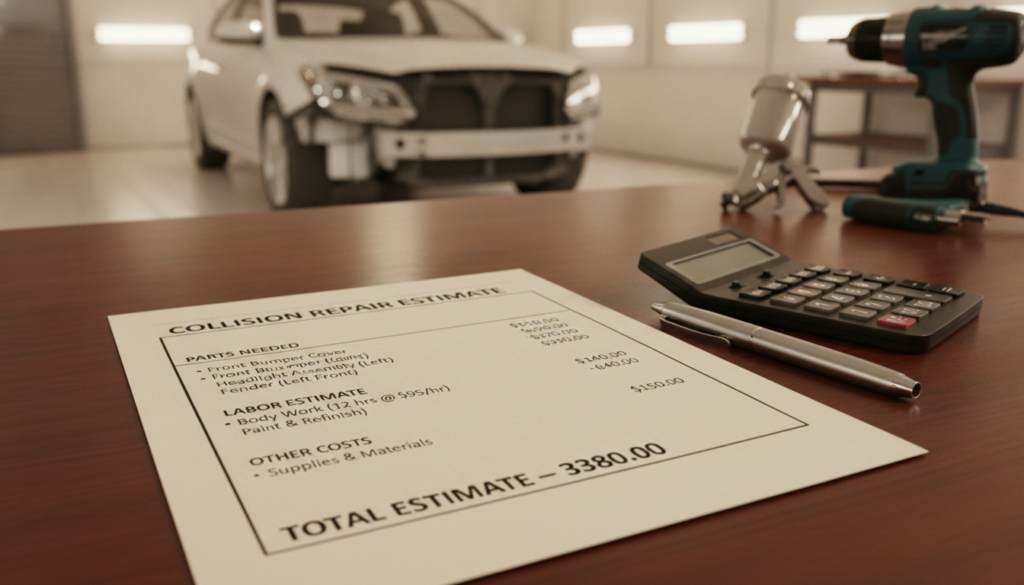
Understanding your estimate report helps you make informed choices about your car. Paperwork from a repair facility gives you a clear plan for restoring your vehicle. Reviewing it helps you know which services you will pay for.
Understanding the Breakdown of Costs
Your document should separate charges clearly, so you can see the full cost. You will usually see labor hours, showing repair time, and parts descriptions, showing whether parts are new or recycled. Also check paint charges, shop fees, and required electronic calibrations.
Precision is key when you review these figures. Ask for details if line items seem vague or charges appear as unexplained lump sums. A professional shop should explain every part of the repair process.
Importance of Itemized Estimates
An itemized collision estimate protects you from unexpected billing disputes. When every task appears separately, you can compare shop quotes and check fair market value. Details also help confirm that the final plan includes all safety procedures.
Watch for common body shop red flags that may show poor service. Red flags include missing safety steps, unclear parts labels, or unexplained extra charges. If a shop gives a vague estimate or dismisses your questions, seek a second opinion.
| Feature | Transparent Estimate | Questionable Estimate |
|---|---|---|
| Pricing | Detailed line items | Vague lump sums |
| Parts | Clearly labeled (OEM/Aftermarket) | Unspecified or hidden |
| Safety | Includes calibration steps | Omits safety procedures |
| Communication | Open to questions | Refuses to explain costs |
Factors That Affect Collision Repair Costs
Many drivers are surprised that identical damage can cost different amounts, depending on the vehicle. Several technical details set your vehicle restoration cost when you receive an estimate. Understanding these collision repair cost factors helps explain why a professional shop provides a specific quote.
The Vehicle’s Make and Model
Your car’s brand and model affect the final price. Luxury or specialized vehicles often need proprietary parts that cost more than standard components. High-strength steel and aluminum also need special tools and training for proper repairs.
Part availability also affects the final cost. Backordered parts or overseas shipping raise logistical costs. Manufacturers often require strict repair methods to protect safety ratings, limiting aftermarket part choices.
Labor Costs and Repair Complexity
The total vehicle repair complexity is perhaps the biggest factor in your final bill. Modern cars have electronic systems, sensors, and cameras needing precise calibration after crashes. Skipping these steps to lower the price may put your safety at risk.
Labor rates depend on the technician’s skill and the equipment needed for the job. Structural repairs realign the vehicle frame and take more time and skill than cosmetic fixes. Always remember that a higher estimate reflects needed procedures that restore your vehicle to its pre-accident condition, while a very low quote may mean essential safety steps were skipped.
Choosing the Right Collision Repair Shop
Your vehicle deserves expert care, but knowing how to choose a body shop can feel hard. Your repair depends on the skill and honesty of the technicians working on your car. Use a clear plan to restore your vehicle safely and efficiently to its pre-accident condition.
Why Experience Matters
Experience builds the foundation for a high-quality repair. A shop serving the community for years may know how to handle complex structural damage. Look for facilities with current certifications from major automotive manufacturers, showing commitment to modern repair standards.
Also, check the shop’s equipment and facility organization. A trustworthy auto body shop keeps a clean, professional space with organized tools and strict safety rules. Use the following best body shop checklist to compare potential candidates:
- Certifications: Verify if technicians are I-CAR or OEM certified.
- Written Estimates: Ensure they provide a detailed, itemized breakdown of costs.
- Warranties: Confirm the shop offers a written guarantee on their workmanship.
- Repair Photographs: Ask to see examples of previous work on similar vehicle models.
- Communication: Assess how clearly they explain the repair process and timeline.
What to Look for in Customer Reviews
When reading body shop reviews, do not rely only on star ratings. Look for patterns in written feedback that show repeated strengths or problems. Check comments about insurance claims and updates during the repair process.
Several reviews praising transparent communication or timely delivery suggest a reliable business. Be careful with vague complaints about hidden costs or poor fit-and-finish. Detailed accounts can reveal a shop that values customer satisfaction and technical precision.
The Role of Insurance in Collision Repair
Knowing your rights about collision insurance claims helps every driver after a crash. Your policy helps pay for repairs, but you must understand the process. This knowledge helps your vehicle receive proper care.
Understanding Your Coverage
Your deductibles and coverage limits set the financial scope of repairs. Review your policy early to learn which costs you may pay. Always verify whether it requires certain parts or lets you request original equipment manufacturer (OEM) components.
Many policies include rules about where you can take your vehicle. An insurer may suggest a direct repair program, but you often can choose a qualified facility. Choose a shop that puts safety before insurer cost cuts, supporting your vehicle’s long-term health.
How to Navigate the Insurance Process
A successful repair may need professional insurance claim assistance to reduce your paperwork. A reputable shop can manage provider communication, especially when teardown reveals hidden damage.
If more damage appears, the shop files a supplement to your original claim. This helps the insurer pay for repairs that restore your vehicle to its pre-accident condition. Do not hesitate to ask your technician about experience with insurance claim assistance so they can handle negotiations well.
Finally, remember that a direct repair program is a partnership between a shop and an insurer. You do not have to use these facilities if you prefer an independent repair center. By staying proactive and asking about repair steps and records, you protect your investment and support high-quality results.
What Comes Next After the Estimate
Clear communication and planning help you move from the estimate to your vehicle’s repair. Once you have the document, you can begin restoring your vehicle.
This phase helps ensure the shop addresses all damage. Staying informed can help you feel confident about your car’s repair quality.
Approving the Work Needed for Repairs
First, review the estimate’s scope carefully. Check that it lists every known damage and that you understand the repair plan. If insurance is involved, confirm the carrier authorized the needed collision repair approval.
Technicians may find more damage after they take the vehicle apart. The shop will then send your insurer a supplement for approval. Stay in touch with your service advisor to avoid surprises in the original plan.
Scheduling the Repair Appointment
After the paperwork is complete, focus on auto body repair scheduling. Parts availability and the technicians’ workload help determine when your vehicle can enter the shop.
Your service advisor will help you choose a date that fits your calendar. If repairs take time, arrange other transportation. Ask for the expected completion date and the schedule for status updates.
Before dropping off your car, confirm your auto body repair scheduling details to avoid confusion. At pickup, you will receive a final invoice and warranty documents for the work. Securing formal collision repair approval and planning early will make the process smoother.
The Benefits of Getting Multiple Estimates
You may want to accept the first repair quote, but gathering multiple collision estimates is a smarter choice. Visiting several trusted shops helps you understand your vehicle’s needs and find quality service for your money. This step helps you seek high-quality service for your investment.
Comparing Costs and Services
Compare more than the final dollar amount. Shops may use different repair methods, parts policies, and warranty coverage options. Quality should always be your top priority when you review each quote.
Notice how each shop communicates with you. A professional team explains its process and answers your questions clearly. If a shop seems rushed or dismissive, it may not put your vehicle’s safety first.
Avoiding Underestimations
Be careful with quotes that cost much less than others. These prices may leave out structural measurements, needed calibrations, or high-quality parts. Incomplete documentation is one of the most common body shop red flags during your search.
Other body shop red flags include pressure to decide now or promises of unrealistic completion dates. If a shop cannot provide a detailed, itemized work breakdown, consider looking elsewhere. Protecting your vehicle’s integrity means choosing a partner who values transparency and precision over speed.
Miracle Body and Paint Collision Center Overview
When your vehicle needs professional care, choosing the right facility matters. You deserve a partner who understands accident stress and works to restore your car to its original condition. Miracle Body and Paint Collision Center has built a reputation as a trustworthy auto body shop through precise, honest work.
Locations in San Antonio to Serve You
Convenience matters when vehicle damage disrupts your day. We operate two accessible facilities across San Antonio to better serve our community. Visit our North West San Antonio–Leon Valley location or our North East San Antonio shop for expert help.
Both centers meet the same high standards and can handle your repair needs. You receive smooth service at either location for your San Antonio collision repair.
Commitment to Quality and Customer Satisfaction
Your peace of mind guides us through every step of the repair process. Read our body shop reviews to learn how we helped other drivers return safely to the road. Our team values clear communication and skilled work on every project.
We believe honest service builds lasting client relationships. When you choose us, you choose a team that respects your time and puts your vehicle’s safety first.
| Service Feature | Standard Shop | Miracle Body and Paint |
|---|---|---|
| Repair Quality | Basic | Certified Excellence |
| Customer Support | Limited | Dedicated Assistance |
| Location Access | Single Site | Two Convenient Hubs |
| Warranty | Short-term | Comprehensive Coverage |
Why You Should Choose Miracle Body and Paint Collision Center
When your vehicle needs care, a trusted partner makes a big difference. You need a facility that values your safety. Miracle Body and Paint Collision Center provides quality collision repairs that restore vehicles to original factory standards.
Experienced Technicians Dedicated to Quality
Our skilled team understands modern vehicle engineering. Each technician receives rigorous training on current, manufacturer-aligned procedures. We believe precision supports every successful repair.
Choosing a certified collision center gives your car specialized care. Our staff completes inspections, structural checks, and detailed refinishing. We document each step, giving you clear information and confidence in our work.
Advanced Equipment for Accurate Repairs
Modern vehicles use sensitive technology that needs special tools for proper repairs. We use advanced collision repair equipment for precise frame alignment and computer diagnostics. This technology can find hidden damage that others might miss.
Safety comes first, so we check every safety system after repairs. We recalibrate sensors and scan electronics to keep driver-assistance systems working properly. Our facility can handle demanding restoration work with absolute accuracy.
| Service Feature | Standard Shop | Miracle Body and Paint |
|---|---|---|
| Technician Training | Basic Certification | Manufacturer-Aligned |
| Diagnostic Tools | General Scanners | Advanced OEM Systems |
| Repair Documentation | Minimal | Full Detailed Reporting |
| Safety Verification | Visual Inspection | Computerized System Checks |
Contact Miracle Body and Paint Collision Center Today!
After a vehicle accident, careful planning and informed choices can guide your next steps. You can now spot body shop red flags and review repair estimates with confidence. Choosing a trusted partner is the key step toward restoring your vehicle to its original condition.
Locations and Contact Information
Miracle Body and Paint Collision Center operates multiple facilities across San Antonio, giving you convenient access to expert care. Our team’s commitment to excellence makes us a premier certified collision center. Contact staff at any local shop to discuss your specific repair needs.
Your Next Steps for Collision Repair
Learning how to choose a body shop means seeking transparency, professional certifications, and a proven track record. Bring your vehicle to Miracle Body and Paint Collision Center for a complete assessment. Our technicians use advanced tools, so every repair meets the highest safety standards. Schedule your visit today and get your car back on the road with peace of mind.

