

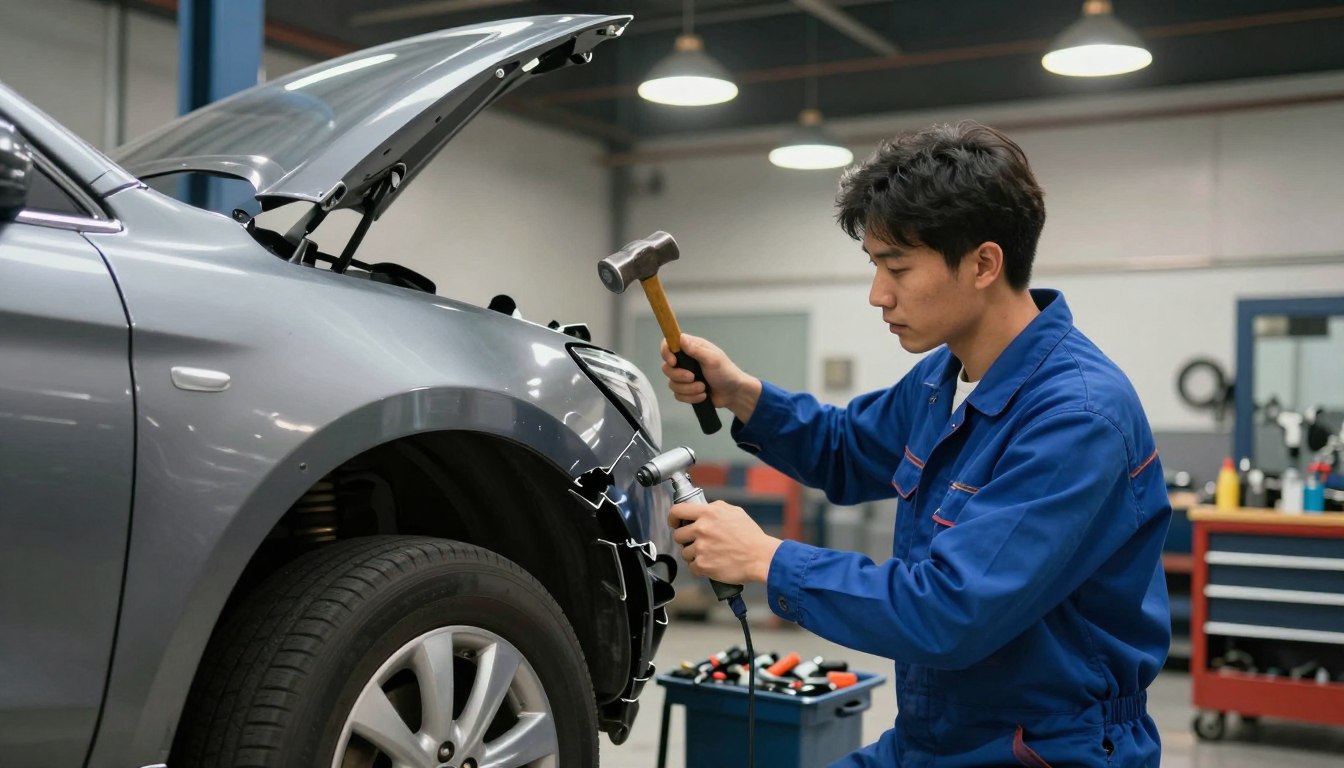
Accidents can be very stressful and often damage your car’s structure. They can harm your engine, cooling parts, and frame. It’s very important for your safety and your car’s life to fix these problems fast.
At Miracle Body and Paint Collision Center, we know how to fix your car right. We have two locations in San Antonio. Our team is great at front end collision repair to make sure you’re safe on the road.
Our experts do everything from fixing your hood to repairing the radiator support. We use the latest tools to make sure your car works perfectly again. You can count on our skilled technicians for all your car needs.
Key Takeaways
- Accidents often cause hidden damage to internal engine and cooling systems.
- Professional assessment is vital to ensure your vehicle remains safe to drive.
- Miracle Body and Paint Collision Center operates two locations in San Antonio.
- Specialized services include structural frame work and component restoration.
- Quality workmanship helps maintain your vehicle’s value and performance.
Understanding the Mechanics of Front End Collision Repair
When your car gets hit in the front, fixing it is more than just a quick fix. Front end collision repair means checking the car’s structure carefully. It’s not just about making the body look good or replacing the bumper.
Technicians look at hidden spots to make sure everything is fixed right. They might need to fix the radiator support to keep the engine cool. If they don’t do it right, it could be unsafe to drive.
Places like Miracle Body and Paint Collision Center use the latest tools and skills. Their team finds small problems that others might miss. They make sure your car is safe and works like it did before the accident.
The main aim is to bring back your car’s safety and how it handles. No matter the damage, a detailed plan is key. Choosing experts who know your car’s intricate mechanics is the smartest choice for your car’s safety.
The Anatomy of a Front End Impact
When your car hits something, the damage is often more than meets the eye. Modern cars are built to handle crashes by spreading out the force. Knowing how this works is key to fixing the damage right.
Energy Absorption Zones and Crumple Zones
Car makers design special zones to absorb crash energy. These crumple zones are made to bend and absorb the shock. This helps keep you safe inside the car.
But, fixing these zones can be a big job. Even small repairs, like fixing the hood, can show deeper issues. If these areas aren’t fixed right, your car’s safety could be at risk.
Impact on the Vehicle Frame and Unibody Structure
In bad crashes, the force can hit the car’s frame or unibody. This is a big deal because the frame is the car’s backbone. Damage here can mess up everything from how the car steers to how safety features work.
Our team at Miracle Body and Paint Collision Center uses special tools to find hidden damage. We make sure your car is fixed right, so you can drive safely again.
Common Cosmetic Damage to Vehicle Hoods
When a car hits something, the hood often gets damaged. This damage is easy to see because the hood is so visible. To fix it right, you need to look closely at the dents and creases.
Assessing Hood Deformation and Creasing
First, technicians check the metal for any signs of damage. They look for deep creases and stress marks. They also check if the damage affects the hood’s latch or hinges.
They search for hidden ripples in the metal. These ripples can show if the frame has moved. Finding these problems early is key to safe front end collision repair.
Techniques for Hood Repair and Panel Replacement
After checking, the team decides how to fix the hood. If the damage is small, they use special tools to fix it. They aim to make the hood look like new again.
If the damage is big, they might replace the whole panel. At Miracle Body and Paint Collision Center, we focus on quality. We want your car to look perfect again, whether we fix it or replace it.
Radiator Support Repair and Cooling System Integrity
After a front-end collision, the radiator support often gets hit hard. It’s key for your cooling system, keeping the radiator, condenser, and fans in place. If it’s bent or cracked, your engine might not cool properly.
For good front end collision repair, you need to check this part well. Even small changes in the frame can mess up your cooling system. This could harm your engine over time.
Identifying Damage to the Radiator Support Assembly
Look for signs that your radiator support is damaged. It’s often hidden by the bumper cover, so you might not see it right away.
Watch for these signs of trouble:
- Visible cracks or breaks in the support frame.
- Issues with the hood latch or trouble closing the hood.
- Unusual vibrations or rattling sounds from the engine bay.
- Leaking coolant or a damaged radiator core.
Restoring Engine Cooling Efficiency After a Collision
When you find damage, fixing the radiator support is urgent. At Miracle Body and Paint Collision Center, our team knows how to find and fix these problems. We make sure everything is back to normal to avoid overheating.
Fixing your car is more than just replacing parts. It’s about getting everything right again. With expert front end collision repair, your cooling system works best. This keeps your car safe, reliable, and ready for the road.
Bumper System Damage and Sensor Calibration
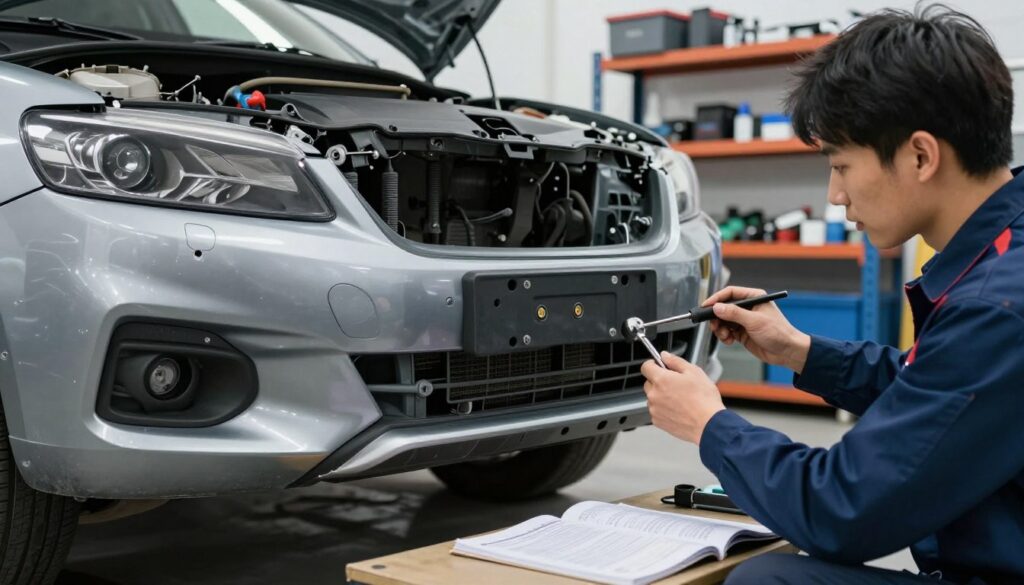
When a front end collision happens, the bumper system usually takes the hit. These parts are made to absorb shock, but they often get badly damaged. This damage needs expert front end collision repair.
Today’s bumpers are more than just for looks. They protect your car’s body and important electronics.
Repairing Plastic and Composite Bumper Covers
Most cars now have plastic or composite bumpers. These materials help with air flow and keep people safe. Fixing these parts needs special skills because they’re not like old steel bumpers.
Technicians check if a bumper can be fixed or if it needs to be replaced. This is to keep your car safe.
Fixing a bumper involves several important steps:
- Surface Preparation: Cleaning and sanding the damaged area to remove debris.
- Material Matching: Using specialized resins or welding techniques compatible with the specific plastic type.
- Refinishing: Applying primers and high-quality paint to match the vehicle’s original color.
The Importance of Recalibrating Advanced Driver Assistance Systems
Your car has Advanced Driver Assistance Systems (ADAS) in or behind the bumper. These systems, like cameras and sensors, are very sensitive. If they’re not set right after a front end collision repair, your car’s safety features might not work right.
At Miracle Body and Paint Collision Center, we use the latest tech to make sure all sensors are set to factory standards. We know your safety is key. Our team fixes the mechanical parts and calibrates the digital systems. This way, your car drives like new, and you can feel complete confidence on the road.
Headlight Assembly Damage and Electrical System Faults
After a crash, your car’s lights often need special care. The impact can push the front bumper and grille inward. This puts a lot of pressure on the headlight assemblies. Fixing this damage is key to ensure your lights work well at night.
Replacing Cracked Lenses and Housing Units
Headlight lenses are tough but can crack or shatter in an accident. Even if the lens looks fine, the inside might have tiny cracks. These cracks can let moisture in, causing bulbs to fail early and electrical contacts to corrode.
During the repair, techs must check these units closely. If the mounting tabs are broken or the housing is off, the whole unit might need to be replaced. This keeps your beam pattern right and safe.
Troubleshooting Wiring Harness Issues Post-Collision
The electrical system is often ignored after a crash. A big impact can damage the wiring harnesses for your headlights and turn signals. These problems can make lights flicker or stop working if not fixed by a pro.
At a good repair shop, experts use special tools to find these issues. They make sure all connections are good and voltage levels are right. Fixing these circuits right is key to avoid damage to your car’s computer or fuse box.
Fender Damage and Alignment Challenges
When your car hits something, the fenders usually take the hit. This damage can go deeper than just scratches, affecting the metal and how it connects to the car’s frame. Fixing these problems is key to any front end collision repair job.
Addressing Dents and Structural Fender Integrity
Technicians must check how bad the dents and creases are. They decide if the panel can be fixed or needs to be replaced. The main goal is to keep the fender strong, as it holds important parts.
Experts use special tools to fix the metal, keeping it strong. This careful work stops rust and makes sure the fender can handle future impacts. Shops like Miracle Body and Paint Collision Center make sure your car is safe.
Ensuring Proper Panel Gaps and Body Line Alignment
Getting the panels to line up perfectly is what makes a repair stand out. When fixing a fender, it must match the door, bumper, and hood just right. Good hood repair means the fender and hood fit together well.
Uneven gaps can cause noise, leaks, or trouble opening the hood. Technicians focus on making sure the gaps are even and the body lines are smooth. This makes the car look new again.
- Consistent panel gaps between the fender and the hood.
- Smooth transitions along the body lines to ensure a factory-fresh look.
- Secure mounting points that prevent vibration or rattling while driving.
By paying attention to these details, your car will look like it did when it was new. A well-aligned repair shows the skill of modern front end collision repair.
Engine Bay Component Inspection and Repair
A successful front end collision repair means checking the engine bay well. Exterior damage is easy to see, but internal parts can get stressed too. Ignoring these parts can cause long-term problems or safety risks, like hidden damage from rear-end collisions you shouldn’t ignore.
Checking for Hidden Damage to Engine Mounts
Engine mounts absorb vibrations and keep the engine in place. A collision can damage these mounts, causing the engine to vibrate too much. If these mounts are compromised, it can harm other parts of the drivetrain.
Technicians must carefully check these mounts. They look for signs of wear or damage. Replacing damaged mounts is key to fixing your vehicle’s powertrain.
Repairing Air Intake and Accessory Drive Systems
The air intake and accessory drive belts are near the engine bay’s front. A good radiator support repair also checks these systems. If the intake housing is damaged, your engine may not get enough air, affecting fuel efficiency and power.
At Miracle Body and Paint Collision Center, our experts follow a strict checklist. They make sure every part is fixed to factory standards:
- Air Intake Inspection: They check for small cracks in the plastic housing and ensure all seals are tight.
- Accessory Drive Assessment: They check if pulleys are aligned and belts are not frayed or misaligned.
- Fluid Line Verification: They make sure cooling and power steering lines are straight and secure after the impact.
By fixing these internal systems, we make sure your vehicle works like new again. Paying close attention to detail during your front end collision repair protects your investment and keeps you safe on the road.
Suspension and Steering System Complications
A front end collision repair can affect the hidden systems that keep your car safe. While hood repair fixes the look, the steering and suspension are key for safety. These parts absorb shock but can bend or break in a crash.
Detecting Bent Control Arms and Tie Rods
The control arms and tie rods are essential for your car’s handling. Damage to these parts can make your steering feel off or the car pull to one side. Technicians must check for even small bends to avoid bigger problems later.
At Miracle Body and Paint Collision Center, our experts use special tools to check these parts. They look for stress fractures and small deformations that are hard to see. Finding these issues early helps prevent uneven tire wear and keeps your car stable.
The Necessity of Four-Wheel Alignment After Impact
A full front end collision repair includes a four-wheel alignment. Even if parts look fine, an impact can change your car’s alignment. This can make your tires wear down faster and affect how your car handles.
We suggest a full alignment check to get your car back to its original settings. This involves adjusting the angles of your wheels to ensure they move together smoothly. Investing in this final step makes your car safe and stable like new.
The Role of Computerized Frame Straightening
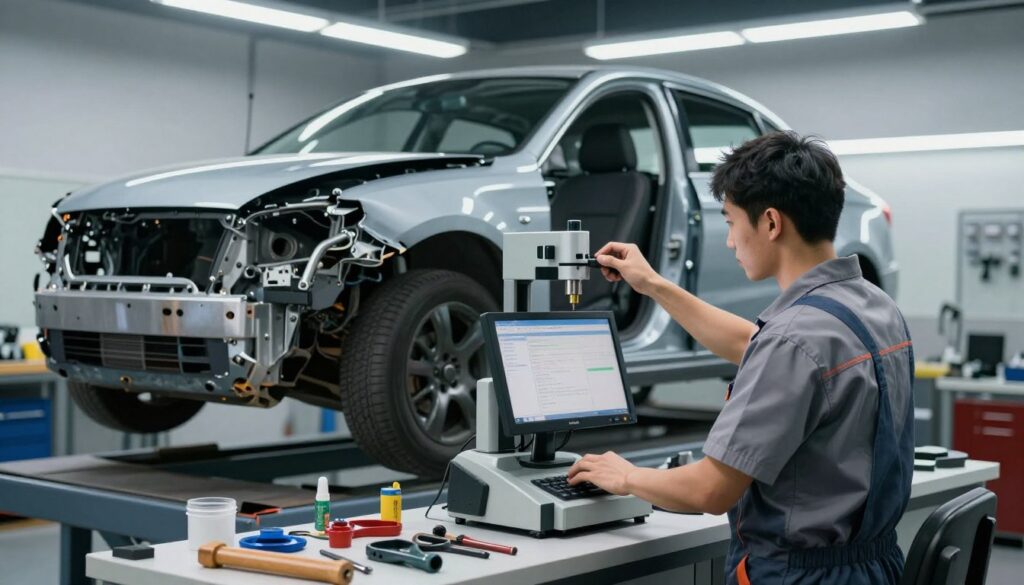
Computerized frame straightening is the top choice for fixing structural damage after a crash. When a car hits something hard, the metal frame can twist or bend in ways we can’t see. Precision is key to make sure your car is safe again.
How Modern Technology Restores Factory Specifications
Places like Miracle Body and Paint Collision Center use advanced laser systems. These systems map your car’s frame. They compare it to the original blueprints from the manufacturer.
Technicians use hydraulic tools guided by these computers to fix the frame. This is super important for front end collision repair. The frame must fit perfectly with the engine and suspension. The tech makes sure every part is back to factory specs.
Ensuring Structural Safety for Future Driving
Fixing the frame is not just about looks; it’s about your safety. A straightened frame means your car will handle better in future accidents. If the frame is off, airbags might not work right, and the cabin could be unstable.
Experts also fix other parts to make sure everything is solid. This careful work has many benefits:
- Restored handling: A straight frame means your tires will wear evenly and steering will be smooth.
- Component fitment: The right frame size is needed for radiator support repair and headlight alignment.
- Structural rigidity: A fixed frame helps your car absorb energy in future crashes.
Choosing professional frame straightening means your car will be as safe as new. It combines skilled work with digital precision. This way, your car stays a reliable way to get around for many years.
Paint Matching and Refinishing Processes
After fixing the structure, the last step is to make your car look new again. This includes fixing a damaged hood or a full front end collision repair. The paint stage is where the car gets its shine back. It needs advanced tech and skill to get it just right.
Color Theory and Digital Paint Matching Technology
Today’s paint shops use digital tools to match your car’s original color. They use color theory to adjust for aging, sun damage, and special pigments. High-resolution cameras and software help them scan your car’s paint for a perfect match.
This method is much better than old ways. At places like Miracle Body and Paint Collision Center, experts use these tools for a flawless hood repair. This ensures your car’s value stays high.
Applying Clear Coat and Achieving Factory Finishes
The clear coat is the last layer of protection. It’s critical for durability, keeping the paint safe from damage. A pro’s touch ensures the finish looks just like the factory’s.
Getting a factory finish needs a clean space and careful hands. When you choose a pro for front end collision repair, you’re getting someone who knows how to do it right. Precision is the key to making your car look accident-free.
Safety Systems and Airbag Deployment Consequences
Modern cars have complex safety systems that need careful handling after a front end collision repair. When a car hits something hard, the computer records the crash and starts safety measures. These systems aim to save lives but need special care to work right again.
Managing Airbag Module Replacement and Resetting
Airbags are a key safety feature, but they can leave the car’s computer in a bad state. Just replacing the airbags isn’t enough. The car’s computer must be reset or replaced to make sure it’s ready for safety.
This reset uses special software that talks to the car’s computer. Without it, the car’s warning lights won’t go off, showing the safety system isn’t working. Shops make sure all parts are set up to meet safety standards.
Inspecting Seatbelt Pretensioners and Safety Sensors
Seatbelt pretensioners also get activated in a crash. They tighten the belts fast to keep people in place. A good front end collision repair checks these pretensioners to see if they need to be replaced.
Technicians also check the impact sensors in the car’s front. These sensors help decide when to use safety features. If they’re damaged or off, the safety system might not work right next time.
| Safety Component | Post-Collision Status | Required Action |
|---|---|---|
| Airbag Module | Locked/Data Stored | Reset or Replace |
| Seatbelt Pretensioners | Deployed/Tensioned | Mandatory Replacement |
| Impact Sensors | Potential Misalignment | Diagnostic Testing |
| Wiring Harness | Possible Frays | Electrical Continuity Check |
Quality Control and Post-Repair Testing
Your journey to a fully restored vehicle ends with a strict quality control process. Even after the most complex front end collision repair is done, your car must pass tough evaluations. These steps make sure every part works as the maker planned.
Road Testing Vehicles for Performance and Noise
Technicians take your vehicle for a detailed road test. They check if all systems work well. They listen for any odd sounds that might show a problem with the radiator support repair.
This test is essential to see if the steering, suspension, and cooling systems work right. They watch engine temperatures and fluid levels for leaks. They also test the brakes and wheel alignment. If there’s any issue, the car goes back for fixes.
Final Inspections for Safety and Aesthetic Perfection
After the road test, the vehicle gets a final check for looks and safety. Experts look at the paint and body gaps. They make sure all electronic and safety systems work right.
This final check gives you peace of mind that your vehicle is safe. Every part, from the hood latch to the headlights, is checked to meet top standards. You can be sure your car is in its best shape.
| Inspection Category | Focus Area | Success Criteria |
|---|---|---|
| Mechanical | Cooling & Steering | No leaks or vibrations |
| Structural | Alignment & Gaps | Factory specifications |
| Aesthetic | Paint & Finish | Uniform color match |
| Safety | Sensors & Electronics | Zero fault codes |
Choosing the Right Collision Center for Your Vehicle
Choosing the right collision center is key to your car’s safety and performance. After an accident, you need a place that knows front end collision repair well. A good shop will make sure your car is as good as new.
Why Professional Expertise Matters for Complex Repairs
Today’s cars are made with advanced materials and safety systems. A simple hood repair can be tricky because of these systems. Without the right skills, your car’s safety could be at risk.
At Miracle Body and Paint Collision Center, the team is well-trained. They know how every part of your car works together. This means your car will be safe and sound on the road.
Evaluating Technician Certification and Shop Equipment
When looking at a repair shop, check for certifications and modern tools. Certified techs can do a great hood repair that looks and works like new. The right tools help find and fix hidden damage.
The table below shows what makes a top collision center:
| Feature | Why It Matters | Benefit to You |
|---|---|---|
| Certified Technicians | Ensures expert handling | Safety and precision |
| Digital Diagnostics | Identifies hidden faults | Reliable performance |
| Advanced Tools | Matches factory specs | Aesthetic perfection |
Always choose shops with the latest tech for front end collision repair. This ensures your car is fixed right and safe to drive. Quality workmanship is essential for your car’s recovery.
Conclusion
After a crash, fixing your car needs skill and care. You want your vehicle to work perfectly, just like when it was new. Professional front end collision repair keeps your car safe for every drive.
Good repair work helps your car last longer. Whether it’s a big repair or a small fix, experts are ready. They make sure your car is safe and sturdy for you and your family.
Count on Miracle Body and Paint Collision Center for your car’s fix. Their certified team uses the latest tools to meet high safety standards. They aim to make your car as good as new.
Call their North East San Antonio location at (210) 858-3630 to begin repairs. Or, visit their North West San Antonio – Leon Valley shop by calling (210) 680-1987. Book your appointment today and drive with confidence again.

