

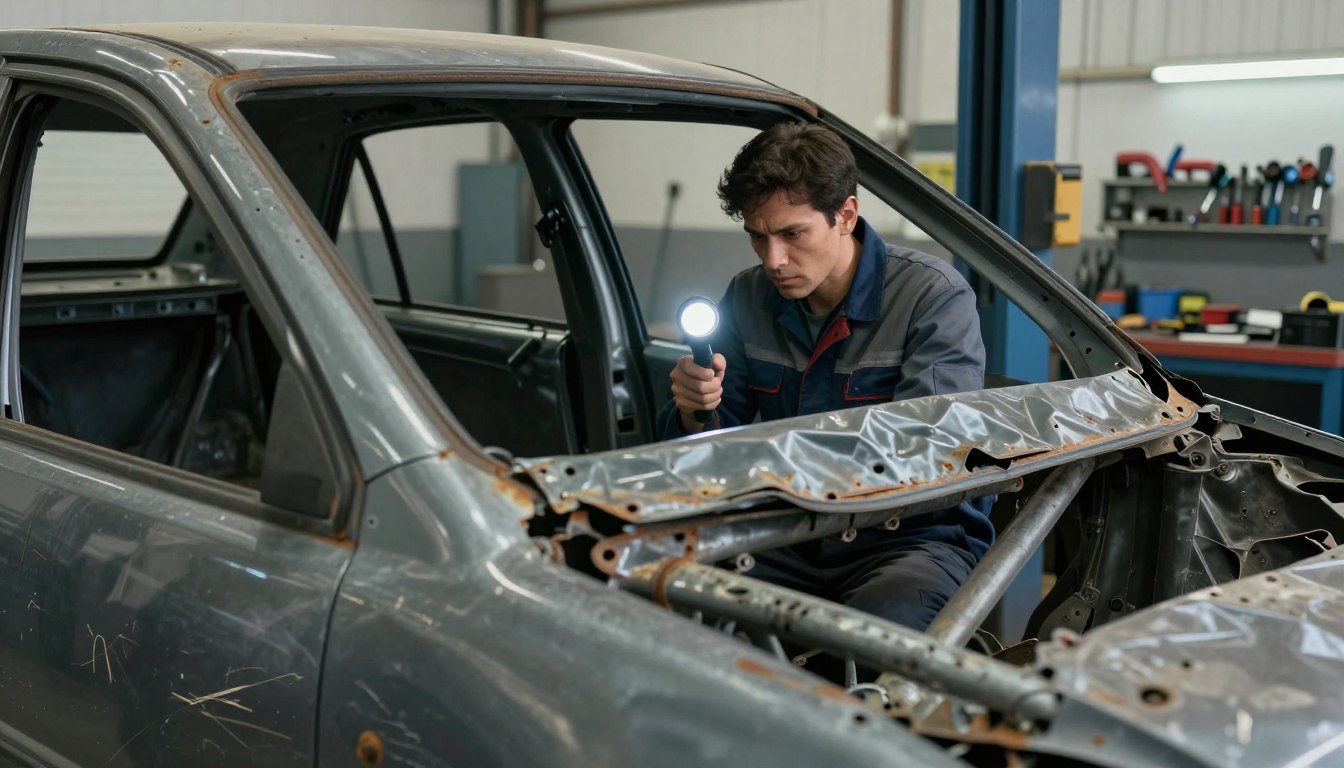
Your car relies on a solid foundation to keep you and your family protected. This core structure supports the heavy engine and ensures your doors stay straight. It acts as the backbone for every other part of your automobile.
When a collision occurs, the structural integrity of your vehicle might be at risk. Even a small fender-bender can cause hidden frame damage that makes driving dangerous. It can lead to poor handling and uneven tire wear over time.
Experts at Miracle Body and Paint Collision Center have the skills to fix these complex issues. Restoring the base of your vehicle to its original state is critical for your long-term protection. Professional care ensures the body remains strong enough to handle future impacts.
This guide will help you understand the risks and the expert restoration process. You will learn why maintaining the foundation of your car is the most important part of post-collision care. Staying informed helps you make the best choices for your road security.
Key Takeaways
- The foundation of your automobile serves as its primary safety shield.
- Misaligned components can compromise the way your automobile handles on the road.
- Hidden structural issues often exist even after minor traffic accidents.
- Professional assessments are vital to ensure your automobile remains crashworthy.
- Restoring the base foundation is necessary for keeping all passengers secure.
- Miracle Body and Paint Collision Center specializes in complex structural restoration.
What You Need to Know About Vehicle Frame Damage
At Miracle Body and Paint Collision Center, we define frame damage as any compromise to your car‘s core support system. This foundation provides the essential structural support for your entire vehicle. Any damage here weakens the setup and directly impacts your safety.
This type of damage typically occurs during collisions, accidents, or improper third-party modifications. Because the frame protects you during a crash, maintaining its structural integrity is a vital concern. Even minor dents can indicate deep issues that require professional intervention to fix correctly.
Understanding what constitutes frame damage helps you make better choices about your repairs. Consider these important facts regarding your vehicle’s structural health:
- Structural issues permanently appear on your vehicle’s history report, which affects its future resale value.
- Professional assessments are necessary because many structural problems remain hidden from the untrained eye.
- The severity of the issue determines whether a technician can safely repair the frame or if you should replace the unit.
| Severity Level | Visibility | Recommended Action |
|---|---|---|
| Minor Dents | Often Visible | Professional Straightening |
| Moderate Sway | Hidden | Hydraulic Realignment |
| Severe Crumple | Obvious | Potential Replacement |
Experts evaluate the specific structural weakening to ensure the car remains roadworthy. You must treat any frame issue as a priority to maintain the foundation of your vehicle.
Understanding Your Vehicle’s Frame Structure
Think of your vehicle frame as the core foundation that holds everything in its proper place. This structure acts like a skeleton, keeping all other parts in perfect alignment. Engineers design the frame to distribute weight and absorb heavy impact forces during a crash.
Your car frame provides the essential mounting points for the engine and the suspension system. It also ensures that your doors stay properly aligned for better security and sealing. Modern designs even include specialized crumple zones to help protect you during a collision.
A damaged car frame is a serious safety concern because it compromises the vehicle‘s integrity. Restoring these complex systems requires professional expertise and specialized equipment. Understanding this frame helps you see why expert repairs are so vital for your safety on the road.
| Frame Function | Description | Safety Benefit |
|---|---|---|
| Foundation | Support for motor and bumpers | Maintains structural balance |
| Alignment | Keeps doors and axles straight | Ensures proper vehicle handling |
| Protection | Absorbs impact in a crash | Reduces force on passengers |
Types of Vehicle Frames and Their Characteristics
The way makers build car frames significantly changes how your vehicle reacts in a crash. It also affects how experts handle repairs. While every car is unique, two main frames dominate the industry today.
These two designs form the foundation for most modern vehicles.
Knowing which type of architecture your car uses helps you talk to mechanics. Each design reacts differently to the complex force of an impact. This difference helps professionals check for structural damage after an accident.
Technicians utilize different tools based on whether the car is unified or separate. The best repair method depends entirely on this underlying foundation. Learning about your vehicle’s structure ensures you ask the right questions at the shop.
Your safety depends on a strong and stable foundation. Most cars on the road fall into one of these two types used today. Makers use these specific designs to keep you safe and ensure the car performs well.
| Feature | Unibody Design | Ladder Build |
|---|---|---|
| Main Build | Single Unified Piece | Body on Top of Rails |
| Best Utility | Handling and Efficiency | Towing and Heavy Hauling |
| Typical Use | Sedans and Crossovers | Trucks and Large SUVs |
Unibody Frame Design
A unibody design joins the body and the skeleton into one single piece. This engineering method makes cars lighter and saves on fuel.
You will see unibody construction in most sedans and small SUVs. Since the whole shell supports the weight, these vehicles handle very well.
This design prioritizes passenger safety by absorbing the energy from a crash. However, damage in one spot can often spread across the entire car shell.
Ladder Frame Construction
Ladder construction uses two symmetrical rails with several cross members connecting them. This looks like a ladder, and the car body sits on top. Makers use this for trucks and big SUVs that need to be very strong.
- Provides high towing capacity.
- Offers great off-road durability.
- Resists twisting under heavy loads.
They are heavy, but these structures stay stiff under a lot of pressure. Strength is the main reason to use this rugged design.
Critical Components of Your Car’s Frame System
You must recognize the individual parts that make up your vehicle frame to ensure long-term safety. These elements work together to provide rigidity and protect passengers during an accident. In a modern unibody, each piece plays a specific role in maintaining the body alignment.
Core Support and Front End Structure
The core support, often called the radiator support, is the front-most structural component. It houses your cooling system and helps form the front collision structure. In many vehicles, technicians can replace this component without it being considered structural frame damage.
| Component | Primary Function | Safety Role |
|---|---|---|
| Strut Towers | Suspension Support | Steering Control |
| Firewall | Engine Separation | Cabin Protection |
| Pillars | Roof Support | Rollover Safety |
Unirails and Frame Beams
Unirails are two symmetrical metal beams that run longitudinally along the front and back of your car. These act as the primary foundation for many other structural parts. Because they are some of the strongest sections of the vehicle frame, they absorb significant energy during a hit.
Strut Towers and Aprons
Strut towers are critical mounting points for your suspension system, found at each corner. Aprons form the inner fender structure, connecting the core support to the towers. These pieces ensure your wheels stay aligned and the body stays stable during high-speed turns.
Floor Pan, Pillars, and Rocker Panels
The floor pan is a welded metal sheet that forms the bottom of the passenger compartment. Pillars (A, B, and C) support the roof, while rocker panels sit between wheels under the doors. These components create a protective cage for everyone inside the unibody frame structure.
Damage to any of these areas can compromise your structural integrity. You should always seek professional repair expertise to handle these complex systems.
How to Identify Frame Damage on Your Car
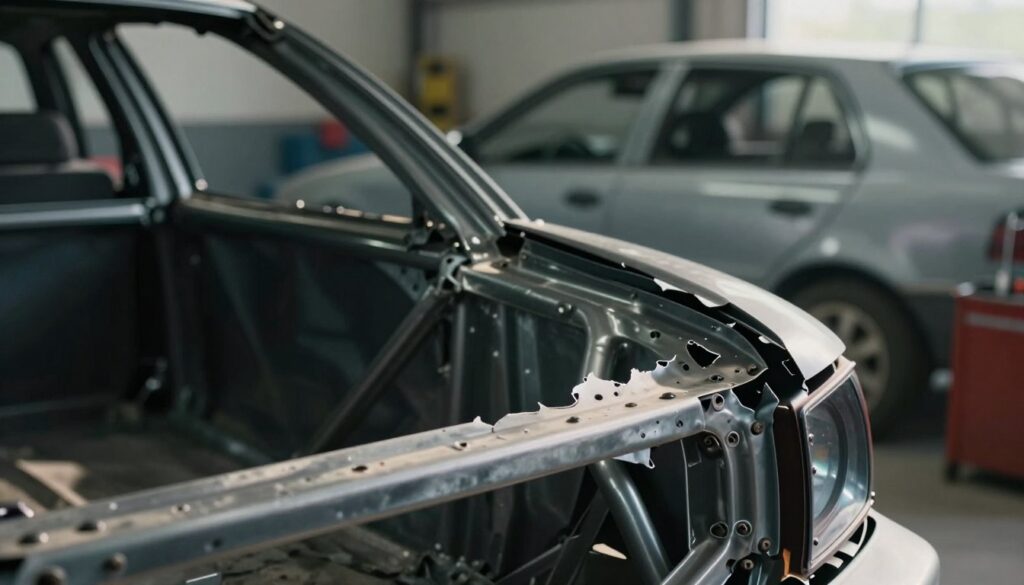
Detecting hidden structural problems after an accident requires a keen eye for specific warning signs. Identifying frame damage early is crucial for your safety and prevents further structural deterioration of your car.
You must look for subtle signals that suggest the vehicle has lost its core integrity. These symptoms often warrant an immediate professional inspection to ensure the chassis remains sound.
Visual Inspection Methods
Walk around your car and check for uneven gaps around the doors, hood, or trunk lid. These misalignments often indicate structural damage that is not obvious at first glance.
Look for fenders crumpled like accordions or bent metal beams visible in the engine bay. If you see radiator supports smashed against the engine, your vehicle likely has significant frame damage.
Driving and Performance Indicators
Pay attention if your vehicle pulls to one side while driving. This movement suggests a compromised wheel alignment affecting your positioning on the road.
Unusual tire wear patterns also signal that the suspension geometry is off due to hidden damage. You might notice the steering wheel sits off-center or feel strange vibrations at high speeds.
These symptoms, along with creaking noises during turns, require a professional alignment check. Visit a facility like Miracle Body and Paint Collision Center to assess your structural integrity properly.
The Role of Crumple Zones in Vehicle Safety
Modern automotive engineering prioritizes your safety by incorporating specialized sections known as crumple zones into the frame. These are specifically engineered areas of your vehicle frame. Designers build them to deform in a controlled way during a collision.
You can usually find these parts in the front engine bay and the rear support areas. They sit away from the passenger compartment to keep you out of harm’s way. Modern safety relies on these sacrificial components to save lives.
These zones feature indented sections with a distinct wavy shape. This clever design allows the metal to fold like an accordion upon impact. Their primary goal is to absorb energy, preventing that massive force from reaching you and your passengers.
| Feature | Crumple Zone Design | Legacy Rigid Frames |
|---|---|---|
| Energy Management | Absorbs impact energy | Transfers force to cabin |
| Frame Behavior | Folds accordion-style | Resists until total failure |
| Occupant Protection | High survival rates | Higher risk of injury |
When a vehicle hits an object, these parts crumple to keep the passenger cabin intact. While the damage might look severe, it shows the system worked as intended. The car sacrifices its metal structure to maintain your physical well-being.
However, once a collision activates these sections, their structural integrity is gone. You must seek a professional assessment immediately after an accident. A crumple system cannot provide the same safety level a second time without expert repair.
- Specifically engineered to deform in a controlled manner.
- Located in the front and rear areas for maximum protection.
- Folds like an accordion to absorb dangerous impact energy.
- Keeps the passenger cabin safe even during severe crashes.
- Requires professional assessment after any activation.
How Frame Damage Compromises Your Safety
Your car’s ability to keep you alive during a crash depends entirely on the condition of its structural core. Even minor frame damage can lead to catastrophic failure during an emergency maneuver or a sudden collision.
Your car’s frame acts as its backbone, providing the essential strength needed to withstand heavy forces. When this structure is compromised, the entire safety system of the car is at risk.
Airbags and seatbelts rely on the frame staying rigid in specific areas to work correctly. If the frame gives way too soon, these systems might not trigger as the manufacturer designed. Understanding these risks is the first step toward keeping your family safe on the road.
You must recognize that structural issues are often invisible to the naked eye. Without a professional inspection, you are essentially driving a vehicle with a weakened shield. Expert assessment from a center like Miracle Body and Paint Collision Center is non-negotiable for your peace of mind.
Structural Weakness and Collision Risks
Vehicle frames are precisely engineered to crumple in specific patterns. This design directs impact forces away from you and your passengers. When the frame is bent, this carefully planned path is destroyed.
Instead of protecting you, the metal might collapse inward in a sudden collision. This structural instability creates a dangerous environment for everyone inside. Your vehicle may no longer behave as the engineers intended during a high-speed accident.
Why Repaired Frames Never Fully Restore Safety
Consider the “tin can analogy” for your car. Once you crush a soda can and straighten it, the metal is permanently weak. A repair that involves welding or straightening cannot fully restore the metal’s original integrity.
While professional shops like Miracle Body and Paint Collision Center provide the best possible outcomes, the metal remains stressed. It will take less force to fail in a future safety event. A repair can make the car look perfect, but it will never match the factory strength of a new car.
| Safety Feature | Original Design | Impact of Damage |
|---|---|---|
| Energy Absorption | Predictable & Managed | Unpredictable & Reduced |
| Crumple Zones | Controlled Folding | Erratic Metal Failure |
| Passenger Shell | Maximum Rigidity | Compromised Weak Points |
| Safety System Alignment | Factory Precision | Disrupted Timing |
Is Your Frame-Damaged Vehicle Safe to Drive?
Whether you can safely drive your car after sustaining frame damage depends on two main factors. First, are your four wheels perfectly aligned? Second, does the vehicle track in a straight line without pulling?
If you answer no to either question, your vehicle is not safe to drive at all. Even if it seems okay for basic transportation, a bent frame creates a massive risk during a future collision. Daily drivability often provides a false sense of security regarding actual crash protection.
The real test of safety happens when you encounter another accident. While minimal damage in non-critical areas might not compromise integrity, such cases are rare. Most structural issues involve bent rails or weakened crumple zones that fail unpredictably.
| Safety Check | Optimal Status | Danger Sign |
|---|---|---|
| Wheel Alignment | Perfectly Square | Misaligned/Drifting |
| Driving Path | Tracks Straight | Pulls to One Side |
| Structural Integrity | Intact Components | Weakened Crumple Zones |
- Drivability depends on whether all four wheels maintain proper alignment.
- Vehicles that pull significantly are absolutely unsafe under any circumstances.
- A car might drive normally while still lacking essential collision protection.
- Bent rails and damaged strut towers create unpredictable weak points.
- Seek an immediate professional evaluation to confirm if the chassis is secure.
When DIY Frame Repairs Are Appropriate
Determining when a DIY approach is safe for your vehicle is crucial for maintaining structural integrity. You can often handle small surface damage like dents or dings using basic tools. If your car has a slightly crunched bumper, you might hammer it out without much hassle.
However, you must limit your home efforts to strictly cosmetic issues. Professionals advise against DIY straightening of a structural frame because it compromises safety. Attempting any major frame repair at home can lead to serious liability issues and future risks.
You should never try straightening major components like frame rails or pillars yourself. If you notice issues with steering or see internal engine damage, seek expert help immediately. Always err on the side of caution and visit Miracle Body and Paint Collision Center for your car repair needs.
- Focus DIY efforts only on non-structural body panels like fenders.
- Avoid heat-treating or pulling major metal beams in your garage.
- Ensure you have the proper tools to avoid making minor dings worse.
| Damage Type | Repair Method | Safety Level |
|---|---|---|
| Surface Dents | DIY Hammering | High Safety |
| Crunched Bumper | Manual Adjustment | Moderate Safety |
| Bent Frame Rail | Professional Rack | Professional Only |
When to Seek Professional Frame Damage Repair
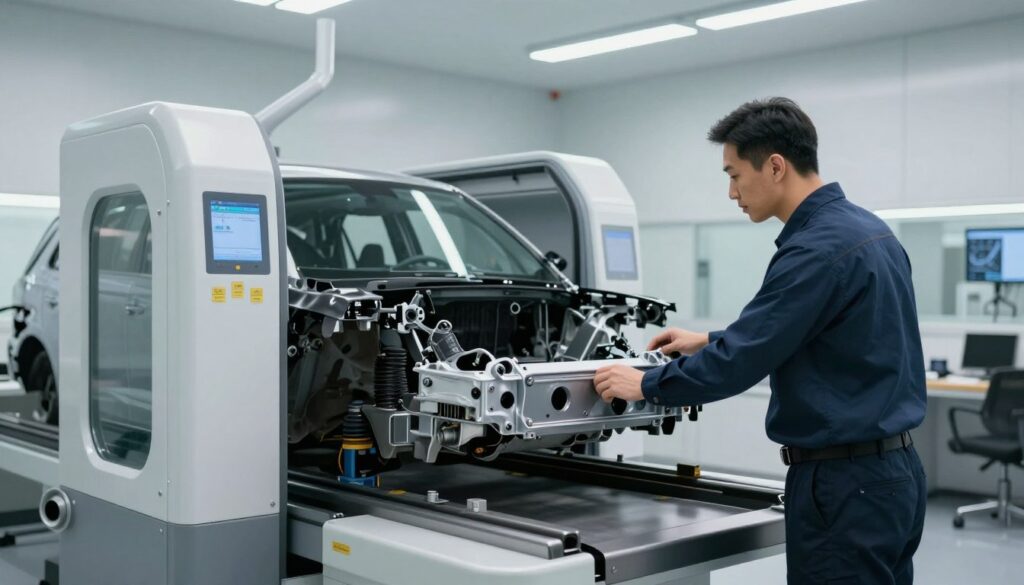
Knowing when to call a professional for structural issues is vital for your safety on the road. Any collision that impacts components like rails or pillars requires expertise that only a certified technician provides. Even if you cannot see the issue, frame damage often hides deep behind the bumper.
Internal systems like your brakes and steering often suffer during collisions. A crushed radiator or a misaligned suspension makes driving dangerous and difficult. Only an expert at a professional shop can diagnose these hidden mechanical failures accurately.
If your vehicle pulls to one side or the airbags deployed, you need a professional repair immediately. An expert technician uses specialized measuring equipment to find invisible bends that you might miss.
Trust Miracle Body and Paint Collision Center to perform your frame repair with precision. Our shop ensures your car returns to factory safety standards through high-quality repair. Using the right tools for frame repair keeps you and your family safe.
The Professional Frame Damage Repair Process
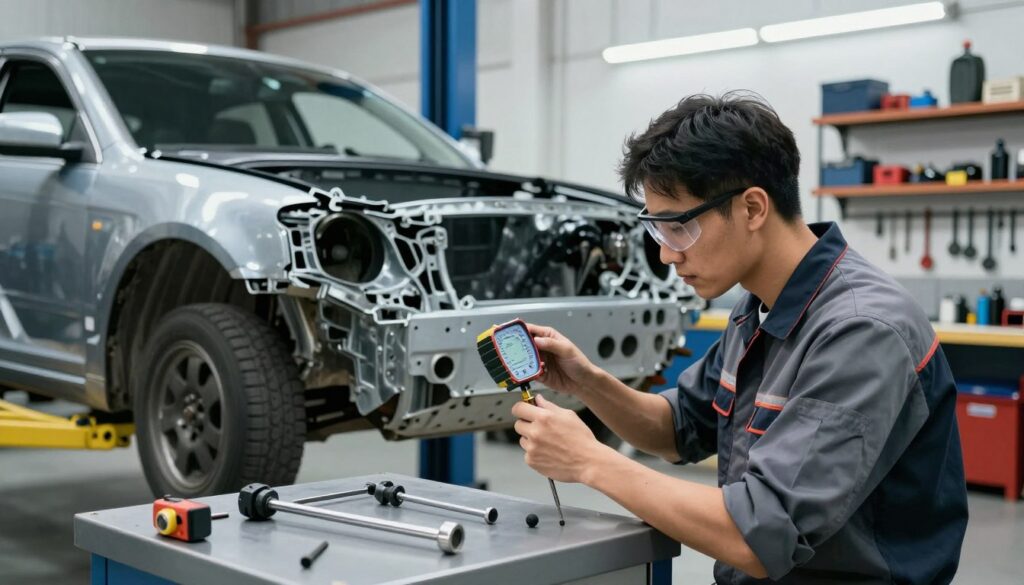
Professional frame repair involves a sophisticated series of steps designed to ensure your car is safe again. Most shops use heavy-duty equipment like frame racks to bend metal back into its original shape. This technical approach restores the structural integrity of your vehicle using precision and force.
Initial Assessment and Measurement
Technicians begin the process by using computerized systems to map your car’s current dimensions. These tools detect tiny, millimeter-level shifts that the human eye cannot see. By comparing these numbers to factory specs, experts identify exactly where the structure is weak or bent.
Frame Straightening and Restoration
During this stage of the repair, the shop secures your vehicle onto a rigid frame rack. Hydraulic systems then apply controlled force to pull the metal back into position. Technicians use their expert judgment to apply the right pressure from multiple angles. They measure progress constantly to ensure the metal reaches its original geometry.
Final Alignment and Quality Checks
The final alignment phase ensures your wheels and frame are perfectly straight. This step is vital so your car tracks properly on the road. A complete frame repair concludes with a test drive and final measurements. This quality process confirms the alignment meets strict safety standards. A quality repair always prioritizes your long-term safety on the road.
| Repair Phase | Main Technology | Primary Goal |
|---|---|---|
| Assessment | Computerized Mapping | Identify Deviations |
| Straightening | Hydraulic Racks | Restore Geometry |
| Verification | Alignment Systems | Safety Validation |
Professional Equipment Used in Frame Repair
When your vehicle suffers structural damage, specialized machinery becomes the key to a safe recovery. A professional collision shop utilizes heavy-duty equipment to ensure the metal returns to its original alignment. This process requires extreme precision to protect your car’s integrity.
Frame Racks and Hydraulic Systems
These sophisticated platforms use powerful hydraulic systems to apply controlled force to your vehicle. They can restore a bent frame to factory measurements with minimal effort using torque and leverage. Modern racks also include non-skid ramps so technicians can work safely around the entire chassis.
Pulling Posts and Anchor Pots
Heavy-duty pulling posts provide up to 20 tons of force to assist in frame straightening. These posts use your car’s mass and strategic attachment points for precise straightening results. Anchor pots are floor-mounted points that secure the chains used during the straightening process.
Technicians use properly weighted clamps and hooks to hold tension in cables without slipping. These professional-grade accessories make the restoration process both simpler and safer for the repair team. This setup ensures that force is applied only in the directions needed for correction.
Computerized Measuring Technology
Precision is vital for safety, which is why a shop uses laser or electronic measuring tools. This equipment compares your car’s current shape against original manufacturer specifications. Advanced systems detect even the smallest deviations that the human eye might miss.
Facilities like Miracle Body and Paint Collision Center invest in this advanced technology for every repair. Using digital data ensures your frame straightening is accurate to within millimeters. This level of detail is necessary to restore the car’s original safety performance.
| Repair Tool | Technical Function | Primary Benefit |
|---|---|---|
| Hydraulic Rack | Applies torque to the frame | Restores structural base |
| Pulling Post | Provides 20-ton tension | Effective straightening |
| Laser Scanner | Digital equipment comparison | Precise frame straightening |
Understanding Frame Damage Repair Costs
Navigating the expenses associated with frame damage repair requires a clear understanding of your vehicle’s structural needs. These costs vary significantly depending on which parts of the frame need attention. Structural fixes are among the most expensive tasks a shop can perform because they require specialized industrial machines and high-level expertise.
| Severity Level | Estimated Cost Range | Common Procedures |
|---|---|---|
| Minor | $600 – $1,000 | Cosmetic dents or quarter panel fixes |
| Moderate | $2,000 – $5,000 | Straightening and alignment services |
| Severe | $10,000+ | Cutting, welding, and part replacement |
A small dent in a quarter panel is technically structural but remains relatively affordable. However, if a technician must cut off a frame rail or stretch the chassis back to factory specs, repairs become labor-intensive. These complex repairs often involve heavy hydraulic equipment to ensure your car remains safe to drive on the road.
You should contact your insurance company immediately after an accident to start your claim. Most collision insurance policies cover the cost of restoration minus your specific deductible amount. Your insurance company will likely evaluate the vehicle’s total value compared to the estimated fix price before approving the work.
Always work with a reputable facility like Miracle Body and Paint Collision Center for an accurate repair quote. They can coordinate with your provider to verify insurance coverage. This professional repair guarantees that the structure meets safety standards again and helps you maximize your insurance payout.
- Obtain detailed estimates to compare the severity of the damage.
- Ensure the shop uses computerized measuring technology for accuracy.
- Verify if your policy covers OEM parts or aftermarket replacements.
How Frame Damage Impacts Your Vehicle’s Resale Value
Structural issues often lead to a permanent decrease in what your vehicle is worth on the market. Even after professional repairs, frame damage remains a permanent part of your car history through services like Carfax. This public record alerts potential buyers to safety concerns and compromised structural integrity.
Typically, a history of this damage reduces your resale value by 20% to 40% depending on the severity. Buyers view these records as major red flags, making it much harder to sell your car at a fair price. Furthermore, disclosure laws in most states require you to inform buyers about past structural problems to avoid legal liability.
Insurance companies also track these reports, which may influence coverage rates for subsequent owners. You should carefully weigh the cost of restoration against the inevitable loss in market value before proceeding. Consider these key impacts on your bottom line:
- Your vehicle value drops significantly even if it looks perfectly restored.
- Buyers often lose confidence in the future safety of the chassis.
- Hiding a collision history is illegal and can lead to severe penalties.
| Resale Factor | Impact Level | Market Consequence |
|---|---|---|
| Market Price | High Reduction | 20-40% Value Loss |
| Buyer Pool | Significant | Fewer Interested Buyers |
| Legal Duty | Mandatory | Full History Disclosure |
Choosing Between Repair and Replacement
After your vehicle sustained collision damage, the critical choice between restoration and replacement often comes down to safety and value. If the estimated repair costs exceed 50-70% of the market value, replacement is usually the smarter financial move. Fixing a damaged car doesn’t always restore it to its original factory strength, even with professional help.
You must also consider the permanent drop in resale value that follows a major frame repair. If your vehicle is older or has high mileage, the costs to fix the collision damage might outweigh the potential benefits. In many cases, it makes more sense to sell your damaged car rather than invest in expensive, complex fixes.
Emotional attachment should not cloud your judgment when it comes to your family’s safety on the road. When your vehicle sustained major structural issues, it is often better to seek an undamaged alternative. We recommend consulting with the experts at Miracle Body and Paint Collision Center to evaluate your specific damage car situation before making a final decision.
| Decision Factor | Repairing the Frame | Replacing the Vehicle |
|---|---|---|
| Financial Cost | High initial investment; lower total than new car. | High upfront cost; better long-term value. |
| Safety Level | Restored but may lose some factory integrity. | Original factory safety standards intact. |
| Resale Value | Significantly reduced due to accident history. | Maintains standard market depreciation. |
| Vehicle Life | Potential for recurring alignment issues. | Reliable performance with no structural history. |
Trust Miracle Body and Paint Collision Center for Expert Frame Damage Repair
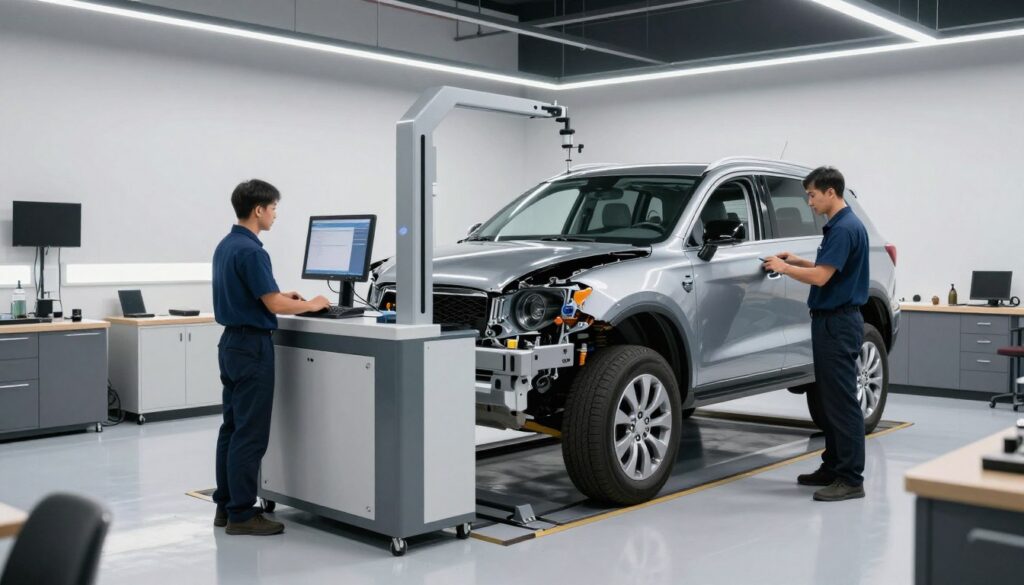
Miracle Body and Paint Collision Center is your trusted expert for professional frame repair in San Antonio. Our certified technicians bring specialized expertise to every job. They restore your vehicle to factory safety standards with meticulous care.
We use state-of-the-art frame straightening equipment and computerized measuring technology for your collision repair. This advanced approach ensures your car’s structural integrity remains sound. We prioritize the safety of your family by delivering reliable results every time.
Visit our North West San Antonio – Leon Valley shop at 6217 Grissom Rd, San Antonio, TX 78238, or call (210) 680-1987. Our expert staff also serves North East San Antonio at 4650 Walzem Rd, San Antonio, TX 78218, reachable at (210) 858-3630.
Our collision repair expert team works with insurance companies to simplify your claim. Contact us today for a professional frame repair estimate and frame straightening assessment. Trust our technical expertise and call our expert team today.
Conclusion
Your vehicle frame serves as its structural backbone.
Its condition is vital for your ongoing safety on the road.
Understanding how structural damage impacts your car empowers you to make informed decisions after a collision.
While minor issues might seem manageable, complex damage requires professional expertise and specialized equipment.
Quality frame damage repair ensures your vehicle remains reliable and structurally sound.
This makes choosing an expert facility essential for the best possible outcome.
Trust Miracle Body and Paint Collision Center for the professional repair your cars deserve.
Our expert team restores your frame to factory standards with meticulous attention to detail.
Contact us today to schedule your estimate at our San Antonio locations.
Your safety is our priority.
We are here to help.
| Location | Address | Phone Number |
|---|---|---|
| North West San Antonio – Leon Valley | 6217 Grissom Rd, San Antonio, TX 78238 | (210) 680-1987 |
| North East San Antonio | 4650 Walzem Rd, San Antonio, TX 78218 | (210) 858-3630 |

