

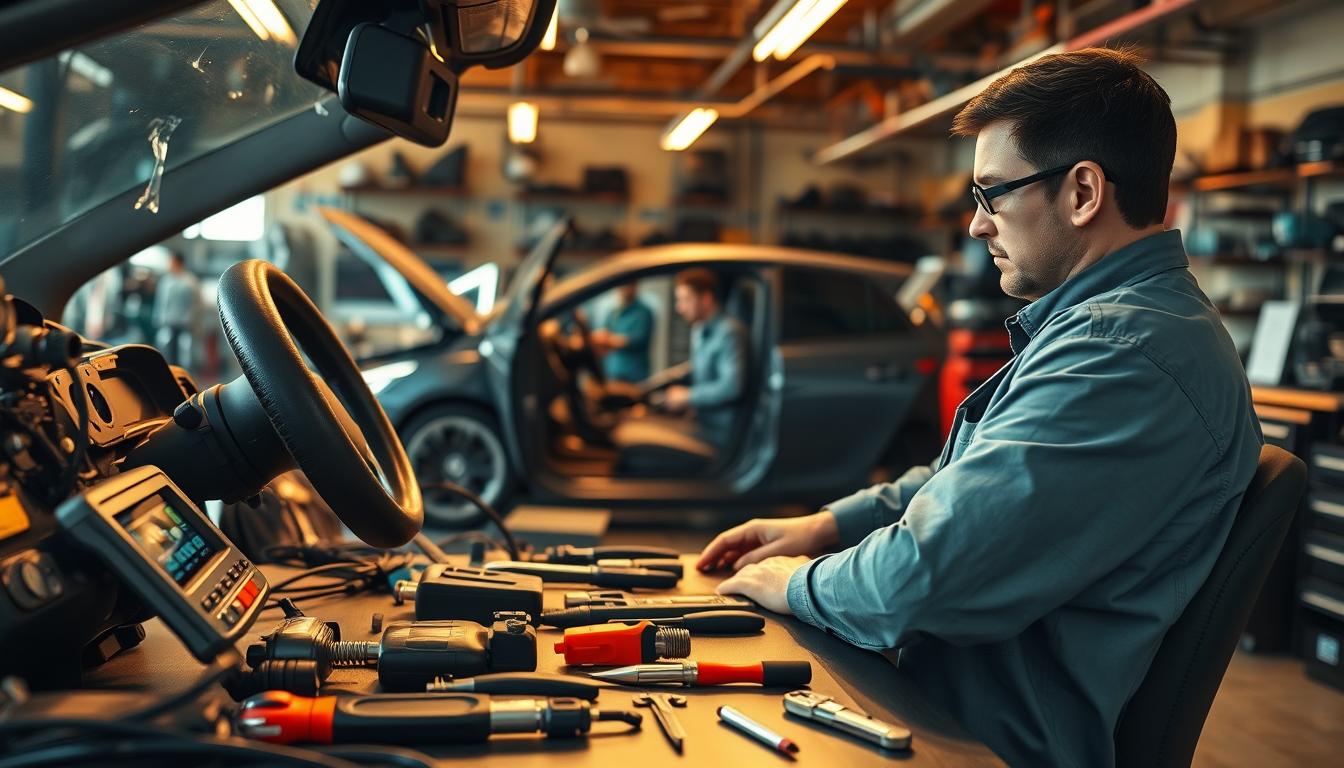
At Miracle Body and Paint Collision Center, we know how key it is to fix these features right. This ensures people stay safe in future crashes.
Our team works hard to give the best collision repair. This includes fixing advanced safety features.
Key Takeaways
- Modern vehicles have advanced safety features that need to be restored after a crash.
- Proper repair of safety systems is key for keeping people safe.
- Miracle Body and Paint Collision Center offers expert collision repair services.
- Advanced safety features can be fixed with the right skills.
- Contact us for professional collision repair at (210)858-3630 or visit us at 4650 Walzem Rd, San Antonio, TX 78218.
Understanding Modern Vehicle Safety Systems
Vehicle safety has made huge strides with new safety systems. These systems have changed how we drive. Today’s cars come with many safety features like airbags, seatbelts, and shatter-resistant glass.
They also have lane departure warning systems, blind spot detection, and automatic emergency braking. These features make driving safer.
Types of Advanced Driver Assistance Systems (ADAS)
Advanced Driver Assistance Systems (ADAS) help drivers in many ways. They include:
- Lane departure warning systems
- Blind spot detection
- Adaptive cruise control
- Automatic emergency braking
These systems work together to make driving safer.
How Safety Systems Protect You During Accidents
Safety systems are made to keep you safe in accidents. Airbags help cushion the impact. Seatbelts keep passengers safe by restraining them.
Systems like automatic emergency braking can even stop accidents before they start.
The Complexity of Integrated Safety Features
Modern cars have many safety features working together. These systems need special care after a crash. ADAS repair is key to getting these systems working right again.
How Collisions Affect Advanced Safety Technology
When a car gets into a crash, its safety tech can get really hurt. Today’s cars use many sensors, cameras, and computers. They help with features like lane warning and cruise control.
Direct Impact Damage to Sensors and Cameras
A crash can hurt the sensors and cameras needed for safety. For example, a broken front-facing camera can mess up the lane warning system.
Secondary Damage from Airbag Deployment
When airbags go off in a crash, they can hurt safety systems too. The force from airbags can knock or damage nearby parts, like sensors and wires.
Electrical System Disruptions After Crashes
Crashes can mess up a car’s electrical system. This can make safety features not work right. Problems with wiring or short circuits can cause issues with accurate sensor data.
We need to check the damage well to see how much it affects safety tech. This will help us fix the car’s safety features so they work best again.
Signs Your Car’s Safety Systems Are Compromised
A crash can damage your car’s safety systems. It’s important to check for damage after a crash. Look for signs of malfunctions in your car’s safety features.
Dashboard Warning Lights and What They Mean
Dashboard warning lights are a key sign of damage. They can show problems with systems like lane departure warning or adaptive cruise control. For example, a light for lane departure might mean the cameras or sensors are broken.
Performance Changes in Driver Assistance Features
Changes in how your car’s features work are another sign. Your car might not warn you when you drift out of your lane. Or, the adaptive cruise control might not adjust speed right. These signs mean your safety systems might not be working well.
When to Seek Immediate Professional Assessment
If you see these signs, get a professional check right away. Ignoring these signs can make driving less safe. A pro can find the problem and fix it, like repairing ADAS or recalibrating safety parts.
Some important signs to watch for are:
- Illuminated warning lights on your dashboard related to safety systems
- Unusual behavior from driver assistance features like lane departure warning or blind spot detection
- Any noticeable decrease in the performance of your vehicle’s safety features
The Professional Diagnostic Process
After a car crash, fixing safety systems is key. Shops need the right tools and info to fix these systems well.
Computer-Based Diagnostic Tools
Computer-based diagnostic tools are used a lot today. They check safety systems and find problems like sensor damage.
Physical Inspection Protocols
But, physical inspection protocols are also important. They help find damage that computers might miss. Technicians look at cameras, sensors, and wires for damage.
Creating a Detailed Repair Plan
After checking everything, a comprehensive repair plan is made. This plan says what needs to be fixed or replaced. It makes sure all parts, including sensor damage, are fixed right.
- Diagnostic assessment
- Physical inspection
- Repair and replacement
- Recalibration

Car Safety Systems Repair: What’s Possible and What’s Not
Fixing modern car safety systems needs a deep understanding. Advanced Driver Assistance Systems (ADAS) make cars safer. But fixing them can be tough.
Components That Can Be Successfully Repaired
Some parts of car safety systems can be fixed. These include:
- Damaged wiring and connectors: Often, wiring and connectors can be fixed or swapped out.
- Faulty sensors: Some sensors can be fixed or replaced without changing the whole system.
- Electronic control units (ECUs): ECUs can sometimes be fixed or updated.
When Complete Replacement Is the Only Option
In some cases, you need to replace safety system parts. This is true when:
- Severe physical damage: Parts that are badly damaged can’t be fixed.
- Internal software corruption: If the system’s software is badly messed up, you might need to replace it.
- Manufacturer’s replacement policy: Some makers might only replace whole systems or parts.
Manufacturer Guidelines and Limitations
Car makers have rules for fixing safety systems. These rules might include:
- Specific repair procedures: Makers have detailed steps to follow.
- Certification requirements: Techs might need special training to do certain repairs.
- Part replacement policies: Makers have strict rules about replacing parts.
Knowing these rules is key for fixing ADAS systems right. It makes sure safety systems work as they should.
ADAS Repair Procedures After Collision Damage
When a car gets into a crash, its ADAS parts might get hurt. These parts need careful fixing and setup again. This is key to make sure they work right and keep us safe.
Lane Departure Warning System Restoration
The lane departure warning system uses cameras and sensors to watch where the car is. If a crash happens, these parts might get out of line or get broken. To fix it, we check and swap out any broken parts. Then, we set it up again so it works right.
Adaptive Cruise Control Repair Process
Adaptive cruise control keeps a safe gap from the car in front. A crash can mess up its sensors. We find out what’s wrong, fix or replace parts, and set it back to how it was.
Blind Spot Detection System Repairs
The blind spot detection system has sensors on the sides to spot other cars. If a crash damages these sensors, they might not work right. We check the sensors, replace any that are broken, and set it up again for good detection.
By doing these repairs, techs make sure ADAS parts work like new. This keeps the car safe and its advanced safety features working well.
The Critical Importance of Sensor Recalibration
ADAS components need recalibration after even small crashes. This step is key to keeping these safety features working right.
Why Even Minor Misalignments Can Be Dangerous
Small sensor misalignments can cause big safety problems. For example, a camera that’s off can mess up the lane departure warning system. This could lead to accidents. So, we must make sure all sensors are in the right place and working well.
Static vs. Dynamic Calibration Methods
There are two ways to calibrate: static and dynamic. Static calibration is done when the car is stopped, using special tools. Dynamic calibration happens when the car is moving, like for adaptive cruise control systems.
Verification Testing After Calibration
After we calibrate, we need to test the sensors. This makes sure they’re working right. We check the lane departure warning and blind spot detection systems to see if they’re working as they should.
Knowing how important sensor recalibration is helps keep our cars safe. It makes sure our safety features are working well, giving us a safer drive.
Cost Factors in Safety System Repairs
After a crash, owners worry about fixing advanced safety features. The cost to fix these systems changes a lot. It depends on how bad the damage is and what kind of car it is.
Insurance Coverage for Advanced Safety Features
Many times, insurance pays for fixing or replacing safety features after an accident. But, how much they cover can change. It depends on your policy and the accident details.
Key points to consider:
- Check your insurance policy to see what’s covered.
- Take clear photos of the damage to help your claim.
- Talk to your insurance to figure out the best repair plan.
Typical Price Ranges for Common Repairs
Repair costs can differ a lot. For example:
- Fixing a broken radar sensor might cost $500 to $1,500.
- Repairing or replacing a camera module could be $300 to $1,000.
- Getting safety systems recalibrated might add $100 to $500.
These prices are just estimates. They can change based on your car’s make, model, and the repair shop’s rates.
Long-Term Value of Proper Repairs
Even though fixing safety systems can be expensive upfront, it’s worth it. Good repairs can stop future accidents. This can save money and lower risks.
Benefits of proper repairs include:
- Getting safety features working like new again.
- Stopping accidents from happening in the future.
- Keeping your car’s value high.
Risks of Delaying Safety System Repairs
It’s very important to fix your car’s safety systems quickly. If your car gets damaged in a crash, you need to fix it fast. This keeps your car safe.
Compromised Protection in Future Accidents
Waiting to fix your car’s safety systems can put you in danger. Systems like lane departure warning systems might not work right. This could lead to worse crashes.
Cascading Damage to Connected Systems
Damage to one sensor can hurt many systems in your car. For example, a broken sensor can mess up your lane departure system and other safety features like adaptive cruise control.
Potential Impact on Vehicle Resale Value
Not fixing your car’s safety systems can lower its value. People want cars with all safety features working well.
- Increased risk of injury in future accidents
- Cascading damage to other vehicle systems
- Reduced vehicle resale value
- Potential for additional costly repairs down the line
Fixing your car’s safety systems quickly keeps it safe. It also helps keep its value.
Why Professional Repairs Are Essential for Safety Systems
Fixing your car’s safety systems after a crash needs professional help. Modern cars have complex systems that only experts can fix right.
Specialized Equipment Requirements
Experts use the newest tools to fix ADAS systems. They have scanners and calibration tools to make sure everything works right.
Manufacturer-Specific Training and Certification
Technicians get special training to know the latest car specs. This helps them fix complex problems like sensor damage.
Access to OEM Parts and Specifications
Using real car parts is key for safety. Experts get these parts directly from car makers. This ensures repairs are done right.
Choosing professional repairs means your car’s safety systems will work like new. You’ll be safe on the road.
Miracle Body and Paint’s Approach to Safety System Restoration
Our team at Miracle Body and Paint Collision Center works hard to fix your vehicle’s safety systems. We know how important ADAS like lane departure warning and adaptive cruise control are. They keep you safe on the road.
Our Advanced Diagnostic Technology
We use top-notch diagnostic tools to check your vehicle’s safety systems. Our tech finds problems that might not show up at first glance. This helps us make a detailed repair plan.
Our Technician Certification and Expertise
Our techs are certified and up-to-date on ADAS repair. They know how to fix complex systems like blind spot detection and forward collision warning. They make sure these systems work like new.
Our Quality Assurance Process
After fixing your vehicle, we test everything to make sure it’s working right. We check that features like lane departure warning are working as they should.
We use advanced tech, certified techs, and a strict quality check to fix your vehicle’s safety systems. This way, you can drive safely, knowing your vehicle is in top shape.
Conclusion: Protecting Your Investment and Your Safety
Fixing your car’s safety systems right after a crash is key. It keeps you and your family safe in future accidents. At Miracle Body and Paint Collision Center, we know how important this is.
Our team uses the latest tools and follows the maker’s rules to fix your car’s safety. Choosing us means you’re looking out for your safety and your car’s value. Trust our certified experts and top-notch gear for your car’s safety repair.
Don’t risk your safety – call Miracle Body and Paint Collision Center now to book your repair. We promise quality and safety, so you can feel secure knowing your car is ready to protect you and your loved ones.

