

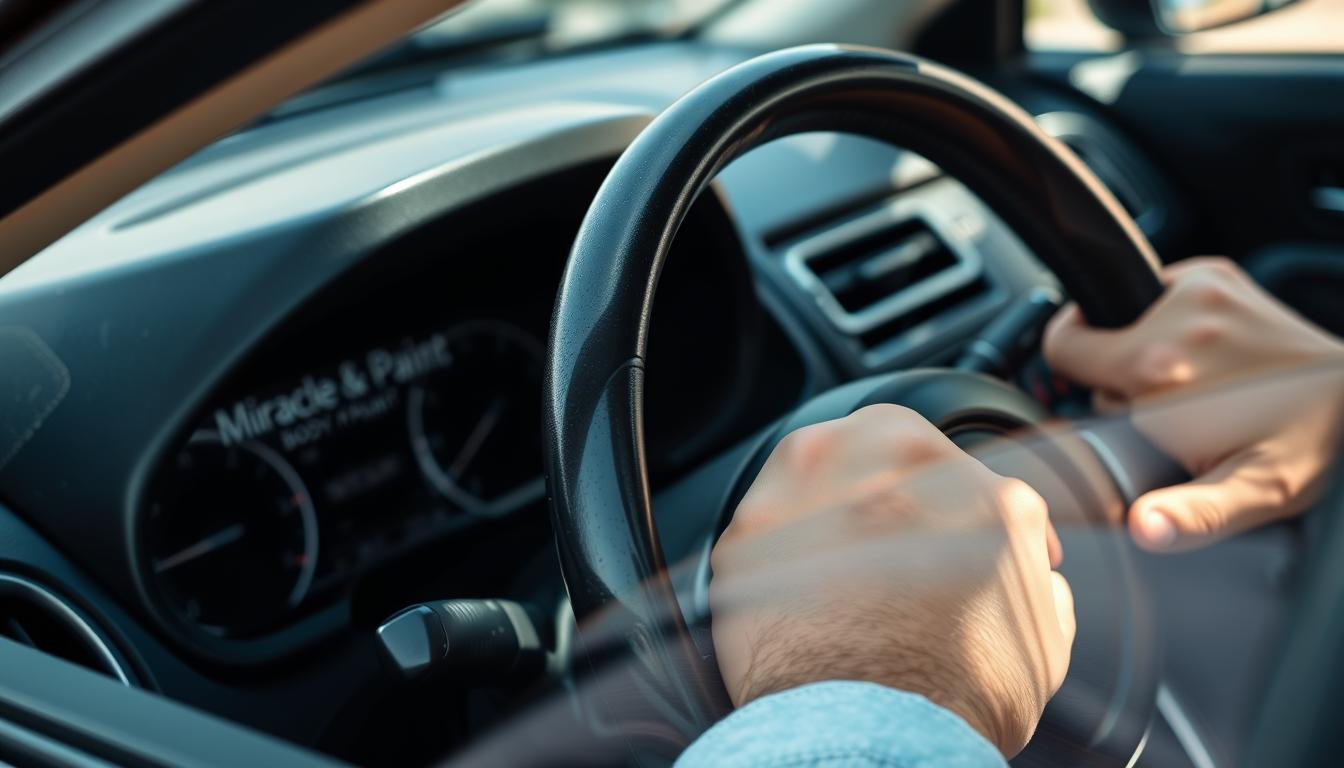
After a crash, getting back on the road is important. At Miracle Body and Paint Collision Center, we make sure your car is fixed right. This is before you drive again.
A test drive is key to check your car after a crash. It shows how your car moves and if it’s damaged.
It’s smart to have a pro check and fix your car. Our team at Miracle Body and Paint Collision Center is ready to help. We’re in North West San Antonio – Leon Valley and North East San Antonio.
Key Takeaways
- Make sure your car is fixed right after a crash.
- A test drive is key to find any problems.
- Getting a pro to inspect is very important.
- Miracle Body and Paint Collision Center offers expert repair.
- Safe driving is very important after a crash.
Understanding Your Vehicle Post-Repair
After a crash, knowing your car’s state is key for safe driving. A detailed vehicle inspection is needed. It checks if repairs were done right and if the car works well.
To make sure your car is safe, follow the maker’s repair rules. Use the right parts and follow the recommended steps. This way, your car will be like new again, with less chance of problems.
Importance of Following Manufacturer Guidelines
It’s very important to follow the maker’s rules for repairs. This means using real parts and making sure the repair team knows your car. They should be certified and have experience with your car’s type.
Recognizing Changes in Vehicle Behavior
Even with a good repair, watch for any changes in how your car acts. This could be odd sounds, shakes, or changes in how it moves. If you see these signs, get your car checked again to find and fix any problems fast.
Being careful and quick to act keeps your car safe and reliable. This gives you peace of mind while driving. Regular checks can spot problems early, stopping bigger issues before they start.
Essential Driving Tips After Collision Repairs
After your car is fixed, drive carefully. Your car might not act the same as before. Knowing these changes is key for safe driving.
Gradually Regain Confidence Behind the Wheel
Getting back to driving takes time. Start in places you know with little traffic. As you feel better, drive on busier roads. Watch for any noise detection or performance changes.
- Start with short drives and gradually increase the distance.
- Practice driving in different conditions, such as daylight and nighttime.
- Avoid distractions while driving, such as using your phone.
Maintain Distance from Other Vehicles
Keep a safe distance from other cars after repairs. This gives you time to react. Be careful and guess what other drivers might do.
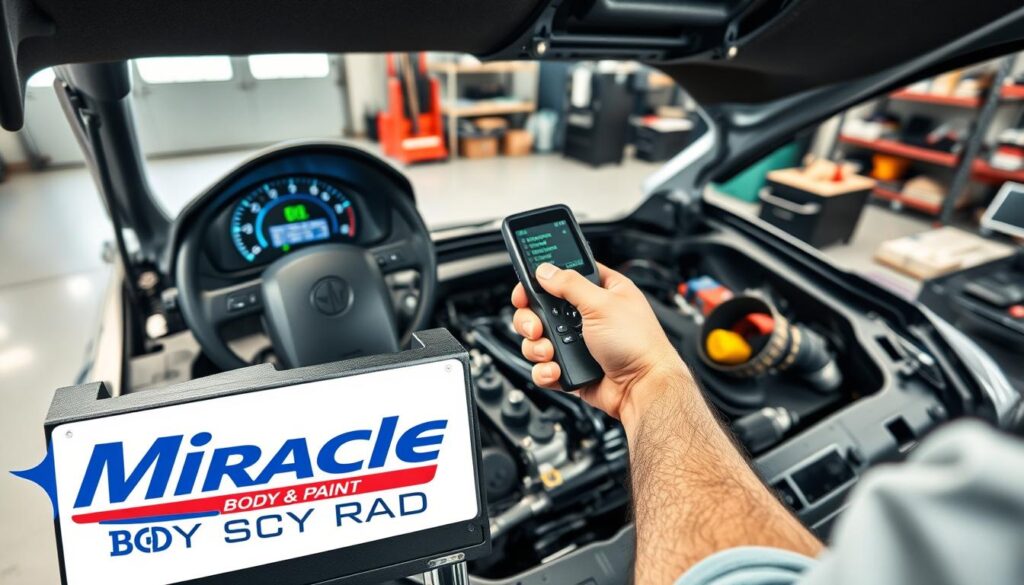
- Double your usual following distance to ensure you have enough time to stop.
- Be aware of your surroundings, including pedestrians and other vehicles.
- Use your mirrors and check your blind spots regularly.
Follow these tips to safely get back on the road. Always put safety first after a crash.
Checking Vehicle Systems After Repairs
After your car is fixed from a crash, it’s important to check a few things. A good inspection and test drive can show hidden problems.
Inspecting Your Brakes and Steering
Your car’s brakes and steering are very important for safety. After repairs, make sure they work right. Listen for odd noises, feel for vibrations, or notice if they feel off. If you see any of these, it might mean there’s a problem.
When you test drive, slowly press the brakes to see if they feel right. Also, check if the steering wheel is straight and if your car goes straight on a flat road.
Monitoring Tire Conditions and Alignment
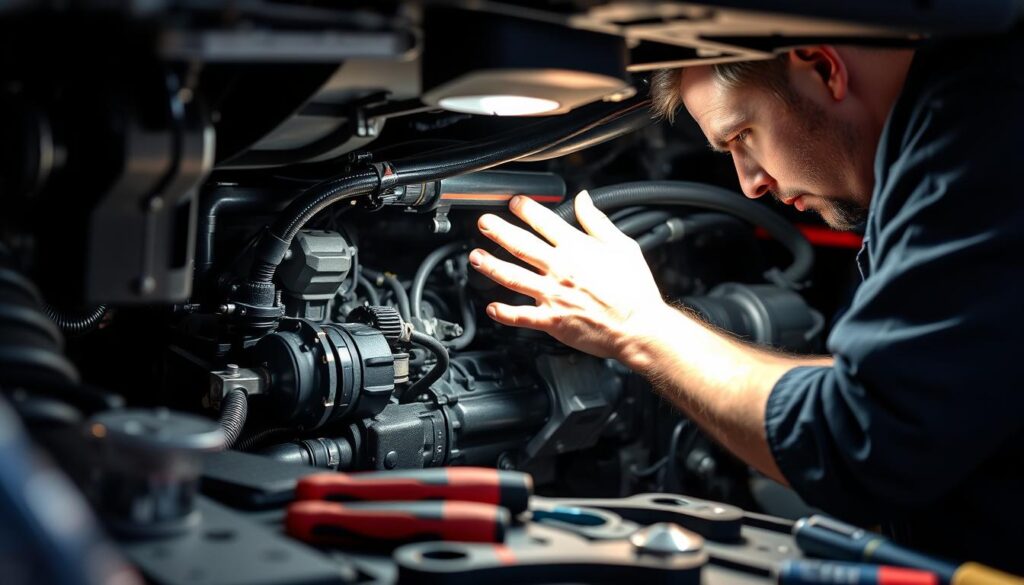
Tire condition and alignment affect how your car handles and stays safe. After repairs, look for uneven wear patterns on your tires. This could mean your car’s alignment is off. Always check your tire pressure, as low pressure can make your car hard to control and less safe.
If your car was in a crash, it might have hurt its alignment. Get a pro to check the alignment to avoid uneven tire wear and keep your car driving well.
Keeping an Eye on Warning Lights
Modern cars have computers that watch over many things. After repairs, watch the dashboard warning lights. If any lights stay on or blink, it might mean there’s a problem.
Know what each light means and what to do. Some lights might just mean a small issue, but others could be serious. Check your owner’s manual or talk to a mechanic if you’re not sure.
When to Seek Professional Assistance
After a collision repair, watch your car closely. Look for signs that mean you need help. This keeps you safe and stops more damage.
Signs That Indicate Further Issues
Listen for strange noises or feel vibrations. If your car acts differently, it’s a warning. Look for uneven tire wear, steering problems, or dashboard lights.
If you see these signs, get help fast. Miracle Body and Paint Collision Center can fix your car. We have two places in San Antonio. Call (210)680-1987 or (210)858-3630 to book a time.

