

According to federal statistics, approximately 17,250 car crashes occur daily across the United States. While a rear-end impact accounts for 29% of these events, the force often leaves your car looking relatively untouched. However, hidden damage after accident scenarios involve serious risks that most people overlook.
Modern automobiles absorb energy in ways that conceal serious structural issues from the untrained eye. At Miracle Body and Paint Collision Center in San Antonio, we find that what you cannot see often matters most. This collision can compromise your vehicle and put your long-term protection at risk.
You should never assume your car is safe just because the exterior looks intact. Professional technicians ensure your safety by checking systems that simple visual inspections miss. Taking action now prevents expensive mechanical failures in the future.
Key Takeaways
- Rear-end impacts often mask internal structural flaws that are not visible.
- Minor looking crashes can compromise your car’s overall frame integrity.
- Modern safety systems might fail without any outward signs of trouble.
- Miracle Body and Paint technicians identify problems beneath the car’s surface.
- Prompt inspections help maintain the long-term resale value of your car.
- Professional evaluations are vital for ensuring the ongoing protection of your family.
Why Hidden Damage After Accident Is So Common
You might think a fender bender is no big deal, but modern engineering says otherwise. Many modern vehicles use unibody construction to keep you safe by absorbing energy during a crash. This process often results in hidden damage that stays out of sight while the exterior looks fine.
How Modern Vehicle Design Conceals Internal Damage
Engineers build modern vehicles with sophisticated crumple zones to protect passengers. These areas absorb the impact effectively by deforming in specific ways. While your exterior panels look untouched, damage to the internal frame or unibody structure often occurs behind the scenes.
The Reality Behind Minor Rear-End Collisions
Rear-end collisions are the most common accidents on American roads today. Even minor bumps can cause damage to the structural components sitting directly behind your plastic bumper. While the outer cover usually pops back into place, these collisions transfer force where damage may linger in the frame or suspension.
Why Visual Inspections Miss Critical Problems
A simple look at your car rarely tells the whole story after a collision. Professional vehicles rely on dozens of sensors and wiring harnesses tucked behind body panels. This damage is often invisible, creating hidden damage that only a technician can find. Internal damage can easily exist even if you see no marks on your car.
- Energy from a crash moves through the entire unibody structure.
- Plastic covers often hide bent metal reinforcement bars and mounts.
- Delicate electrical sensors can fail without showing external scuffs.
- Small bumps often shift wheel alignment or suspension geometry.
| Vehicle Area | External Appearance | Internal Reality |
|---|---|---|
| Rear Bumper | Smooth and intact | Bent frame rail or mounts |
| Trunk Lid | Closes properly | Misaligned latch sensors |
| Side Panel | No visible dents | Compromised unibody strength |
How to Identify Hidden Damage After Accident: Structural Issues
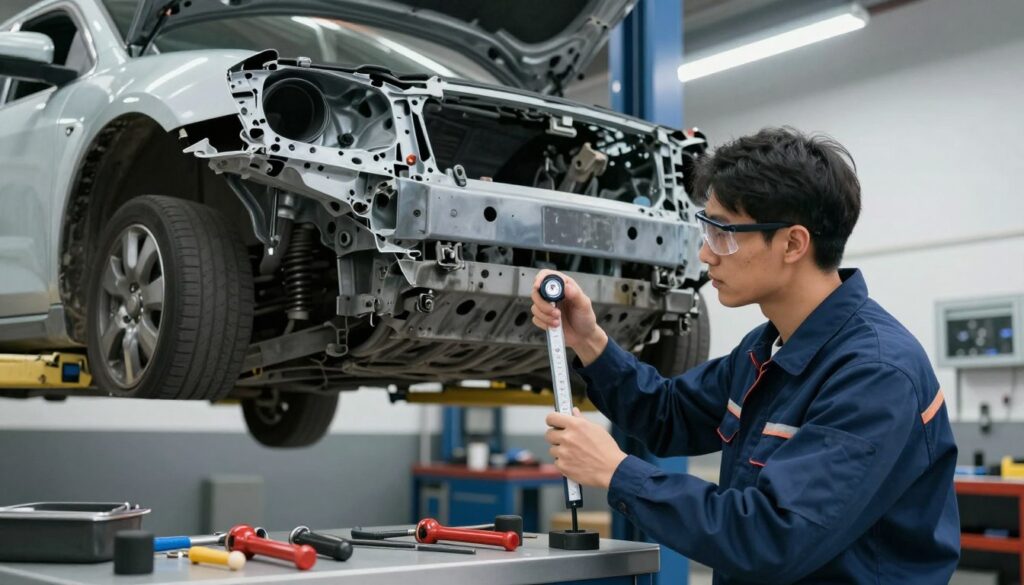
Spotting structural damage requires a keen eye for how your vehicle pieces fit together. Most modern cars use a unibody design that merges the body and frame into one system.
This layout means even a small collision can cause internal parts to twist or bend. These shifts often remain invisible until you look for specific signs of trouble.
Check Your Frame and Unibody Alignment
Hidden problems with the frame often show up as subtle shifts in the exterior. You might notice the car pulling to one side while you drive on a straight road.
Proper alignment is vital for steering stability and your long-term safety. Professional technicians use specialized lasers to ensure the skeleton of the car is perfectly straight.
Test Door, Hood, and Trunk Operation
Walk around your car and open every door, the hood, and the trunk. If a latch feels stuck or needs extra force to close, you likely have a structural issue.
Bent components can ruin these latches, which might cause doors to pop open suddenly while driving. Additionally, broken latches could trap passengers inside during a future emergency.
Look for Uneven Gaps Between Body Panels
Inspect the spaces between the different metal panels on the exterior. If the gaps on the left side look wider than those on the right, the frame has likely shifted.
This visible damage to the gaps shows that the underlying metal is no longer straight. Even a slight bend can affect how the car handles and how the tires wear over time.
Understand the Safety Risks of Frame Damage
Driving with a compromised frame creates ongoing risks for everyone inside. These structural parts are the main defense during an accident. Structural damage weakens the skeleton, meaning it cannot support the car or protect you during second-impact damage events.
Ensuring the integrity of these components is the only way to maintain your safety on the road. Without a solid foundation, the rest of the car’s features cannot do their jobs correctly.
| Warning Sign | Underlying Cause | Risk Assessment |
|---|---|---|
| Sticky Latches | Frame Misalignment | High Risk |
| Uneven Gaps | Structural Shift | Critical Risk |
| Drifting Steering | Alignment Problem | High Risk |
Compromised Crumple Zones
Engineers build specific areas of your car to absorb energy during a crash. If a frame was already bent in a previous wreck, these zones will fail to perform correctly next time.
This failure increases the physical force you feel during a hit. A compromised crumple zone significantly raises the risk of severe injury to the driver and passengers.
Reduced Protection in Future Collisions
A bent frame makes your car fundamentally less reliable in a crash. Without professional alignment and repair, you lose the protection of the original factory design.
Structural issues are rarely visible to the naked eye. Always seek a professional assessment to catch these hidden threats before they lead to a catastrophe.
Spot Mechanical System Damage
You must look beyond the bodywork to ensure your vehicle’s complex internal systems still function safely. Impact forces often travel deep into the chassis, affecting parts you cannot see from the outside.
Inspect for Fluid Leaks Under Your Vehicle
Keep a close watch on the pavement where you park your car for several days after an accident. Manufacturers dye fluids different colors to help you identify a specific problem quickly.
Identify Transmission Fluid (Dark Red Color)
A translucent dark red puddle usually indicates transmission leakage, though it may look darker if the fluid is old. Vehicles with rear-wheel-drive or all-wheel-drive have transmission parts near the rear, making them vulnerable to damage during a rear-end collision.
Check Coolant and Brake Fluid Levels
Small leaks in these components can lead to major mechanical failures if you ignore them. Regularly verify that your fluid reservoirs remain full to avoid catastrophic safety issues while driving.
Test Your Suspension and Steering Response
The suspension system manages the friction between your tires and the road to keep you in control. If your vehicle does not feel as smooth as it did before the crash, internal damage is likely present.
Notice If Your Car Pulls to One Side
If you have to fight the steering wheel to stay straight, your alignment is likely off. Misaligned wheels will cause damage through rapid tire wear and reduce your overall handling ability.
Feel for Unusual Vibrations While Driving
Unusual shaking or a bumpy ride often signs that steering parts or the frame are bent. These issues are particularly dangerous at high speeds and require immediate professional attention.
Monitor Your Check Engine Light
This light acts as a critical warning system that monitors both engine and transmission functions. A minor impact can push exhaust parts forward or disrupt the engine electronics, triggering this alert on your dashboard.
| Visible Symptom | Potential Issue | Impact on Safety |
|---|---|---|
| Dark Red Fluid Leak | Transmission Failure | Loss of power and shifting |
| Vehicle Pulling | Suspension Alignment | Poor handling and tire wear |
| Dashboard Warning | Engine or Sensor Fault | Unpredictable performance |
Detect Electrical and Sensor Problems
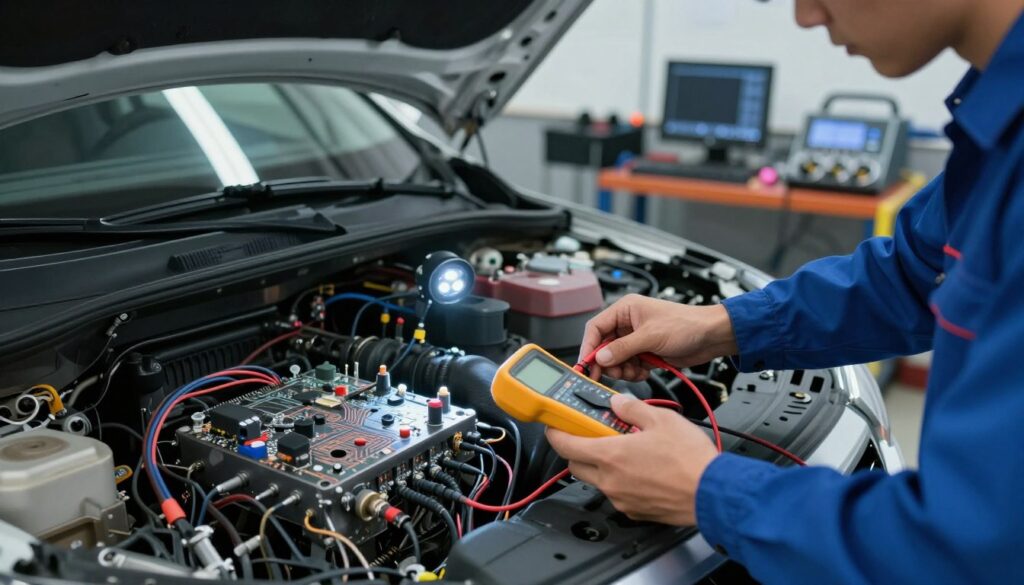
While outer panels might look fine, the hidden computer network in your car could be failing. Modern vehicles rely on high-tech parts to keep you safe on the road. A collision can easily shake these fragile components loose or cause minor damage without you noticing right away.
Watch for Dashboard Warning Lights
Keep an eye on your instrument cluster for any new icons. These lights may not pop up right away; some take days to appear after an impact. Even if the car drives well, a lit-up dashboard often signals deep electrical issues that require a scan.
Test Your Safety Features and Driver Assistance Systems
Advanced systems use precise sensors to monitor your surroundings. A slight shift in a bumper or grille can ruin their accuracy. You should verify that your vehicle still reacts correctly to nearby hazards to maintain safety.
Lane Departure Warnings
Take a drive on a marked road to see if your car still detects lane lines. If the camera is tilted by damage, the system might fail to warn you. Intermittent failures often start small but worsen over time.
Collision Alert Systems
These systems are critical for avoiding future accidents. Check if the front-facing hardware is clear of debris and properly aligned. Even a tiny misalignment can cause a complete system shutdown.
| Sensor Type | Failure Sign | Common Fix |
|---|---|---|
| Lane Camera | Late Warnings | Recalibration |
| Parking Radar | Ghost Beeping | Wiring Check |
| Blind Spot | No Detection | Mounting Repair |
Check All External Lights for Proper Function
Impact force can loosen wires or crack bulb housings. Faulty lights make your car nearly invisible during night driving or heavy rain. Prompt testing prevents you from being pulled over or causing a secondary accident.
Brake Lights and Turn Signals
Have a friend stand behind the vehicle while you tap the brakes. This ensures that following drivers know exactly when you are stopping. Loose electrical connections often cause these to flicker or fail completely.
Headlights and Taillights
Confirm that your beams are still aimed straight ahead. Misaligned lights are common after a collision and can blind other drivers. Properly functioning systems ensure you can see and be seen at all times.
Recognize Long-Term Paint and Body Issues
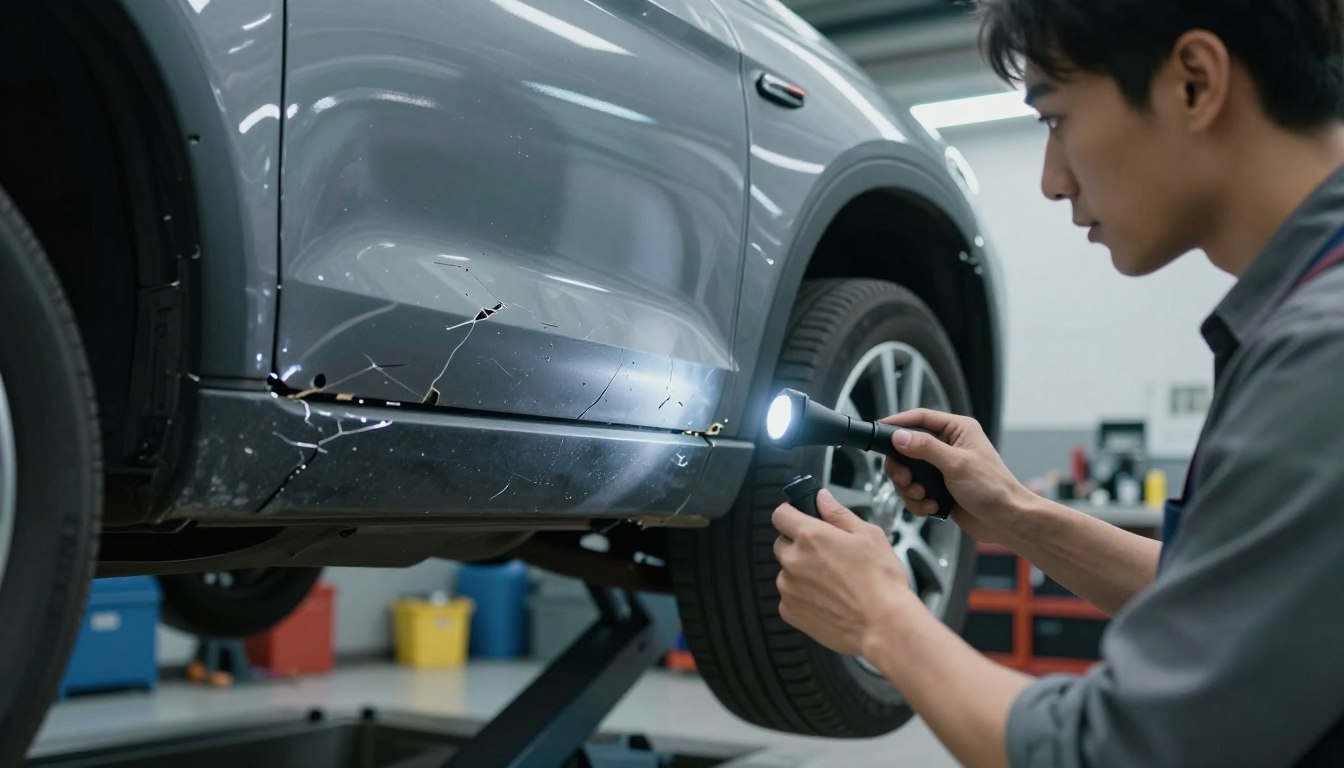
Surface imperfections after a collision often hide deeper structural threats to your car‘s exterior. Your vehicle uses multiple layers of coating to shield the metal from the elements. Even if the surface looks fine, the underlying layers might have suffered serious damage.
Quality paint work does more than just make the body look new again. It restores a vital seal that keeps moisture and salt away from the steel frame. Without this barrier, the metal starts to degrade almost immediately.
Examine Paint for Hidden Cracks and Weak Spots
Modern finishes are flexible, but they have limits during a high-impact event. You should look closely for spiderweb patterns or tiny fissures that appear after a bump. These cracks allow moisture to reach the bare metal of the body over time.
Even if the top coat appears intact, the primer underneath may have shattered. This creates small pockets where air and water can sit. You might not see the failure today, but it creates a foundation for future peeling.
Look for Early Signs of Rust Formation
Corrosive elements move quickly once they find a way past the top protective coat. You must stay alert for early signs of oxidation before they spread across entire panels. Identifying these symptoms early saves you from replacing whole sections of the car.
Bubbling Paint Surface
When you see the surface rising or forming small blisters, it means rust is already eating the metal underneath. The expansion of the iron oxide pushes the paint away from the surface. This indicates that the corrosion has already matured and needs professional attention.
Discoloration Along Seams
Dark or brownish spots near the edges of panels suggest a serious issue with moisture. Water often traps itself in the tight spaces where two panels meet after an accident. This hidden moisture causes rust to bleed through the edges, signaling deep-seated structural decay.
Understand How Compromised Paint Affects Vehicle Value
A vehicle with visible corrosion loses its resale value very fast. Buyers see these problems and assume the owner did not maintain the unit properly after a crash. Strong, professional repairs ensure the exterior stays pristine for years.
Addressing these concerns early protects your investment and ensures safety. Rust can eventually weaken the metal until it is no longer structurally sound. Professional body shops use specialized tools to ensure every layer of protection is perfectly restored.
| Visible Indicator | Hidden Condition | Long-Term Risk |
|---|---|---|
| Spiderweb Cracks | Fractured Primer Layer | Widespread Peeling |
| Surface Bubbling | Active Oxidation | Metal Perforation |
| Edge Discoloration | Seam Damage | Structural Weakness |
| Dull Finishes | Clear Coat Failure | Rapid Rust Spread |
Get Professional Collision Repair in San Antonio

When you need reliable auto body repair in San Antonio, choosing a certified center makes all the difference. You deserve a shop that understands the complexities of modern vehicle safety.
Our auto experts ensure that every repair meets strict standards. We focus on restoring your car to its original state through meticulous care.
What a Complete Post-Accident Inspection Includes
A thorough inspection is the first step toward restoring your car. Skilled technicians use specialized tools to find damage that remains hidden from the naked eye.
They check critical components to ensure everything works together perfectly. This process prevents small issues from becoming expensive problems later on.
Computerized Frame Measurements
These advanced tools detect even the slightest misalignment in your vehicle’s frame. Correcting misalignment is vital for your safety and the car’s structural integrity.
Diagnostic Scans of Electronic Systems
Modern systems rely on complex sensors and computers. A digital inspection identifies electrical faults and hidden sensor errors that could affect your brakes or airbags.
Suspension and Steering Evaluation
We check vital parts to ensure your alignment is perfect. This evaluation finds bent parts in the suspension and steering that compromise handling.
Safe steering and a stable suspension are essential for keeping you on the road. We never skip these checks during a full repair process.
Why Choose Miracle Body and Paint Collision Center
Choosing our auto body shop means you get access to top-tier expertise. We focus on quality collision work that follows manufacturer guidelines.
Our shop is dedicated to providing honest service and excellent results. We take pride in being the preferred choice for local drivers.
Expert Certified Technicians
Our team knows how collision forces affect modern materials. These experts perform every repair with precision and care to ensure total safety.
Advanced Diagnostic Equipment
We use the latest technology at our auto body facility. This allows us to catch damage that a standard body shop might overlook during a basic inspection.
Complete Auto Body Repair Services
We handle everything from cosmetic fixes to complex mechanical repair. Our goal is to return your auto to its original pre-accident state.
A trusted body shop looks beyond the surface. We ensure your car is as safe as it was the day you bought it.
Two Convenient San Antonio Locations
Miracle Body and Paint serves the San Antonio area with two professional locations. Visit the auto body shop nearest you for a detailed inspection and expert repair.
Each shop is equipped to handle any collision case. We work hard to get you back on the road quickly and safely.
North West San Antonio – Leon Valley: (210) 680-1987, 6217 Grissom Rd, San Antonio, TX 78238
North East San Antonio: (210) 858-3630, 4650 Walzem Rd, San Antonio, TX 78218
Our professional auto service helps preserve your vehicle’s value. Trust our certified experts for your next body shop experience.
Conclusion
Protecting your vehicle starts with understanding that what you see on the surface rarely tells the whole story. Hidden damage is a serious risk that drivers often overlook after a collision. While your car and bumper might look fine, internal components or your vehicle structure could be failing.
An even minor car accident can cause misalignment in the frame or trunk latch problems. These issues are not immediately visible but can worsen over time if you ignore them. Delaying your repairs puts your safety on the road at risk and causes more damage later.
Insurance companies frequently focus on the damage that is immediately visible during a quick inspection. However, every car accident victim needs a thorough repair plan to address mechanical wear. Insurance adjusters might miss a hidden issue like frame misalignment or structural problems during a claim.
Neglecting these issues lowers the value of vehicles and leads to expensive repairs down the line. Don’t let a car accident compromise your safety or the long-term health of your car. Our team identifies every hidden damage issue and problem that insurance might overlook after an impact.
Professional repairs ensure your trunk and bumper handle another impact correctly to protect your passengers. Drivers deserve peace of mind after a car accident, knowing their trunk functions perfectly. Taking time for a professional inspection protects you from future insurance hurdles and hidden damage costs.
Hire Miracle Body and Paint Collision Center to fix your collision repair damage with expert care. Don’t gamble with your safety after any accident or car accident. We offer two convenient San Antonio locations to handle your repair and repairs with precision for all drivers.
Visit us at North West San Antonio – Leon Valley: (210) 680-1987, 6217 Grissom Rd, San Antonio, TX 78238. You can also find our experts at North East San Antonio: (210) 858-3630, 4650 Walzem Rd, San Antonio, TX 78218.

