

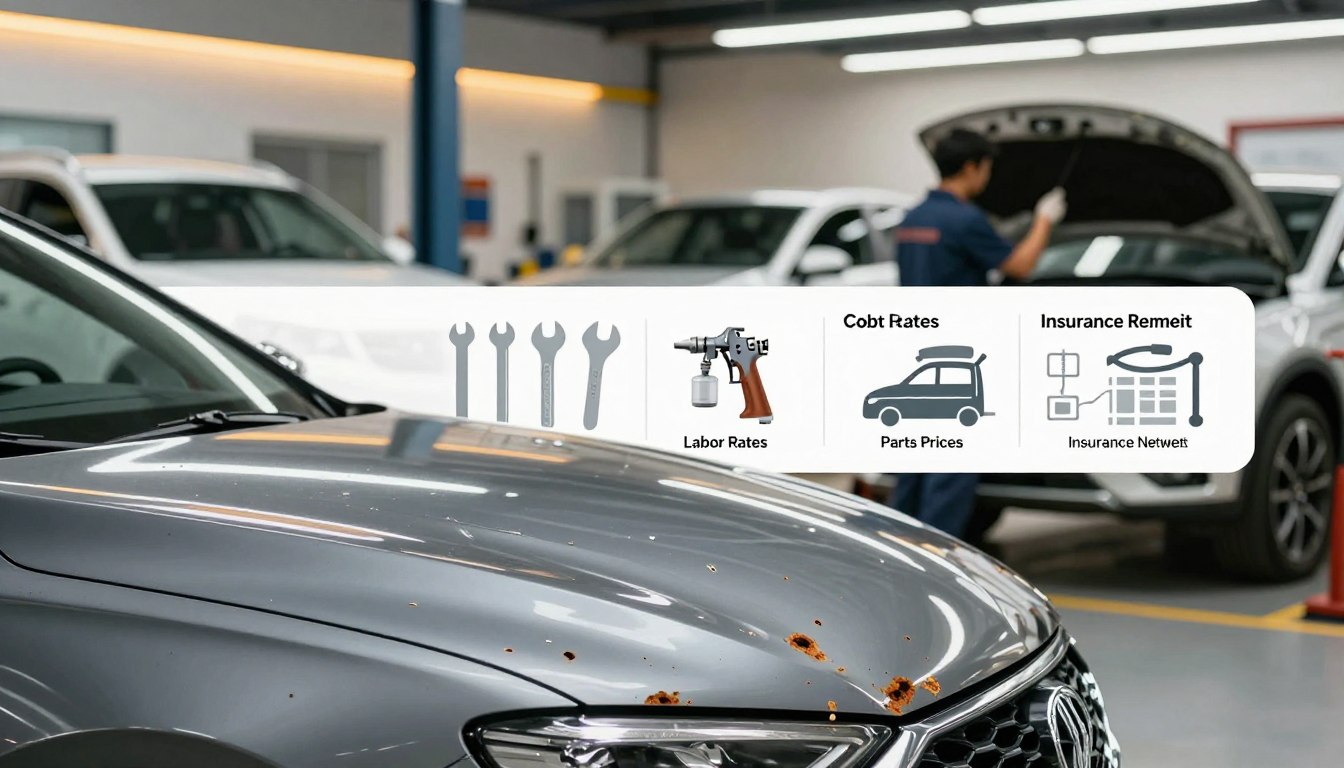
Finding your vehicle damaged is stressful. You want to get back on the road fast. But the repair bill often seems like a mystery. Understanding the variables that affect these prices helps you choose wisely.
Many complex factors influence the cost of fixing your car. From the extent of damage to your insurance policy details, each factor matters. Knowing these key factors lets you handle the process with confidence.
Key Takeaways
- Structural damage severity is the primary driver of total service costs.
- Insurance policy coverage limits significantly influence your out-of-pocket expenses.
- The availability of original equipment manufacturer parts affects both price and quality.
- Labor rates vary based on your geographic location and shop expertise.
- Hidden internal damage often increases the final invoice beyond initial quotes.
Understanding Collision Repair Estimates
When your car gets damaged, getting a professional assessment is the first step. A repair estimate is like a roadmap for fixing your car. It shows you what parts, labor, and paint are needed to fix it.
What Is a Collision Repair Estimate?
This document is a detailed plan for fixing your car. It’s not just a number; it’s based on industry standards and a technician’s check. Transparency is key so you know where your money goes.
A good repair estimate includes several important parts:
- Parts: A list of OEM or aftermarket parts needed.
- Labor: The hours for disassembly, repair, and reassembly.
- Paint and Refinish: Costs for matching your car’s color and applying clear coats.
- Miscellaneous Fees: Charges for supplies, waste disposal, or special equipment.
Importance of Accurate Estimates
Getting an accurate repair estimate is key for peace of mind. With a precise estimate, you can compare prices confidently. This avoids unexpected financial surprises during repairs.
Also, a detailed estimate helps you and your insurance agree on the work. Choosing a shop that explains everything clearly helps you make better decisions for your car.
Types of Damage and Their Impact on Costs
Not all vehicle damage is the same. Knowing the difference helps you manage your repair budget. The severity of the impact affects how hard it is to fix. Spotting the extent of accident damage helps you guess the time and effort needed for a full fix.
Minor vs. Major Damage
Small issues like door dings, paint scratches, or minor bumper scuffs are easy to fix. These repairs need less work and fewer special parts, keeping costs down. Efficiency is key for these small jobs, as they don’t mess with the car’s mechanics or safety.
Big damage, like bent body panels or hits to important parts, is much harder to fix. It takes a lot of time and special skills to make the car like new again. Expect to pay more for repairs that involve big parts or complex bodywork.
Frame Damage Considerations
Fixing the frame is the toughest job because it affects the car’s strength. Unlike simple fixes, frame repairs need precision equipment to get the chassis right. This includes strong welding and tests to make sure the car is safe.
Frame repairs are very time-consuming, making the job even harder. Technicians must measure the frame carefully to check if the accident damage has weakened the car. Getting professional help for frame repairs is key to keeping your car safe and valuable.
Labor Costs in Collision Repair
When you see a collision repair invoice, labor costs are usually the biggest part. These costs show the time and skill needed to fix your car like new. Today’s vehicle systems are so complex, fixing them needs more than basic car knowledge.
Skilled Labor and Its Value
The quality of your car’s repair depends on the techs working on it. Skilled technicians need ongoing training to keep up with new safety and repair methods. Their expertise makes sure your car is safe to drive again.
Jobs like straightening frames, aligning panels, and detailed sanding take a lot of time. You’re paying for the precision and attention to detail these pros bring. When a tech spends extra time for a perfect fit, it affects the labor hours on your repair estimates.
Geographic Cost Variations
Labor rates change based on the repair shop’s location. These changes come from different costs like rent, utilities, and wages. Shops in big cities often have higher costs than those in smaller towns, affecting their rates.
Also, how shops price their work is influenced by local competition. Knowing this is key to understanding the collision repair industry. The table below shows how different factors affect your labor costs.
| Factor | Impact on Cost | Reasoning |
|---|---|---|
| Technician Skill | High | Advanced training for complex systems. |
| Task Complexity | Moderate | Time required for structural repairs. |
| Regional Overhead | Variable | Local rent and economic conditions. |
| Shop Certification | High | Compliance with manufacturer standards. |
Parts Replacement vs. Repair
When your car goes to the shop, deciding to repair or replace parts is key. It affects the cost and the quality of the collision repair. Technicians check if a panel can be fixed or if a new part is needed for safety.
This choice impacts your car’s value and safety over time. Knowing the differences helps you choose wisely for your situation.
Aftermarket vs. OEM Parts
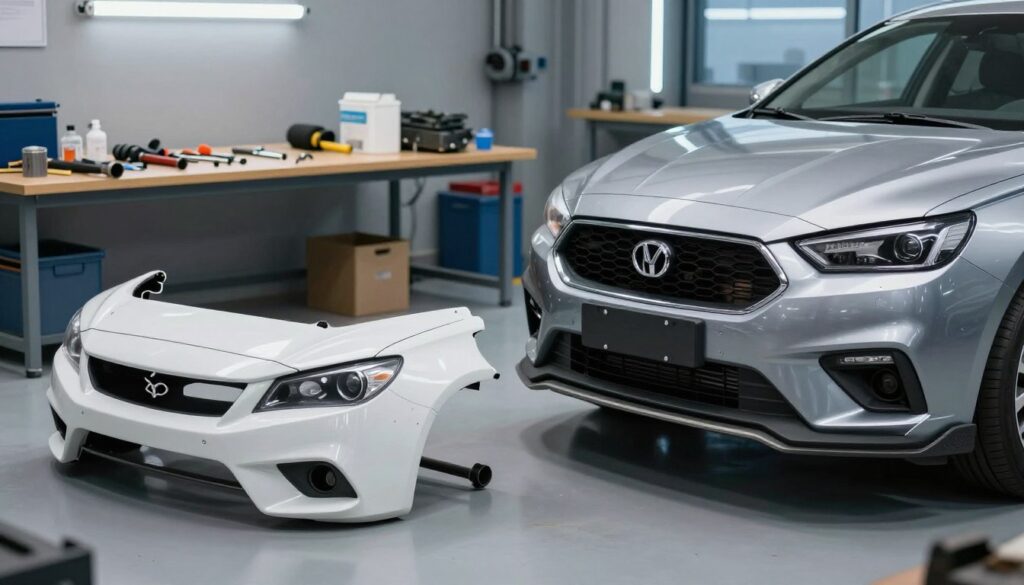
Choosing between vehicle restoration parts is common. OEM parts are made by the car’s maker and fit perfectly. They keep your car safe but cost more.
Aftermarket parts are cheaper and good for looks or minor fixes. They’re made by others but might not fit as well.
| Feature | OEM Parts | Aftermarket Parts |
|---|---|---|
| Fitment | Guaranteed precision | May require adjustments |
| Cost | Higher price point | More affordable |
| Warranty | Manufacturer backed | Varies by supplier |
Availability and Quality of Parts
How fast your car is fixed depends on part availability. Even if parts are found, delays can keep your car in the shop longer. This is true for special parts like trim or sensors.
Quality is the most critical factor in parts. High-quality parts make sure your car works like new. Always talk to your technician about where parts come from. This ensures you’re okay with the cost, quality, and repair time.
Insurance Coverage and Its Influence
Understanding your insurance policy is key in the insurance repair process. Each policy has its own language that affects how much help you get after a crash. Reviewing your documents carefully prepares you before you even get to the shop.
Understanding Your Policy Coverage
Your policy is a contract between you and your provider. It lists specific limits and exclusions that might impact your insurance repair claim. Check if your plan covers OEM parts or if it requires aftermarket alternatives.
Talking clearly with your insurance adjuster is important for a smooth process. We help you document all necessary repairs. This ensures your provider knows the full extent of the damage. Proper documentation helps avoid unexpected coverage gaps.
Deductibles and Out-of-Pocket Costs
Deductibles are the part of the repair bill you pay first. This amount is fixed in your policy and affects your final cost. Knowing this helps you plan for your vehicle’s repair.
There might be extra costs for premium services or specific parts not fully covered. We aim to be clear about these costs. This way, you can make informed choices. The table below shows how different factors affect your costs during a claim.
| Component | Financial Impact | Responsibility |
|---|---|---|
| Deductible | Fixed amount | Policyholder |
| Covered Repairs | Insurance payout | Insurance Provider |
| Non-covered Upgrades | Variable cost | Policyholder |
| Labor Rates | Market-based | Shared/Negotiated |
Paint and Finishing Costs
Paint and finishing are key to making your car look new again. While fixing the structure is important for safety, the paint job hides the accident’s history. Precision is essential for a flawless look with modern coatings.
Types of Paint and Their Price Points
The price of a paint job depends on the finish’s complexity. Basic single-stage paints are cheaper but less durable than multi-coat systems. Specialty finishes like pearl coats or deep metallics need more layers and time to dry.
These advanced finishes require more work and better materials, raising the cost. Each layer must be applied carefully, making the process more expensive. Expect to pay more for finishes that look like factory work.
| Paint Type | Complexity | Material Cost | Labor Intensity |
|---|---|---|---|
| Single-Stage | Low | Budget-Friendly | Minimal |
| Metallic/Pearl | High | Premium | High |
| Custom/Specialty | Very High | Very High | Extensive |
Importance of Color Matching
Getting the paint color just right is what a top-notch repair center does. They use advanced electronic color-matching tools to match your car’s paint perfectly. This tech makes sure the new paint looks like it’s always been there.
Technicians might do paint blending on nearby panels to cover up any small differences. This method helps the new paint blend seamlessly with the old. By choosing these professional methods, your car will look like it never had an accident.
Technological Factors
If you drive a newer car, you might be surprised by its complexity. Modern cars are like computers on wheels, with advanced safety features. These features need special care after an accident, affecting the cost of collision repair.
Advanced Driver-Assistance Systems (ADAS)
Your car uses cameras, radar, and sensors to keep you safe. These Advanced Driver-Assistance Systems (ADAS) are very sensitive to impacts. After a crash, they might not work right anymore.
To fix this, technicians must recalibrate your car. This ensures your safety features work as they should. This process takes time, adding to the repair cost.
Repair Technology and Equipment Costs
Fixing a modern car needs more than just basic tools. Shops must have specialized diagnostic equipment to talk to your car’s computer. Without this tech, they can’t check if all safety systems are working.
This tech requirement affects the repair cost in several ways:
- Technical Expertise: Technicians need ongoing training to keep up with new car tech.
- Diagnostic Time: Checking and calibrating vehicle sensors takes a lot of time, unlike older cars.
- Equipment Investment: The cost of special software and hardware is high, affecting repair shop costs.
In short, even small accidents can mean a lot of digital work. Choosing a shop that values this tech is key for your car’s safety and performance.
The Impact of Shop Reputation
A shop’s reputation is more than just a sign. It’s built on consistent, high-quality service. When you give your vehicle to a shop, you trust them to offer transparent pricing, reliable repairs, and clear communication.
Choosing a shop with a strong reputation means your vehicle is in good hands. Your peace of mind comes from picking a team that values integrity and skill.

How Location Affects Perception
The location of a repair center can shape how people see it. A clean, professional place shows the business cares about its setup and tools.
A shop that’s been around for years likely has happy customers. You can tell by how well they treat every vehicle that comes in.
Importance of Certifications and Awards
Certifications and awards show a shop follows strict standards. They prove the techs use recommended repair methods and keep service high.
Seeing industry certifications means the shop uses the latest tech. Prioritizing a certified shop ensures your vehicle is fixed right and safely.
Geographic Location and Market Rates
Your location affects the cost of fixing your car. When you get an insurance repair, prices change based on where you are. This is because of the economic conditions in your city.
Local Economic Factors
Shops in big cities pay more for rent and utilities. They also have to pay their workers more. This makes prices go up. Demand for services also affects prices, as busier shops charge more.
The cost of living in your area also matters. If workers earn more, you pay more. Knowing this helps you understand repair costs better.
San Antonio’s Collision Repair Market
In San Antonio, the repair market is competitive. Shops here offer good prices while keeping quality high. This is because the city is a big hub.
When looking at quotes, it’s important to know about local labor trends. This way, you can make sure you’re getting a fair deal. The table below shows how different factors affect repair costs in different places.
| Factor | Metropolitan Area | Rural Area |
|---|---|---|
| Labor Rates | Higher | Lower |
| Facility Overhead | Significant | Moderate |
| Service Demand | High | Low |
| Parts Availability | Excellent | Limited |
Time Frame for Repairs
When your car is out of commission after an accident, time is of the essence. The repair time isn’t always set in stone. It varies based on the damage’s complexity and part availability. A shop that values your time will manage the repair efficiently.
How Time Affects Estimates
The repair timeline is tied to the labor hours needed to fix your car. Shops estimate the time for disassembly, repairs, and finishing touches. If they find hidden damage, the timeline might get longer, affecting costs.
Good shops keep you informed about these changes. They work efficiently to minimize your car’s time in the shop. This approach helps keep labor costs within the initial estimate.
Rental Car Costs During Repairs
Long repairs often mean you’ll need a rental car, adding to your expenses. Not all insurance policies cover rental cars. Check your policy to avoid surprise costs.
If your policy doesn’t cover rentals, the daily fees can add up fast. Plan with your insurance to avoid these extra costs.
| Factor | Impact on Timeline | Cost Consideration |
|---|---|---|
| Minor Cosmetic Damage | Short (1-3 days) | Low rental expense |
| Structural/Frame Damage | Long (1-3 weeks) | High rental expense |
| Parts Availability | Variable | Potential for delays |
| Insurance Approval | Moderate | Administrative wait time |
Customer Service and Communication
Good customer service is key to making a stressful accident easier. When you pick a repair shop, you want someone who cares about your time and worries. Clear, honest dialogue means you’re supported from start to finish.
Transparency in Estimates and Timing
A detailed repair estimate is the start of a good relationship with your technician. A shop that breaks down costs clearly helps you understand what’s being fixed and why. This makes you feel sure the work is needed and priced right.
Also, being open about when the work will be done is key for planning. A realistic schedule lets you plan your day without surprises. Transparency about delays or part issues keeps you in the loop about your car’s status.
Importance of Follow-Up and Updates
A professional collision center keeps you informed. You should get updates on your repair estimate and any changes. Regular updates ease your mind and keep you in the loop.
When a team keeps you updated, it shows they value your investment. Staying connected helps you make smart choices if problems come up. A shop that values your communication will offer better service.
Choosing the Right Collision Repair Center
Finding the right auto body shop can be tough without the right help. When your car gets damaged, the shop you pick matters a lot. It affects your car’s safety and longevity. Choosing wisely means your car will be fixed right and look like new again.
Factors to Consider When Selecting a Shop
Good shops have certified technicians and the latest tools for precise repairs. Make sure the shop has the right certifications. This shows they care about quality and keep up with new methods. They should also be open about how they fix your car.
Also, ask what kind of parts they use. A good shop will use top-notch parts, like OEM or high-grade aftermarket ones. They should give you a written warranty for their work and parts.
Recommendations and Reviews
Do your homework before picking a shop. Look at online reviews and ask friends for advice. This gives you valuable insights into the shop’s reliability and service. Pay attention to what people say about communication and how long repairs take.
By looking at these things, you can avoid bad shops. Use the table below to compare different repair centers.
| Selection Criteria | High-Quality Shop | Average Shop | Warning Signs |
|---|---|---|---|
| Technician Training | Certified & Ongoing | Basic Experience | No Certifications |
| Equipment Used | Modern & Digital | Standard Tools | Outdated Machinery |
| Part Quality | OEM or High-Grade | Mixed Quality | Used or Unverified |
| Customer Updates | Proactive & Clear | Upon Request | No Communication |
Miracle Body and Paint Collision Center
Fixing your vehicle needs a team that values precision and clear communication. You should feel less stressed during the repair process.
Miracle Body and Paint Collision Center is your go-to for top-notch repairs. We aim to make your car look new again after any damage.
Why Choose Us for Your Repair Needs?
Our techs are all about professional service and paying attention to the little things. We handle your repair with care to meet safety standards.
Visit us in North West San Antonio at 6217 Grissom Rd. Call (210) 680-1987 to talk about your car’s damage.
Our North East San Antonio shop is at 4650 Walzem Rd. Call (210) 858-3630 to book your appointment. We’re excited to help you get back on the road safely.

