

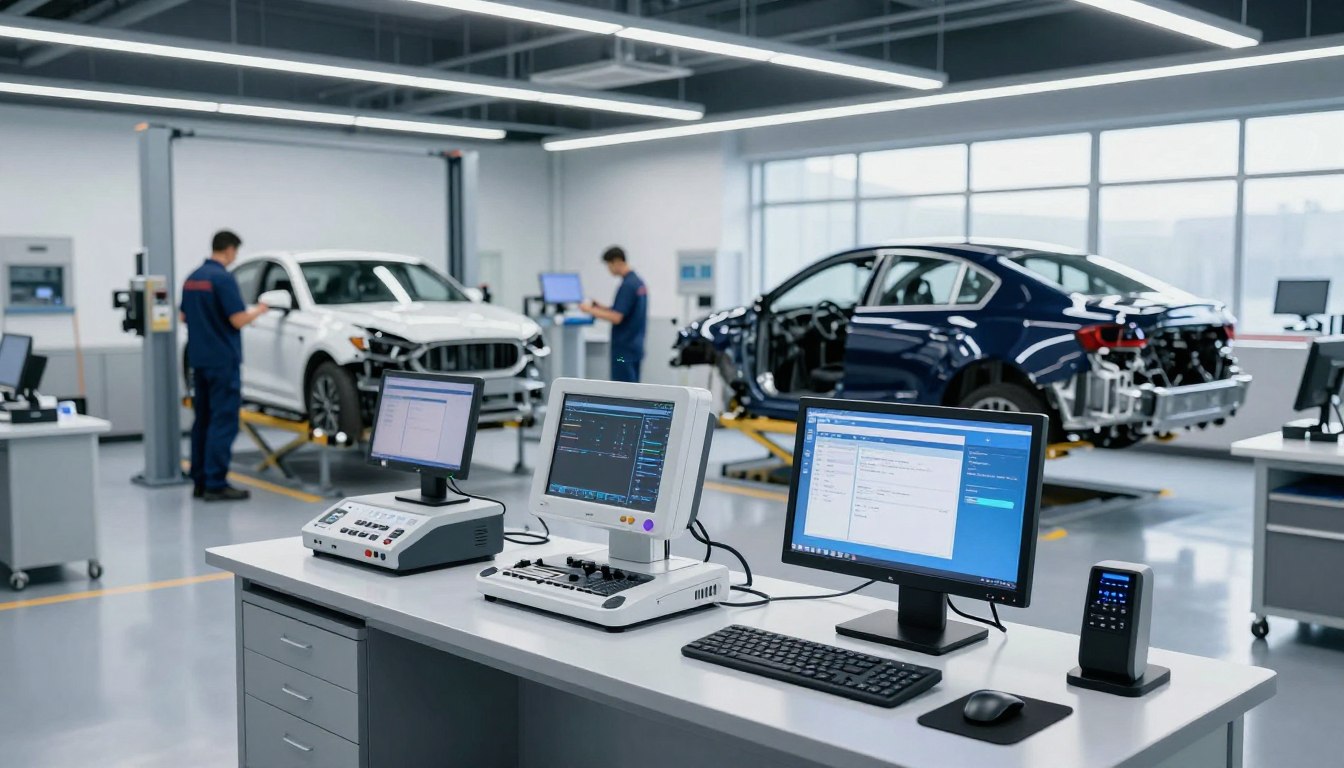
The automotive world is changing quickly. If your car gets damaged, it’s important to know the repair shop uses the latest car body shop technology. This ensures your safety and the precision of the repairs.
Today’s repair equipment is much more advanced than old tools. Experts use 3D imaging and AI diagnostics to find hidden damage. These tools offer a level of accuracy that was unthinkable a few years ago.
By using these digital tools, technicians can fix your car to its original state. At Miracle Body and Paint Collision Center, we focus on these advanced methods. We want to give you peace of mind. If you need reliable service, hire our expert team for your next repair.
Key Takeaways
- Modern repair facilities now utilize AI-driven diagnostic tools for better accuracy.
- 3D imaging systems help identify structural damage that is not visible to the naked eye.
- Advanced digital tools ensure your vehicle meets strict factory safety standards.
- Choosing a center with updated equipment significantly improves the quality of your repair.
- Miracle Body and Paint Collision Center offers professional services using these cutting-edge methods.
The Evolution of Car Body Shop Technology
Technology has changed how we fix damaged cars. Before, people used manual tools and looked at cars to find damage. Now, the focus is on high-tech methods for precise repairs.
The growth of car body shop technology has changed repair work a lot. Modern places can find hidden problems that were hard to see before. This means your car will be fixed to match its original state perfectly.
Digital measuring systems are a big step forward. They let techs map a car’s frame with great detail. This way, shops can make sure the car is fixed right.
Modern repair shops use these new tools to serve their customers better. Choosing a shop with the latest tech means you get:
- Enhanced Safety: Tools ensure parts are in the right place.
- Increased Efficiency: Automated systems make repairs faster.
- Greater Accuracy: Digital tools cut down on mistakes.
Being up-to-date with car body shop technology shows a shop’s professionalism. With digital measuring systems and other advanced tools, techs can tackle tough repairs. This focus on quality keeps your safety first during repairs.
Precision Diagnostics and Digital Measuring Systems
Precision is key to safety in today’s complex vehicle repairs. Modern digital measuring systems help find even tiny frame changes. These tools make sure every part is back to factory specs.
Choosing a shop with top-notch repair equipment means you value your safety. These systems cut down on the uncertainty of old repair methods. They guide the repair process with clear, data-based steps.
How Laser Measuring Ensures Frame Integrity
Laser measuring is like a technician’s eyes during repairs. It maps the vehicle’s chassis in three dimensions with intense beams. This checks your car against the original blueprints.
If the frame is off by a few millimeters, the laser spots it right away. This unmatched accuracy makes sure parts fit right after repair. Without it, your car might handle poorly or wear out tires unevenly.
The Role of Computerized Diagnostic Scans in Post-Collision Analysis
Today’s cars are like computers, full of sensors and modules. A post-collision scan is key to check these systems. It finds faults that a simple look can’t.
Technicians use special repair equipment to talk to your car’s computer. This shows error codes for airbags, brakes, and more. Fixing these codes and adjusting electronics ensures your car’s safety features work right in future incidents.
Advanced Paint Matching and Refinishing Systems
Getting your car to look like new isn’t just about skill and good paint. Today, pros use top-notch digital tools to make sure repairs match your car’s look perfectly. With repair equipment that’s cutting-edge, technicians can avoid the color mistakes of the past.
Spectrophotometers and Digital Color Retrieval
At the heart of today’s color accuracy is the spectrophotometer. These handheld tools scan your car’s paint to get exact light reflection data. This info is then used by paint matching technology to create a custom paint formula. It takes into account how the paint will change over time and with sun exposure.
Digital color systems let techs quickly find the right paint codes for your car. This precision means the new paint will match your car’s original finish perfectly. Say goodbye to mismatched panels or uneven colors after a repair.
Environmentally Friendly Waterborne Paint Technologies
The industry is moving towards greener practices. Now, car body shop technology uses waterborne paint instead of old solvent-based paints. These new paints cover better and release fewer harmful fumes into the air.
Waterborne paints are better for the planet and last longer with no color fading. They make painting your car smoother, just like the factory. Choosing a shop that uses these eco-friendly paints means your car gets a top-notch, green repair.
Structural Repair Innovations and Aluminum Welding
The use of aluminum in cars has changed how repairs are done. Shops need special repair equipment to fix aluminum cars right. Without these tools, the car’s structure might not be fixed properly.
Today, shops use digital measuring systems to check the car’s frame. These tools help align panels carefully. This ensures every part fits perfectly, just like the factory made it.
Specialized Equipment for Aluminum Body Panels
Aluminum can get damaged by steel particles. To avoid this, shops use only aluminum tools. This keeps the car’s body panels strong for a long time.
Technicians use special tools for aluminum, like dent-pulling stations and rivet guns. These tools help make repairs that meet factory standards. They do this without using too much heat, which can harm the metal.
Resistance Spot Welding and Factory-Standard Integrity
Resistance spot welding is the best way to join car parts. It makes strong welds that keep the car’s frame solid. This method also protects the metal around the weld from damage.
Technicians use digital measuring systems during welding. This ensures the car’s frame stays straight. This accuracy is key for the car’s systems to work right. You can feel safe knowing your car’s structure is fixed with the latest technology.
ADAS Calibration in Modern Collision Repair
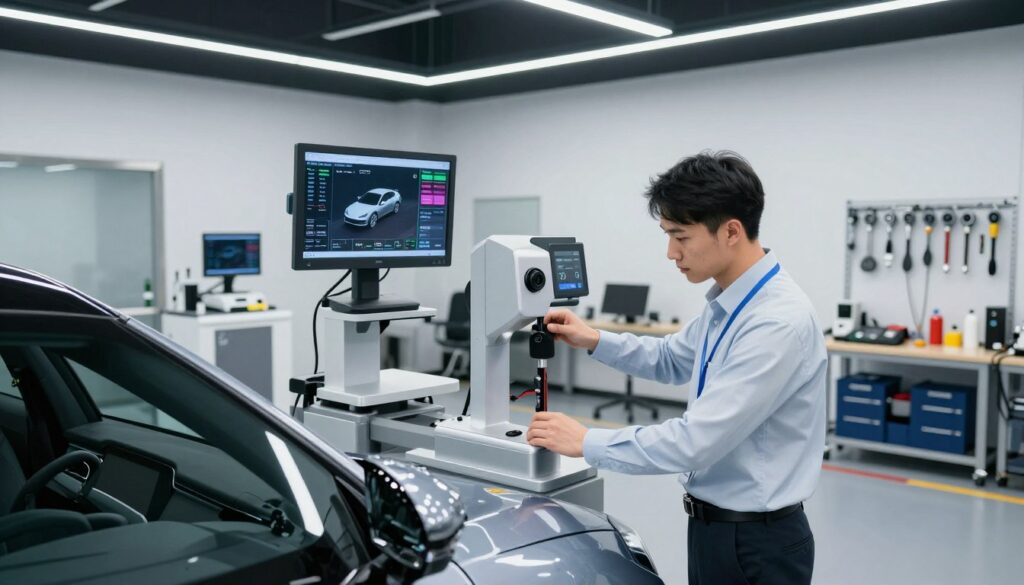
Advanced Driver Assistance Systems (ADAS) are key to your car’s safety. They need to be perfectly set up to work right. As car body shop technology gets better, fixing cars now means more than just bodywork. It’s about making sure all electronic parts work together.
Today’s repair shops use digital measuring systems to get everything just right. Even a tiny mistake can mess up these systems when you need them most. Getting your car’s safety features right is a must for your safety.
Understanding Advanced Driver Assistance Systems
ADAS includes features like lane departure warnings and automatic emergency braking. They use cameras, radar, and sensors all around your car. Precision is non-negotiable when fixing these parts.
When your car gets damaged, these parts can move or lose their correct position. Technicians use special tools to get everything back to where it should be. This makes sure the car’s computer can read the road correctly.
The Necessity of Static and Dynamic Calibration
Calibration comes in two types: static and dynamic. Static calibration happens in a shop using targets and digital measuring systems. It lets techs check sensor alignment very accurately.
Dynamic calibration means driving the car to test how it sees the world. Many cars need both types to work right. Using the latest car body shop technology makes sure your car is safe to drive.
| Calibration Type | Environment | Primary Tools | Goal |
|---|---|---|---|
| Static | Controlled Shop | Targets & Lasers | Sensor Alignment |
| Dynamic | Public Road | Diagnostic Scan Tool | System Recognition |
| Combined | Hybrid | Full Suite | Total Safety |
The Impact of OEM Repair Procedures on Safety
Your vehicle’s safety depends on the shop following the manufacturer’s repair guidelines. Modern car body shop technology needs precise adherence to these protocols. If a technician doesn’t follow these instructions, they risk damaging your vehicle’s structure.
Accessing Manufacturer-Specific Repair Data
Professional repair centers use special portals to get the latest repair procedures from the automaker. This data gives step-by-step instructions for handling materials like high-strength steel or aluminum. Without this, a shop can’t ensure the repair equipment is used right.
Using these digital databases means every weld, bolt, and sensor is handled as designed. Staying updated with these requirements lets technicians fix your car like it was before the accident. This focus on data-driven repair shows a shop’s quality.
Why Following OEM Guidelines Prevents Future Failures
Following OEM guidelines is not just a suggestion; it’s a safety must. When shops ignore these standards, they miss the complex interactions between modern vehicle systems. This can lead to big failures in future crashes, as the vehicle might not work as the engineers planned.
Advanced car body shop technology allows for precise measurements that match factory specs. Using the right repair equipment makes sure your vehicle’s crumple zones and safety features work as they should. The table below shows the differences between following these standards and taking shortcuts.
| Feature | OEM-Compliant Repair | Non-Compliant Repair |
|---|---|---|
| Structural Integrity | Restored to factory safety | Potentially weakened |
| Sensor Calibration | Verified and accurate | Risk of system failure |
| Material Handling | Manufacturer-approved | Generic or improper |
| Long-term Reliability | High performance | Increased failure risk |
Robotic and Automated Body Shop Tools
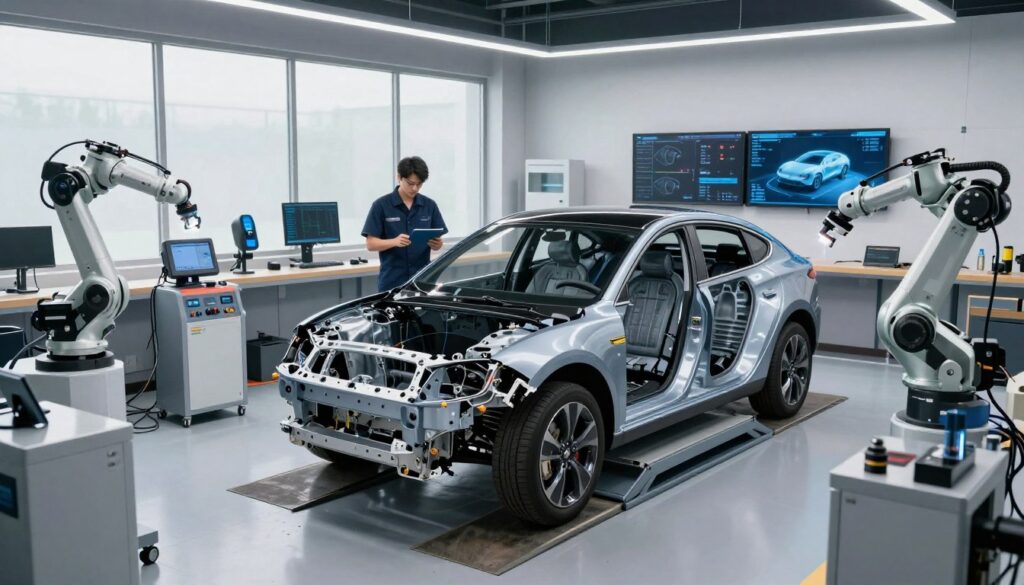
Robots are changing how cars are fixed after accidents. They help technicians do less manual work. This makes repairs more consistent. Shops also use digital measuring systems to meet factory standards.
Improving Efficiency with Automated Dent Pulling
Automated dent pullers use sensors to find and fix dents. They apply the right amount of force to fix the metal. This way, the paint and structure stay safe.
These tools make repairs faster. Technicians can work on harder tasks. Your car gets fixed quickly and well.
Precision Cutting and Material Removal Tools
Robotic cutters are key in modern car repairs. They remove damaged parts with great care. This is important for new, light materials.
Good repair equipment cuts down on mistakes. Safety improves because these tools avoid damage to important parts. Your car will be fixed right, like before the accident.
The Role of Software in Repair Management
Software plays a big role in how fast and accurate car repairs are. While repair equipment is key for fixing cars, software keeps everything running smoothly. Today’s car body shop technology includes management platforms that link all departments together.
Streamlining Communication Between Shops and Insurers
Good communication is key for quick repairs. Special software lets shops send updates to insurance adjusters right away. This instant data exchange cuts down on phone calls and manual checks.
With automated updates, shops get quicker approval for extra repairs. This means your car gets fixed faster, without waiting for approval. Clear communication makes the process smoother for everyone involved.
Digital Documentation for Insurance Claims
Keeping accurate records is important for everyone. Digital tools let techs upload photos, reports, and notes to a cloud database. This creates a transparent audit trail that shows every repair followed the manufacturer’s guidelines.
Choosing a shop with this car body shop technology means your claim is well-documented. These digital records prove every repair was done right. They’re key for keeping your car safe and its value high.
Safety Standards and Technician Training
Being great at fixing cars is not just about having the right tools. It’s also about having skilled people. Modern tools help fix cars well, but skilled workers are key to making sure your car is safe.
Technicians need to know a lot about how cars work and how to fix them safely. They use their knowledge and care to make sure your car is fixed right.
I-CAR Certification and Ongoing Education
The world of cars is always changing. So, car repair workers must keep learning. Groups like I-CAR offer top training to keep workers up-to-date.
Having a technician with I-CAR certification means they know a lot about fixing cars. They learn about new ways to fix cars and use digital measuring systems to check if cars are fixed right.
Keeping up with new car materials is important. Staying ahead is not just a goal; it’s a must for keeping your car safe.
Maintaining a Safe Working Environment
A safe place to fix cars starts with a clean and safe shop. Every car body shop technology must follow strict safety rules. This keeps workers safe and your car in good shape.
Handling dangerous stuff safely, using the right gear, and following rules are key. A safe shop means every fix is done with absolute precision.
| Training Level | Focus Area | Safety Impact |
|---|---|---|
| Entry Level | Basic Tool Handling | Foundational Safety |
| I-CAR Certified | Advanced Diagnostics | High Structural Integrity |
| Master Technician | Complex Systems Integration | Maximum Passenger Protection |
The Future of Collision Repair Technology
The world of car repair is changing fast. Cars are getting more complex, so repair shops need new tools and methods. Soon, you’ll see digital tools and learning that’s like being right in the action.
Artificial Intelligence in Damage Estimation
Artificial intelligence is set to change how we assess damage. AI can look at photos to find hidden damage quickly. This means shops can give faster, more accurate estimates to customers and insurance companies.
AI helps technicians focus on the tough repairs. They don’t have to spend time on paperwork. This means your car gets the right parts and care from the start.
Virtual Reality Training for Technicians
The future of training is virtual reality. It lets technicians practice without risking real cars. They can get better at tricky tasks like welding or sensor work.
VR helps technicians get really good at their jobs. When they work on your car, they’re experts. This means your car is fixed better and safer.
| Technology Type | Current Method | Future Innovation |
|---|---|---|
| Damage Assessment | Manual visual inspection | AI-driven image analysis |
| Technician Training | On-the-job shadowing | Immersive VR simulations |
| Repair Equipment | Standard mechanical tools | Connected, smart repair equipment |
Sustainability in Modern Repair Facilities
Sustainability is key for modern car repair shops in the U.S. They use eco-friendly methods to show that quality repairs don’t harm the environment. This change is making car body shop technology better and keeping shops running well for a long time.
Reducing Waste Through Advanced Recycling
Today’s repair centers focus on recycling. They sort out metal, plastics, and glass to avoid landfills. Advanced recycling protocols help turn waste into useful materials.
Digital measuring systems also help cut down waste. They make sure repairs are done right the first time. This saves on materials and is key to running a green shop.
Energy-Efficient Spray Booths and Lighting
Repair centers are now using less energy. They have spray booths that use smart technology to save power. These booths keep paint curing conditions perfect while cutting down on carbon emissions.
Lighting is also important for saving energy. Shops switch to energy-efficient LED lighting to cut costs and improve work conditions. These changes help make the auto industry greener.
| Practice Area | Traditional Method | Sustainable Approach |
|---|---|---|
| Waste Management | General landfill disposal | Advanced material recycling |
| Lighting Systems | Standard fluorescent bulbs | High-efficiency LED arrays |
| Repair Precision | Manual estimation | Digital measuring systems |
| Energy Usage | High-draw HVAC systems | Smart climate-controlled booths |
Quality Control and Final Inspection Protocols
Quality control is key in the world of modern collision repair. Even with top-notch repair equipment, human checks are vital for safety. This step makes sure every part meets strict safety standards.
Digital Quality Assurance Checklists
Today, shops use digital checklists for every repair step. These tools help techs check each step against the maker’s specs. This way, car body shop technology helps avoid mistakes.
The table below shows what we check during our digital inspections:
| Inspection Category | Verification Method | Safety Priority |
|---|---|---|
| Structural Alignment | Laser Measurement | High |
| Paint Finish | Spectrophotometer | Medium |
| Electronic Systems | Diagnostic Scan | Critical |
Road Testing and Sensor Verification
A road test is the last check of a repair’s success. Techs check how the car handles, brakes, and sounds. This test shows the repair equipment worked right while driving.
Also, checking sensors is key for cars with safety features. We calibrate sensors to make sure they talk right with the car’s computer. This meticulous attention to detail means your car’s safety systems work as they should.
With the latest car body shop technology, we make sure your car is safe. Our focus on these final steps means you can trust your repair. Your safety is our top priority at every step.
The Importance of Choosing a Tech-Forward Repair Center
Choosing a collision center affects your vehicle’s long-term performance and safety. Opting for a place with advanced repair equipment means investing in your car’s future. Modern cars are complex, needing precise care and special knowledge to fix right.
Why Modern Equipment Matters for Your Vehicle
Today’s cars use strong steel and aluminum, needing special repair methods. Shops with digital measuring systems can spot frame misalignment with great accuracy. This is essential for your car’s safety features to work as intended.
Without these tools, repairs might not meet safety standards. By picking a tech-savvy center, you ensure your car is fixed to the factory-specified integrity. This gives you peace of mind every time you drive.
Avoiding Substandard Repair Practices
Going for cheap or convenient repairs can be risky. Old repair equipment can’t handle today’s car tech. This might make your car look good but hide serious problems.
Always verify your repair center follows proper procedures. A modern center will show you detailed repair records, proving they used the right tools for your car. Making a smart choice about where to get your car fixed is key to your safety.
Miracle Body and Paint Collision Center Commitment to Excellence
Being excellent in collision repair means caring deeply about the craft and the community. We see your vehicle as a big investment. So, we handle every repair with utmost precision and care.
Our aim is to make your car look like new again. We want to make sure you’re completely happy with the repair.
Our Investment in Cutting-Edge Repair Technology
We always try to be at the forefront of the industry. We keep our car body shop technology up to date. This helps us deal with the complex needs of today’s cars.
Our shop has top-notch repair equipment that meets the high standards of car makers. This lets us do detailed repairs and match paint perfectly. We think using the best tools is key to keeping your car safe and lasting long.
Serving the San Antonio Community
We’re proud to be a reliable choice for drivers in San Antonio. Our team works hard to give you clear, dependable service. We’re here for you, whether you need small fixes or big repairs.
North East San Antonio
In North East San Antonio, we offer top-notch auto care. We have all the tools and knowledge to take care of your car. Our technicians are experts in many car types.
North West San Antonio – Leon Valley
Our Leon Valley location offers the same quality to the North West side. We have all the latest repair equipment for your car. Come see us and see how our tech-forward approach makes a difference.
- Certified Technicians: Experts trained in the latest repair methods.
- Quality Assurance: Rigorous inspections at every stage of the process.
- Community Focus: Dedicated to serving the unique needs of San Antonio drivers.
Conclusion
Modern vehicle safety relies on precise repairs. Advanced car body shop technology makes sure your car is fixed right after an accident. It ensures your car meets its original factory standards.
Driving away from a repair shop should give you peace of mind. Digital measuring systems provide the exact data needed for repairs. This removes any guesswork from the process.
Choosing a shop with the latest equipment is smart. It protects your investment and keeps your family safe. You get precise calibration and expert craftsmanship. This means your vehicle will work just like the manufacturer intended.
Miracle Body and Paint Collision Center is a leader in San Antonio. We have two convenient locations. Our team uses the latest tools for every part of your vehicle’s restoration. We invite you to visit us for your next collision repair service.
Contact Miracle Body and Paint Collision Center today to schedule your estimate. See the difference that professional, tech-forward care makes for your vehicle.

