

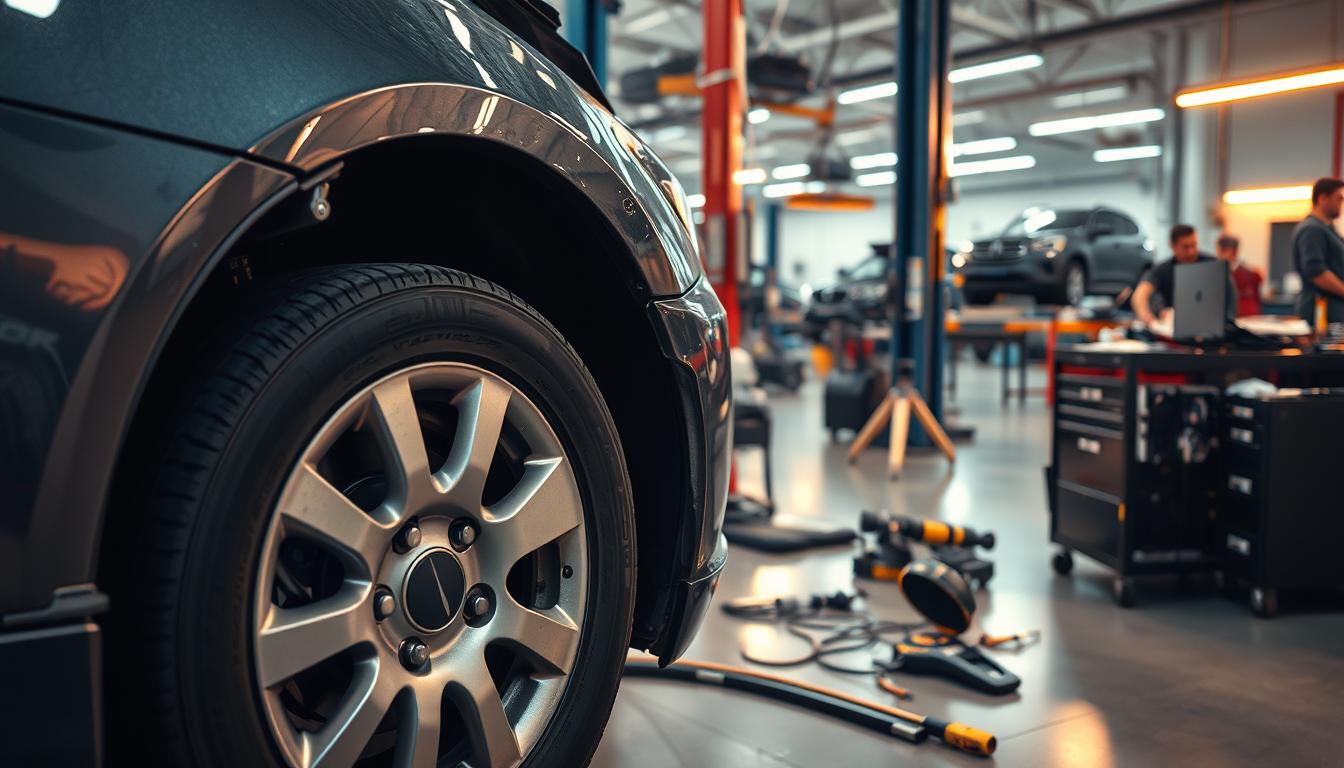
Your vehicle’s wheels are key for both performance and safety. A crash can seriously damage them, risking your safety. After a crash, always check your wheels for damage.
Damaged wheels can make your car less safe and more prone to accidents. This article will show you how to tell if your wheels need to be replaced after a crash. Knowing these signs helps you keep your car in top shape and stay safe on the road.
Key Takeaways
- Inspecting your wheels after a collision is vital for safety.
- Damaged wheels can harm your car’s performance.
- Replacing damaged wheels can stop more problems.
- Regular care is essential to make your car last longer.
- Professional collision repair services can check and fix wheel damage.
The Critical Role of Wheels in Vehicle Safety
Wheels are key to vehicle safety. They help with stability, handling, and braking. They also support the tires and affect fuel efficiency.
How wheels contribute to overall vehicle performance
Wheels are vital for a vehicle’s performance. They must be strong and evenly distribute the load.
Structural integrity and load distribution
Wheels need to be strong to handle different road conditions and loads. Even load distribution is key for balance and stability.
Impact on handling and braking efficiency
Wheels affect a vehicle’s handling and braking. Damaged wheels can reduce performance and increase stopping times.
Why wheel integrity matters after a collision
After a crash, checking wheel integrity is important. Damaged wheels can harm vehicle safety.
Cascading effects of compromised wheels
Bad wheels can cause uneven tire wear and poor handling. They also increase the risk of damage to other parts.
Safety risks of overlooking wheel damage
Ignoring wheel damage can be dangerous. It can lead to accidents because of poor performance and stability.
Understanding Wheel Damage After an Accident
Accidents can severely damage a vehicle’s wheels. The force of impact can affect wheels in various ways. This depends on the collision’s nature and severity.
Types of collisions that commonly damage wheels
Some accidents are more likely to harm wheels. These include:
- Side impacts, which can bend or crack the wheels due to the force exerted on the wheel hub and surrounding structure.
- Curb strikes, which can cause significant damage to the wheel, if the strike is severe.
Side impacts and curb strikes
Side impacts can damage wheels by applying force to the rim or hub. Curb strikes can also harm wheels by scraping or hitting the curb, potentially bending them.
Front and rear collision effects
Front and rear collisions can also damage wheels. This is true if the collision is head-on or involves significant rear-end force. It can lead to bent wheels or wheel bearings being out of alignment.
How impact forces affect wheel structure
Impact forces from a collision can unevenly distribute stress across the wheel’s components. This can lead to material fatigue over time.
Stress distribution through wheel components
The wheel’s structure is designed to distribute stress. But a significant impact can overwhelm this capacity, causing cracks or bends.
Material fatigue and failure points
Repeated stress or a single significant impact can lead to material fatigue. This creates failure points in the wheel that may eventually cause it to fail.
| Type of Collision | Common Wheel Damage |
|---|---|
| Side Impact | Bent or Cracked Wheels |
| Curb Strike | Scraped or Bent Rims |
| Front/Rear Collision | Misaligned Wheels or Bearings |
Visual Indicators of Wheel Damage
After a collision, it’s important to check your wheels for damage. This step helps spot both clear and hidden signs of damage.
Obvious Physical Damage to Inspect For
Start by looking for obvious damage on your wheels. These signs can include:
Visible Dents, Gouges, and Deformations
Look for any dents, gouges, or deformations on the wheel. These could mean the wheel took a big hit and might not be safe.
Chrome or Finish Damage Indicating Deeper Issues
Damage to the chrome or finish might show deeper problems. Check for any scratches, cracks, or where the finish is off.
Subtle Signs That Are Easy to Miss
Some damage is not easy to see at first. Make sure to check for:
Alignment of Wheel to Wheel Well
Ensure the wheel fits right in the wheel well. If it doesn’t, it could mean the rim is bent or damaged.
Brake Dust Distribution Patterns
Look at how brake dust spreads around the wheel. If it’s not even, it could mean the wheel is off balance.
| Signs of Wheel Damage | Description | Potential Consequences |
|---|---|---|
| Visible Dents/Gouges | Obvious damage to the wheel surface | Structural weakness, possible wheel failure |
| Chrome/Finish Damage | Damage to the wheel’s finish or chrome plating | Corrosion, possible structural issues |
| Misalignment | Wheel not properly aligned with the wheel well | Uneven tire wear, handling problems |
| Uneven Brake Dust | Irregular brake dust distribution around the wheel | Potential brake problems, uneven wear |
Bent Rims: A Common Collision Consequence
Car crashes often result in bent rims, which can be a safety and performance issue. Bent rims are not just about looks; they can also affect how well your car works.
Identification of Bent Rims
Spotting bent rims is key to keeping your car safe. There are a few ways to check if your rims are bent.
Visual Inspection Techniques
Looking closely can show if rims are bent. Check for any deformation or damage that might mean your rim is bent.
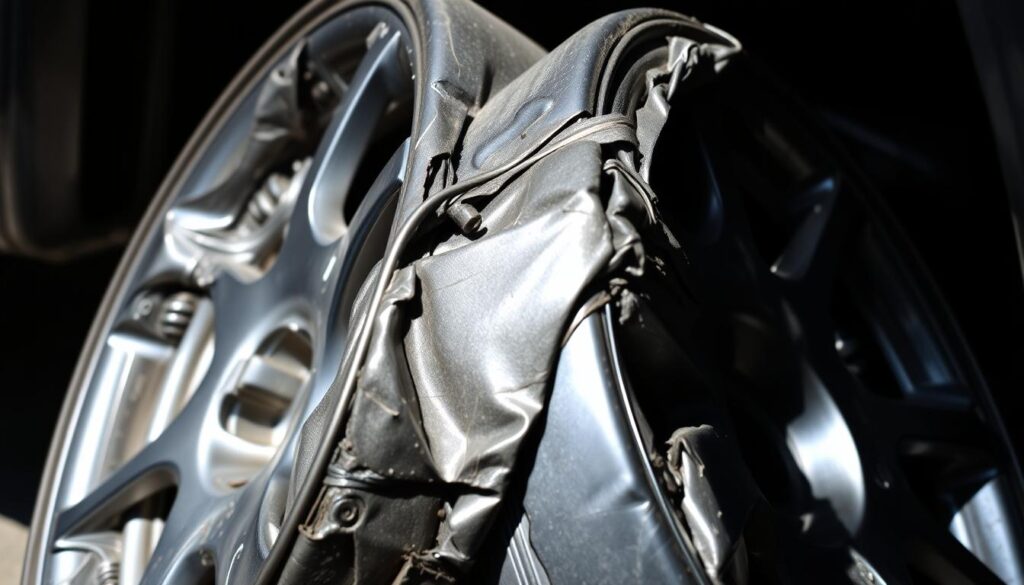
Also, checking your tire pressure can help find bent rims. Bent rims can cause irregular tire wear and affect tire pressure. Keep an eye on your tire pressure to spot any problems.
The Dangers of Driving with Bent Rims
Driving with bent rims is risky. It can cause irregular air pressure and wear out other parts of your car’s suspension system.
Air Pressure Irregularities and Blowout Risks
Bent rims can lead to irregular air pressure, raising the chance of a tire blowout. This is very dangerous, mainly at high speeds.
Accelerated Component Wear
Also, bent rims can make other parts of your car wear out faster. This includes the suspension and steering systems, leading to expensive repairs.
Wheel Replacement After Crash: When It’s Absolutely Necessary
After a crash, checking your wheels is key to ensure they’re safe. Wheels are vital for your car’s performance and safety.
Non-negotiable damage scenarios
Some wheel damage is too serious and needs to be fixed right away. This includes any damage that makes the wheel unsafe.
Structural compromise thresholds
Wheels that are bent too much or have long cracks need to be replaced. For example, cracks over a quarter inch or bends that are off by more than a quarter inch are too far gone.
Safety-critical deformations
Damage that messes with tire pressure or causes uneven wear is a big deal. It can make your car harder to control and increase the chance of a tire blowout.
When immediate replacement is a safety requirement
In some cases, you must replace your wheels right away for safety. This is true if the damage could make your car unsafe to drive.
Risk assessment factors
Things like how fast you hit something, the angle of the hit, and if the wheel took a direct hit are important. A pro needs to check it out to see how bad it is.
Legal and insurance considerations
Think about the legal and insurance side of things too. In many places, driving with damaged wheels can get you in trouble or make you liable if you crash again.
| Damage Type | Description | Replacement Necessity |
|---|---|---|
| Bent Rim | Rim is bent due to impact | High |
| Cracked Wheel | Visible cracks on the wheel surface | High |
| Deformed Wheel | Wheel shape is deformed affecting tire fit | High |
Cracks and Fractures: The Hidden Dangers
Even small cracks and fractures in wheels can cause big problems. They can lead to a wheel failing completely. A wheel’s strength is key to keeping vehicles safe, and any damage can weaken it.
Detecting Hairline Cracks in Wheels
Finding hairline cracks needs a careful look. Inspection methods and tools are very important for spotting these dangers.
Inspection Methods and Tools
Using the right tools, like magnifying glasses or special crack detectors, helps find hairline cracks. It’s important to check wheels regularly, even more so after a crash.
High-Stress Areas to Examine Closely
The spots around the wheel’s spokes, hub, and rim are high-stress zones. Cracks often show up here. Checking these areas well is key to catching problems early.
Why Even Minor Fractures Can Be Catastrophic
Even small cracks can grow under stress, causing a wheel to fail. Knowing how these cracks spread is vital to avoid accidents.
How Small Cracks Propagate Under Stress
When a wheel with a crack faces stress, the crack can get bigger. This can lead to a wheel failing suddenly and dangerously.
Failure Scenarios and Prevention
Regular checks and replacing wheels when needed can stop failures. Spotting damage signs early can save lives.
Abnormal Tire Wear Patterns Indicating Wheel Damage
Abnormal tire wear often points to wheel damage, which can be dangerous. Damaged wheels can cause tires to wear out unevenly. This shortens your tire’s life and might harm your vehicle more.
How damaged wheels affect tire wear
Damaged wheels make tires wear down in odd ways. This happens because the wheels don’t rotate or stress the tires evenly. This leads to specific wear patterns.
Uneven tread wear signatures
- Excessive wear on the center or edges of the tire tread
- Irregular wear patterns indicating misalignment or bent rims
Edge wear and cupping patterns
- Edge wear often signifies under or over-inflation, or camber issues
- Cupping patterns can indicate bent wheels or improper wheel balancing
Reading tire wear as a diagnostic tool
Looking at tire wear patterns can help spot wheel damage. By matching wear patterns with wheel problems, you can find issues early.
Correlating wear patterns to specific wheel issues
For example, uneven wear might mean bent rims or misalignment. Regular checks can catch these problems before they get worse.
When tire replacement must accompany wheel replacement
If you find serious wheel damage, you might need to replace both the wheel and tire. This ensures even wear and prevents more damage.
Handling and Performance Issues: What Your Car Is Telling You
Wheel damage can show up in many ways, affecting your car’s performance and handling. When your car’s wheels are damaged, it can cause a variety of problems. These problems can change how your vehicle drives and reacts.
Vibrations and Wobbling Sensations
A damaged wheel can cause vibrations and wobbling sensations while driving. These symptoms can be very noticeable at certain speeds.
Speed-Dependent Symptoms
The vibrations or wobbling may get worse as you speed up or slow down. This suggests a problem with the wheel’s balance or structure.
Distinguishing Wheel Issues from Other Problems
It’s important to tell the difference between wheel-related vibrations and other possible causes. This includes misaligned tires or brake problems.
Steering Problems Related to Wheel Damage
Wheel damage can also mess with your car’s steering. This can lead to pulling or drifting behaviors. You might find your vehicle veering to one side or the steering wheel not staying centered.
Pull and Drift Behaviors
If your car always pulls to one side, it could mean uneven tire wear or wheel damage. This affects the alignment.
Feedback Through the Steering Wheel
Abnormal feedback through the steering wheel, like vibrations or resistance, can point to wheel damage. It can also suggest other steering-related issues.
OEM vs. Aftermarket Wheel Replacements
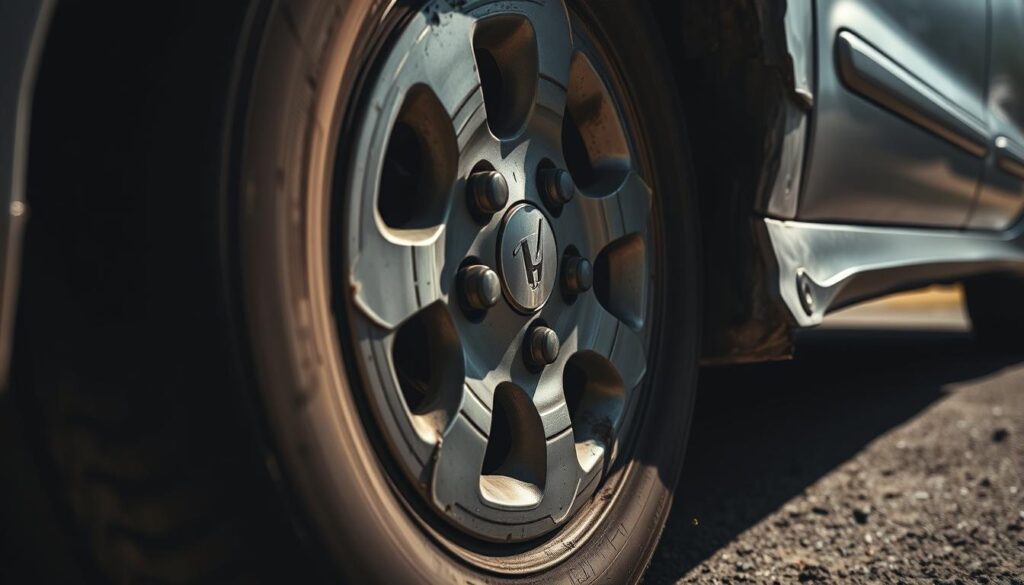
Choosing between OEM and aftermarket wheels after a collision is a big decision. It’s important to know the differences to ensure your vehicle is safe and performs well.
Comparing Quality and Compatibility Factors
OEM wheels are made to fit your car perfectly. They meet the manufacturer’s standards for safety and performance. Aftermarket wheels offer different designs and materials at a lower cost.
Material Differences and Structural Integrity
The material of a wheel affects its durability and performance. OEM wheels follow the manufacturer’s material standards, like aluminum alloy or steel. Aftermarket wheels might use different materials, affecting their fit and safety.
Fitment Considerations for Your Specific Vehicle
Getting the right fit is key for both OEM and aftermarket wheels. OEM wheels are made to fit your car exactly. Aftermarket wheels need careful choice to match your car’s specs. The wrong fit can be unsafe and harm your car’s performance.
Making the Right Choice for Your Situation
Choosing between OEM and aftermarket wheels depends on your budget, preferences, and car’s needs.
Budget Considerations vs. Long-term Value
Aftermarket wheels might be cheaper, but OEM wheels ensure quality and durability. They offer long-term value and performance.
Warranty and Guarantee Differences
OEM wheels usually have a manufacturer’s warranty. This covers defects and performance issues. Aftermarket wheels may have warranties too, but they vary. Always check the warranty terms before deciding.
Professional Wheel Assessment Procedures
To ensure your vehicle’s safety and performance, a professional wheel assessment is key. Experts use advanced methods to check your wheels’ condition.
Advanced Diagnostic Techniques Used by Experts
Professionals use several ways to find wheel damage, including:
- Computerized balancing and runout testing to spot imbalances or irregularities in the wheel.
- Stress testing and metallurgical analysis to check the wheel’s structural strength.
What to Expect During a Professional Inspection
Here’s what you’ll see during a professional wheel check:
- A detailed look with advanced tools.
- Detailed documentation and reporting of any damage or issues.
- A clear timeline for the assessment, making it quick and efficient.
Documentation and Reporting Standards
Inspection services focus on clear, detailed reports on wheel condition.
Timeline for Complete Assessment
The time needed for the assessment depends on the damage’s extent and the methods used.
Post-Replacement Considerations and Maintenance
Wheel replacement is just the start. Taking care of your vehicle after is key. After new wheels are installed, you need to make some important adjustments and checks. This ensures your vehicle runs well and safely.
Essential Adjustments After Wheel Replacement
After getting new wheels, you must make some key changes. Getting your vehicle’s alignment right is critical. It prevents uneven tire wear and keeps your car handling smoothly.
Alignment Requirements and Specifications
Look up your car’s maker specs for alignment needs. Right alignment keeps tires even and stops steering problems.
Torque Settings and Retightening Schedules
Stick to the torque settings for your wheel bolts. Also, retighten them as your car’s maker suggests.
Monitoring Your New Wheels for Optimal Performance
Keep an eye on your new wheels after the first setup. Watch for even tire wear and stable handling.
Break-in Period Considerations
Some wheels need a break-in time. Always follow the maker’s advice for this period to keep your wheels lasting longer.
Long-term Maintenance Schedule
Make a regular maintenance plan. Check wheel alignment, tire pressure, and wheel condition. This catches any problems early.
Conclusion: Ensuring Your Safety on the Road
Keeping your wheels safe is key to your car’s safety and how well it runs. After a crash, check your wheels for damage. If they’re damaged, you might need to replace them. Miracle Body and Paint Collision Center can help with this.
It’s important to check your wheels often, even more so after a crash. Look for signs like bent rims or uneven tire wear. If you see these, get help right away. Miracle Body and Paint Collision Center offers top-notch repair and replacement services.
By focusing on wheel safety and getting help when you need it, you can avoid accidents. For more details or to set up a meeting, visit Miracle Body and Paint Collision Center.

