

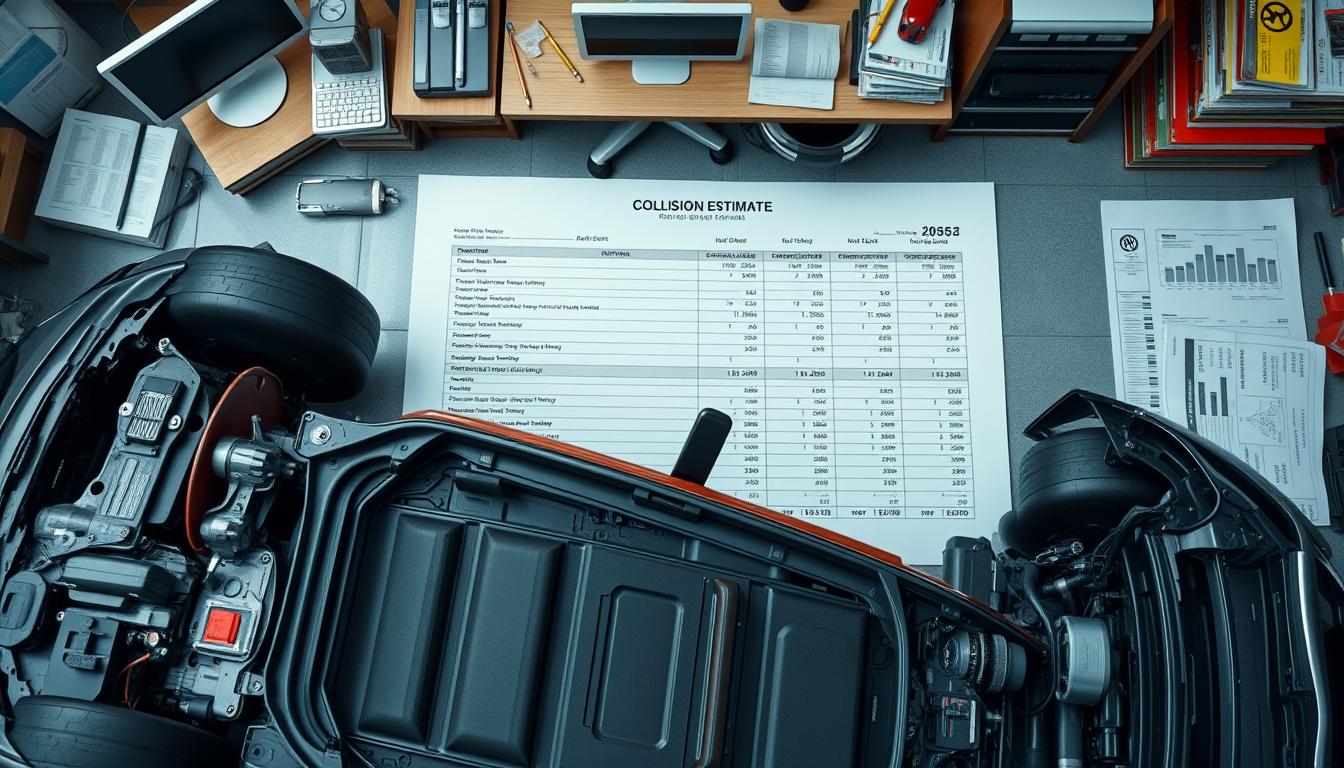
When your car gets damaged in an accident, getting it fixed correctly is your top priority. The document you receive from an auto body shop is much more than a simple price quote. It details the work needed to restore your vehicle to its pre-accident condition.
This detailed breakdown is your roadmap for the entire restoration. It lists parts, labor, and the expected timeline. Knowing how to interpret this information puts you in control of your car‘s restoration.
This guide will help you understand every part of your repair estimate. We will explain what to look for from the initial inspection to the final delivery. Clear understanding helps you talk confidently with your insurance and the repair team.
Whether it’s a small scrape or significant damage, knowing your estimate ensures a smooth and transparent experience. You can avoid surprises and feel sure about the quality of work being done on your vehicle.
Key Takeaways
- A repair estimate is a detailed plan, not just a final cost.
- It lists all necessary parts, labor, and timeframes for your vehicle’s restoration.
- Understanding the document empowers you to make informed decisions.
- Clear communication with your repair shop and insurance company is easier when you understand the estimate.
- This knowledge helps ensure quality work and a smooth repair experience.
- Being informed helps you get your car back to its pre-accident condition with confidence.
Introduction to Collision Repair Estimates
The detailed assessment you receive following an automotive mishap serves as the foundation for your car’s complete recovery. Industry data reveals over 2.4 million property damage crashes occurred in 2020 alone. This creates significant demand for precise documentation.
Your repair estimate goes beyond simple math. It represents a comprehensive blueprint for restoring your vehicle to proper working order. This document outlines every necessary step for your car’s recovery.
Why Accurate Estimates Matter
Precise documentation provides transparency throughout the restoration journey. It helps insurance companies authorize appropriate payments. Repair shops can also allocate resources effectively with clear guidelines.
Well-prepared estimates prevent misunderstandings between all parties. They align expectations with reality from the beginning. Everyone understands the scope of work and associated costs upfront.
The Impact on Your Vehicle’s Safety and Value
Thorough assessments ensure all structural issues get identified and addressed. This protects you and your passengers in future driving situations. Proper repairs maintain your car’s integrity and performance.
Comprehensive documentation helps preserve your vehicle’s resale value. It demonstrates that all necessary work was completed correctly. Your automobile returns to its pre-incident condition with proper care.
If you financed your car, your lienholder often requires complete restoration. The assessment serves as proof that your vehicle meets safety standards. This protects your investment and ensures roadworthiness.
Collision estimate process
The moment your vehicle arrives at a repair center, a comprehensive damage assessment begins to map out the recovery journey. This systematic procedure ensures every aspect of your automobile’s restoration gets proper attention.
Step-by-Step Breakdown
Skilled technicians start with a detailed visual examination of your automobile. They document both obvious issues and potential hidden problems that may surface later.
The assessment procedure follows a logical sequence. Each step builds upon the previous findings to create a complete picture of required work.
| Step | Action | Purpose |
|---|---|---|
| Initial Review | External damage documentation | Identify visible issues and safety concerns |
| Detailed Inspection | Component-by-component analysis | Uncover hidden damage and structural needs |
| Parts Assessment | OEM vs. aftermarket evaluation | Determine replacement part requirements |
| Labor Calculation | Time and skill requirements | Establish repair timeline and resource needs |
Key Components and Considerations
Experts evaluate structural integrity as their primary concern. They ensure your automobile meets factory specifications for safety and performance.
The choice between original manufacturer parts and alternatives receives careful consideration. Technicians balance quality, availability, and insurance requirements.
Labor requirements get calculated based on industry standards. This includes time for disassembly, repair work, and final reassembly.
Photographic evidence supports the entire assessment. These images help your insurance provider understand the scope of necessary work.
Preparing for Your Collision Repair Estimate
Getting organized ahead of your appointment ensures the estimator has all the information needed for a thorough evaluation. This preparation phase saves time and leads to more accurate results.
Gathering Documentation and Photos
Proper documentation provides the foundation for your vehicle’s assessment. Having everything ready helps create a complete picture of what happened.
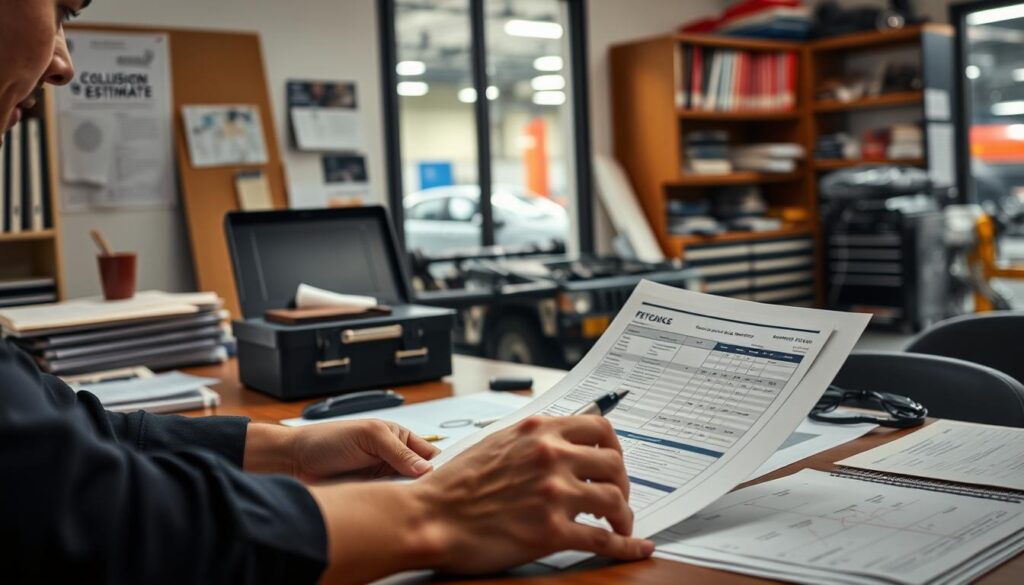
| Document Type | What to Bring | Why It’s Important |
|---|---|---|
| Insurance Information | Policy number and claim details | Facilitates communication with your provider |
| Vehicle Documents | Registration and driver’s license | Verifies ownership and identification |
| Accident Reports | Police report and witness statements | Provides context for the damage |
| Personal Notes | Date, time, location, and symptoms | Helps identify hidden issues |
Take clear photos of all damage from different angles before your visit. Capture close-ups and wider shots to show the full extent.
Note any unusual sounds or handling problems your car experienced after the incident. This information helps technicians spot issues that aren’t immediately visible.
Being prepared demonstrates your involvement and helps ensure nothing gets overlooked. It leads to a more accurate assessment and smoother communication throughout your car’s restoration.
Inspecting Your Vehicle for Damage
A proper damage assessment requires looking beyond what’s immediately visible to the naked eye. Your auto body repair team conducts a detailed inspection to find all issues affecting your vehicle.
Identifying Visible Damage
The first part of the inspection focuses on obvious signs of impact. Technicians document dents, scratches, broken glass, and misaligned panels. They note every mark on your car’s body from the accident.
This visual check creates the foundation for your repair plan. It covers all surface damage that anyone can see during the initial review.
Assessing Hidden Issues
Skilled technicians then search for problems that aren’t apparent. They check your vehicle‘s frame, suspension, and alignment for hidden damage. Modern tools help measure structural issues invisible to the eye.
Finding additional problems during auto body repair is common. The initial review cannot always spot every damaged part. A thorough check ensures all safety issues get fixed properly.
This complete approach protects your car‘s performance and value. It addresses both surface and structural concerns from the collision.
Working with Repair Shops and Insurance Companies
Your choice of repair facility and communication with your insurer significantly impact your vehicle’s restoration journey. Clear dialogue with both parties ensures transparency and manages expectations throughout the restoration.
Remember that you have the final say in selecting your auto body shop. You can choose a familiar repair shop or consider options recommended by your insurance provider. Some policies require you to inform your insurance company about your preferred facility.
Questions to Ask Your Repair Shop
Prepare important questions before visiting potential shops. Ask about their certification for your specific vehicle make and model. Inquire about their parts policy—whether they use original manufacturer components or alternatives.
Determine the expected timeline for completing the work. Ask about warranty coverage on their services and whether they handle insurance communication directly. These questions help you evaluate their collision repair services thoroughly.
Consider asking to see examples of similar work they’ve completed. Understand their process for identifying hidden damage and quality control measures. This gives you confidence in their capabilities.
Communicating Effectively with Your Insurer
Understand your insurance coverage details before beginning repairs. Know your deductible amount and whether rental car coverage applies. Clarify the claims process timeline with your representative.
Many insurance companies maintain networks of pre-approved shops. While you’re not required to use these facilities, they often come with repair guarantees. Some insurers warranty work at network shops for as long as you own your vehicle.
Maintain open communication with both your repair shop and insurance companies. This collaborative approach helps prevent misunderstandings and ensures everyone stays informed about progress and any changes.
Understanding Cost Breakdown and Repair Estimates
Understanding the financial details of your repair quote gives you control over the restoration of your automobile. The document outlines exactly where your money goes during the repair work.
This breakdown helps you see how the shop allocates resources for your vehicle’s recovery. You can identify each expense category clearly.
Parts, Labor, and Supplemental Charges
Your repair costs primarily fall into three categories. Parts expenses cover replacement components needed for your automobile.
Shops may use OEM parts from your vehicle’s manufacturer or aftermarket alternatives. Original equipment parts typically cost more but ensure perfect fit and factory-quality finish.
Labor charges reflect the time and skill required for the restoration work. These rates vary by geographic location and shop expertise.
Supplemental charges may appear as technicians discover hidden damage during disassembly. The initial quote represents an approximation based on visible issues.
Understanding this breakdown helps you evaluate whether the assessment is fair. It enables informed discussions with your insurance provider about coverage details.
High-quality materials and proper techniques may increase initial costs. However, they ensure the longevity and safety of your automobile’s restoration.
The Role of Technology in Modern Collision Assessments
Today’s auto body shops use advanced tools that provide unprecedented accuracy in damage assessment. These technological innovations have revolutionized how professionals evaluate and restore your vehicle.
Electronic measuring systems analyze your car’s structure with precision. They ensure your vehicle returns to exact factory specifications. This technology detects even minor misalignments invisible during visual checks.
Computerized frame measurement devices identify structural issues accurately. They create digital blueprints of your car’s proper dimensions. These systems guarantee that all repair work meets strict safety standards.
| Technology Type | Function | Benefit to You |
|---|---|---|
| 3D Scanning Systems | Creates digital damage models | Identifies all affected areas completely |
| Computerized Estimating | Integrates with manufacturer databases | Ensures accurate parts and procedure matching |
| Advanced Diagnostics | Tests electrical and safety systems | Detects hidden computer-related damage |
| Alignment Verification | Checks structural measurements | Confirms factory specification compliance |
Digital imaging captures comprehensive damage documentation. These detailed records help create more complete estimates. They reduce the chance of missed issues during the assessment.
Modern techniques benefit you through more accurate initial evaluations. Shops investing in this technology demonstrate commitment to quality collision repair. Your car receives restoration that maintains its value and safety.
Tips for Getting a Fair and Accurate Estimate
Securing a fair price for your car repair begins with smart preparation. Your approach to obtaining quotes significantly impacts both cost and results. A little effort upfront ensures you receive proper value for your investment.
Researching and Comparing Multiple Estimates
Start by investigating local repair shops thoroughly. Check online reviews and ask friends for recommendations. Verify certifications and credentials before visiting.
Gather at least three different estimates from various shops. This comparison reveals pricing patterns and service approaches. Significant differences between quotes deserve careful questioning.
Always request detailed breakdowns of all costs. Understanding each charge helps identify potential hidden fees. Keep quality in mind rather than automatically choosing the lowest price.
Remember that extremely low bids might indicate inferior parts or shortcuts. Your vehicle deserves proper restoration using appropriate materials.
Get your final repair estimate in writing before authorizing work. This document protects you if issues arise later. Insurance-preferred auto body shop options often provide guaranteed pricing.
This research process puts you in control of your car repair experience. You can make sure your investment brings satisfactory results.
Navigating the Repair Process from Start to Finish
Your vehicle’s journey through the restoration facility follows a carefully planned sequence of steps. Each phase builds upon the previous one to ensure complete recovery.
From Disassembly and Discovery to Final Reassembly
Once your car enters the shop, technicians begin the detailed work. They start by taking apart damaged areas to find hidden issues.
This discovery phase is crucial for your safety. It ensures all problems get identified before repairs begin.
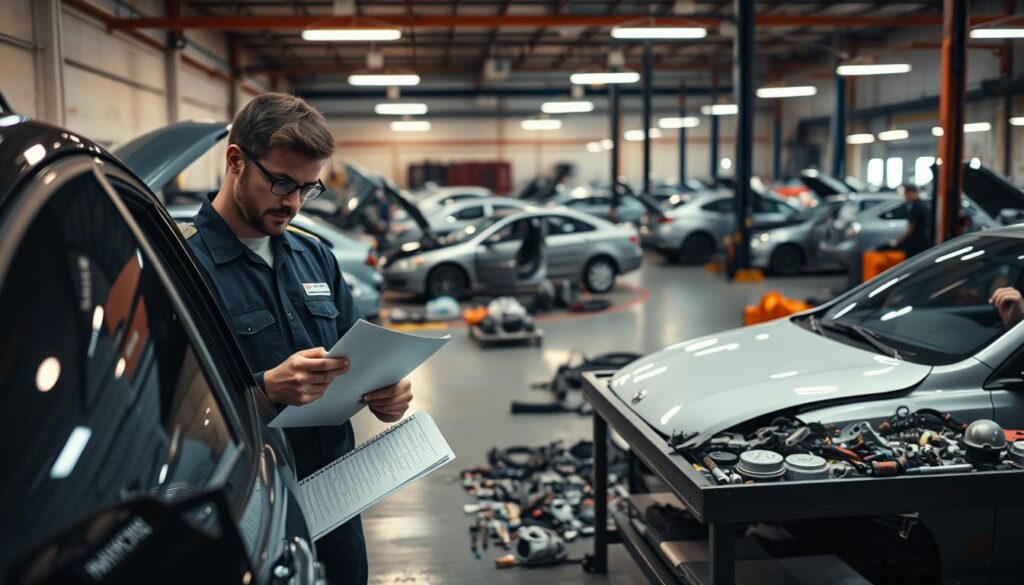
Technicians focus first on structural integrity. They restore frame components to factory specifications. Only then do cosmetic repairs start.
The painting stage involves careful preparation. Panels get primed and sealed before color application. This ensures proper adhesion and color match.
| Stage | Key Actions | Purpose |
|---|---|---|
| Disassembly | Remove damaged components | Identify all necessary repairs |
| Structural Work | Restore frame alignment | Ensure safety standards |
| Body Repairs | Replace exterior panels | Restore appearance |
| Reassembly | Install final components | Verify proper operation |
| Quality Check | Test drive and inspect | Confirm complete restoration |
Final reassembly brings all components together. Each system gets tested for peak performance. The quality control phase includes thorough cleaning and test drives.
Your automobile returns to its pre-accident condition through this systematic approach. Every stage contributes to a safe, reliable result.
Common Challenges in Collision Repair Estimates
The reality of automotive restoration frequently includes challenges not visible during initial inspections. Even the most thorough assessment cannot predict every complication that might surface during actual work.
Hidden damage often emerges once technicians begin disassembling your vehicle. What appeared as minor exterior issues might conceal structural problems beneath the surface. This discovery process is normal and ensures your car receives complete restoration.
Managing Unexpected Costs and Delays
Additional costs may arise when technicians find problems missed during the initial review. Your shop will contact you immediately about any supplemental repairs needed. They’ll work with your insurance company to update the documentation.
Timeline adjustments are common when parts availability becomes challenging. Luxury or older models might require special ordering. Insurance approval for additional work can also extend your car‘s stay at the facility.
Maintain open communication with both your repair team and insurance adjuster. Understanding that these adjustments ensure thorough repairs helps manage expectations. The goal remains returning your vehicle to pre-accident condition safely.
Conclusion
Your journey to restoring your vehicle after an accident concludes with choosing the right repair partner. Understanding your assessment empowers you to make informed decisions and communicate effectively with service providers.
The restoration involves multiple stages from initial inspection through final delivery. Knowing what to expect at each phase reduces stress and uncertainty. Challenges like hidden damage are normal parts of ensuring thorough work.
Always research shops, ask questions, and get detailed written quotes. Prioritize quality and safety standards over simply choosing the lowest price. Modern auto body techniques and materials ensure proper restoration when performed by qualified professionals.
Working with reputable companies that meet industry standards protects your investment. Choose a shop you trust to handle your car with care and expertise. The right partner communicates clearly and stands behind their work.
When your vehicle needs attention after an incident, trust Miracle Body and Paint. They have two San Antonio locations. Contact their North East office at (210) 858-3630, 4650 Walzem Rd, San Antonio, TX 78218.
Call today to schedule your assessment. Experience the quality and transparency that sets them apart. Their commitment to proper techniques makes them your trusted partner for all auto body needs.

