

A crash can be a jarring experience. You might walk away thinking your vehicle looks okay. But hidden problems can lurk beneath the surface. The structural foundation of your automobile is critical for your safety.
Even a minor fender-bender can knock things out of place. This affects how your car handles and performs. Knowing the warning signs is your first line of defense. It helps you protect your investment and everyone inside.
This guide will walk you through the key indicators. You’ll learn what to look for after an accident. Some issues are obvious, like a misaligned body panel. Others are more subtle and only show up over time.
Understanding these symptoms empowers you to take action. Prompt attention can prevent more extensive structural damage. It also helps you avoid higher repair costs down the road. This knowledge is essential for making informed decisions about your vehicle’s care.
Key Takeaways
- The structural integrity of your vehicle is fundamental to your safety on the road.
- Damage from a collision is not always immediately visible to the untrained eye.
- Early detection of alignment issues can prevent more serious and expensive problems.
- Professional assessment is crucial after any accident, no matter how minor it seems.
- Recognizing the warning signs empowers you to seek the right repair services promptly.
Understanding Frame Damage and Its Impact on Your Vehicle
After an impact, your automobile’s core structure can suffer in ways that aren’t obvious. This foundational element is crucial for your safety and the performance of your entire vehicle.
What is Frame Damage?
Think of your vehicle’s skeleton. Any bending or twisting of this core foundation is considered structural damage. It moves parts away from their original factory settings.
Most modern automobiles use a unibody design. This integrates the body and frame into one single, lightweight unit. Larger trucks and SUVs often use a body-on-frame build. This has a separate, heavy-duty chassis.
Visible Signs and Hidden Issues
You might notice clear warning signals. Doors or trunk lids that no longer shut correctly are a major red flag. Uneven gaps between body panels also suggest underlying problems.
Some issues are not visible to you. Hairline cracks or internal stress points can develop. These hidden flaws require a professional inspection with specialized tools to detect. Even a small bump can compromise your automobile’s long-term structural integrity.
Car frame alignment: Restoring Your Vehicle’s Structural Integrity
Many drivers underestimate how everyday driving conditions can affect their vehicle’s fundamental structure over time. When your automobile’s core foundation becomes compromised, it impacts everything from handling to occupant protection.
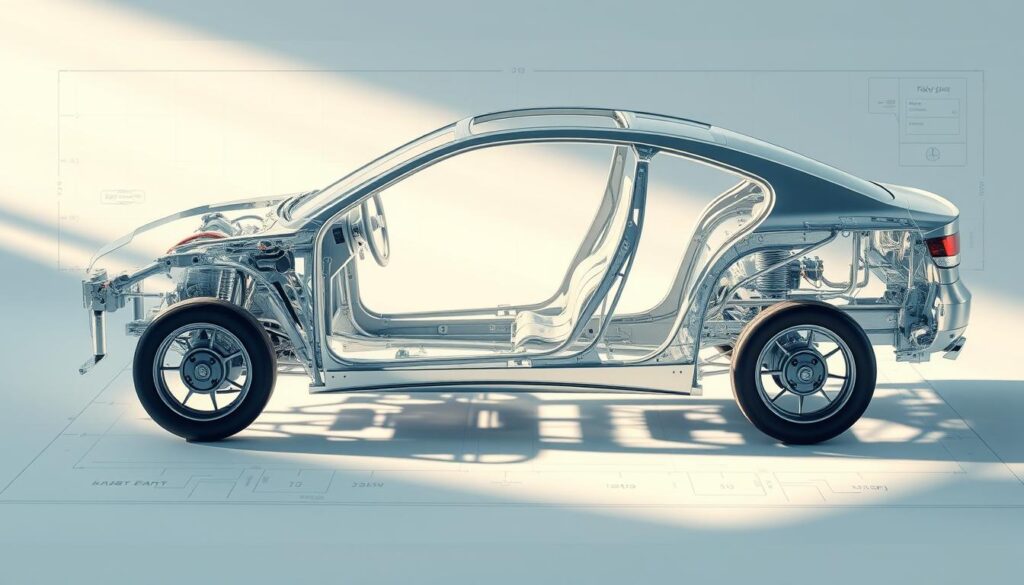
Understanding what causes these issues helps you recognize when professional attention is needed. Early detection prevents more serious problems down the road.
Common Causes of Misalignment
Accidents represent the most frequent source of structural problems. Even minor fender benders can create lasting issues that aren’t immediately visible.
Low-speed impacts in parking lots often cause subtle misalignments. These seemingly insignificant incidents can weaken your vehicle’s foundation over time.
Repeated exposure to potholes and uneven terrain gradually stresses the structure. Normal wear factors like rust and corrosion also make the frame more susceptible to damage.
| Cause Type | Examples | Potential Effects | Detection Difficulty |
|---|---|---|---|
| Sudden Impact | Collisions, fender benders | Immediate misalignment, bent components | Often visible |
| Gradual Stress | Potholes, rough terrain | Cumulative damage, weakened integrity | Harder to detect |
| Environmental | Rust, corrosion, weather | Structural weakening over time | Requires inspection |
How Proper Alignment Enhances Safety
When your vehicle is properly aligned, critical safety systems function as designed. Airbags and crumple zones respond correctly during impact scenarios.
Correct suspension geometry and steering response give you better control. This directly contributes to your safety on the road, especially in emergency situations.
Deformation zones effectively absorb collision forces when alignment is correct. This distributes impact energy away from the passenger compartment, protecting everyone inside.
How to Identify Frame Damage Post-Collision
After an accident, certain telltale symptoms can alert you to potential frame damage. Learning to spot these warning signs helps you address structural issues before they worsen.
Visual Indicators and Uneven Body Panels
Start with a careful visual inspection of your vehicle’s exterior. Look for uneven gaps between body panels that weren’t present before the collision.
Check if doors, hood, or trunk lids close properly. Misaligned panels often indicate underlying structural problems. Difficult-to-close doors suggest the foundation has shifted from its original position.
Examine your tires for unusual wear patterns. Feathering or excessive wear on one edge points to alignment issues. Your vehicle might pull to one side during straight driving.
Diagnostic Tools and Professional Inspections
Your own inspection has limitations. Hidden structural damage requires professional assessment. Trained technicians use advanced equipment to detect problems invisible to the naked eye.
Modern measuring systems compare your vehicle’s current dimensions against factory specifications. This technology pinpoints even minor misalignments with extreme precision.
Investing in professional inspection ensures all damage gets identified. Some issues may not show immediately but could cause problems over time. Early detection prevents more extensive repairs later.
Step-by-Step Guide to Frame Straightening
Professional frame straightening follows a meticulous sequence that ensures your automobile’s foundation returns to factory standards. This systematic approach guarantees your safety and preserves your vehicle’s value.
Initial Damage Assessment and Secure Mounting
Technicians begin with a comprehensive evaluation using advanced measuring systems. They compare your vehicle’s current dimensions against original manufacturer specifications.
This creates a precise damage map that guides the entire repair process. Your automobile then gets securely mounted onto specialized equipment using heavy-duty clamps.
Realigning the Frame with Hydraulic Systems
Hydraulic pulling systems apply controlled force to reshape bent metal. Technicians work with pinpoint accuracy to avoid overstressing the material.
This gradual straightening process corrects complex damage patterns. The equipment allows targeted force application to specific points.
Verification Using Advanced Measuring Tools
Continuous measurement occurs throughout the straightening procedure. Laser-guided tools provide real-time feedback to ensure perfect results.
The final verification step confirms all dimensions match factory specifications. Technicians make additional adjustments until every measurement meets safety standards.
The Technology Behind Precise Frame Repairs
Today’s collision repair centers employ advanced systems that revolutionize how structural damage gets fixed. These sophisticated tools ensure your automobile returns to its original factory specifications.
Modern equipment provides technicians with unprecedented accuracy during complex repairs. This technology minimizes guesswork and maximizes safety.
Advanced Tools and Laser-Guided Measuring Systems
Powerful hydraulic systems apply controlled force to reshape damaged sections. These tools work with precision to avoid stressing the material.
Laser-guided measuring systems create detailed 3D maps of your vehicle’s foundation. They highlight every deformation point with extreme accuracy.
Computerized devices compare current measurements against original specifications. This technology guides technicians through each adjustment.
How Modern Equipment Improves Repair Accuracy
Integrated software connects measuring systems with repair machinery. This creates a seamless workflow from assessment to verification.
Real-time feedback prevents over-correction during the straightening process. Technicians apply exactly the right amount of force to specific areas.
| Measurement System | Key Features | Accuracy Level | Technician Benefits |
|---|---|---|---|
| Laser-Guided Systems | 3D mapping, real-time feedback | ±1 millimeter | Visual deformation highlights |
| Computerized Electronic | Factory spec comparison, data logging | ±0.5 millimeter | Precise adjustment guidance |
| Integrated Software | Workflow management, documentation | Full process tracking | Streamlined repair process |
These advanced systems create verifiable records proving your vehicle meets safety standards. The combination of expert technicians and modern equipment delivers superior results.
Ensuring Safety and Optimal Vehicle Performance
Your vehicle’s safety systems rely on a perfectly aligned foundation to function as designed. When the structural integrity is compromised, every aspect of your driving experience suffers. Proper repairs restore more than just appearance—they rebuild the essential safety characteristics that protect you on the road.

The connection between your automobile’s foundation and its handling is fundamental. Even minor deviations from factory specifications can create significant safety risks during emergency maneuvers.
Benefits of Correct Alignment on Suspension and Handling
Your suspension system depends on precise geometry to deliver optimal performance. When the foundation is properly aligned, every component works in harmony. This creates predictable handling and responsive steering that could save your life.
You’ll immediately notice the difference in road feel. Vehicles with correct structural alignment maintain stability during sharp turns and sudden stops. The steering responds exactly as intended, giving you confidence in challenging driving conditions.
“A vehicle’s handling characteristics are directly tied to its structural integrity. Proper alignment isn’t just about repair—it’s about restoring the engineered safety margins that protect occupants.”
| Component | Properly Aligned Vehicle | Misaligned Vehicle | Safety Impact |
|---|---|---|---|
| Suspension | Even weight distribution | Uneven stress on components | Predictable handling |
| Steering | Precise response | Pulling or wandering | Emergency maneuver capability |
| Tire Wear | Even pattern | Feathering or edge wear | Maintained traction |
| Braking | Straight stopping | Pulling to one side | Shorter stopping distances |
Unresolved structural issues place undue stress on your drivetrain and suspension. This leads to premature wear and costly repairs down the road. Investing in proper alignment preserves your vehicle’s value and ensures long-term reliability.
Your peace of mind comes from knowing that professional repairs restore both safety and performance. The correct foundation alignment allows engineered safety features like crumple zones to function as intended during impact situations.
Conclusion
Your awareness of potential structural issues following a collision empowers you to make informed decisions about necessary repairs. Recognizing the warning signs early helps protect your investment and ensures your safety on the road.
Choosing professional auto body services is essential for restoring your vehicle’s integrity. Don’t take risks with hidden damage from accidents. Expert assessment prevents costly problems and maintains your auto‘s performance.
Miracle Body and Paint Collision Center provides comprehensive collision repair services in San Antonio. Our skilled technicians use advanced straightening equipment to restore your vehicle after any impact.
Visit our North East location at 4650 Walzem Rd or call (210) 858-3630. Trust our auto body experts to handle your repairs and get your vehicles back to factory specifications safely.

